What Is Numerology? Meaning, Core Numbers and the Rudraksha for Each Number
Numerology reads meaning into the numbers of your birth date and name. Learn the core numbers, how to calculate them in two minutes, and which Rudraksha tradition pairs with each number from 1 to 9.
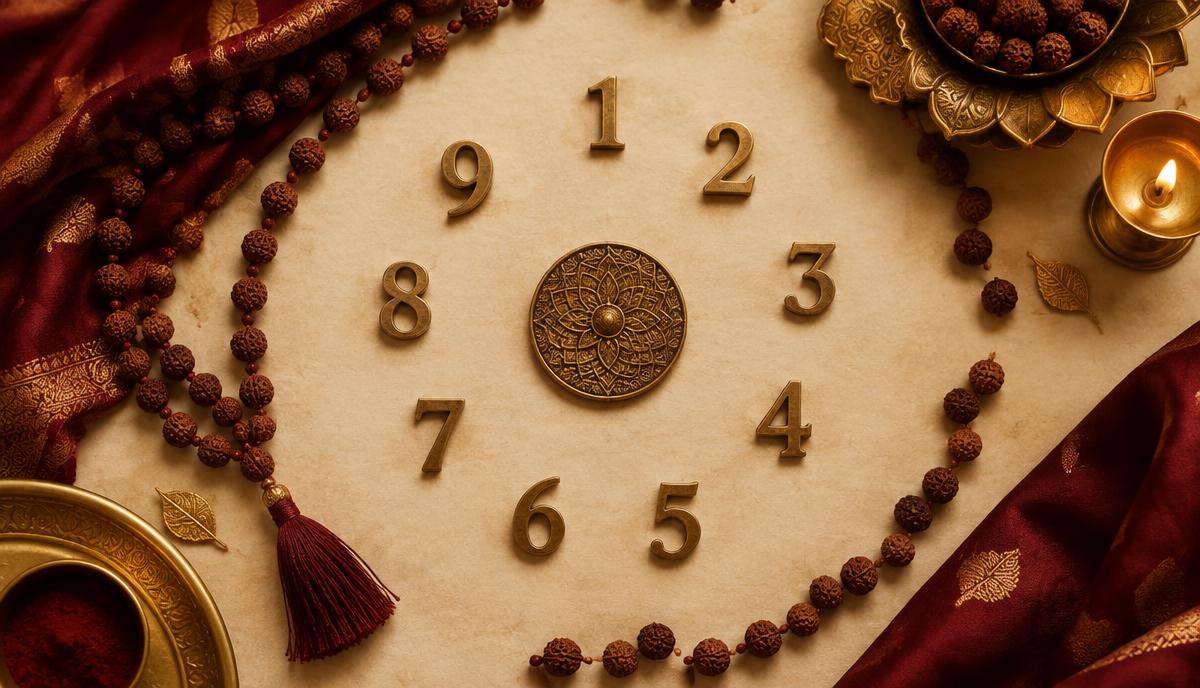
Quick answer: Numerology (Ank Jyotish in India) is a traditional system that links the numbers 1 to 9 with planets and personality themes. Your two most-used numbers are the Moolank (psychic number — the digits of your birth day added together) and the Bhagyank (destiny or life-path number — the full date added together). In Indian practice each number has a ruling graha, and each graha is traditionally linked with a Rudraksha mukhi — so a number can guide which bead you explore. It is a spiritual and cultural framework, not a predictive science.
Most people meet numerology through a lucky number, a suggested spelling of a business name, or a friend who says 'you are such a 5'. Behind those casual uses sits a fairly simple system. Once you understand its three or four building blocks, you can calculate your own numbers, read what tradition says about them, and decide for yourself how much weight to give them.
Where numerology comes from
Number mysticism appears in many cultures. Pythagorean thinkers in ancient Greece treated numbers as the hidden structure of the cosmos. Hebrew Kabbalah developed gematria, which assigns values to letters. The Chaldean system from Mesopotamia gave us a letter chart still used by many numerologists today. In India, numbers have been tied to the nine grahas (Navagraha) for centuries, and this is the version most Indian families know as Ank Jyotish or Ank Shastra.
What all these traditions share is the idea that numbers are not only quantities but also qualities — that '1' carries something of beginnings and leadership, while '7' carries something of reflection and the inner life. Modern numerology mixes these sources, which is why you will see slightly different charts on different websites. This guide follows the Indian Navagraha mapping because it connects naturally with Rudraksha.
The core numbers in numerology
1. Moolank (psychic or root number)
Your Moolank comes from the day of the month you were born. Add the digits until one digit remains. Born on the 23rd? 2 + 3 = 5, so your Moolank is 5. Born on the 9th? It is simply 9. Tradition says the Moolank describes how you see yourself, your instincts and your day-to-day temperament.
2. Bhagyank (destiny or life-path number)
Add every digit of your full date of birth and reduce to one digit. For 23-08-1994: 2+3+0+8+1+9+9+4 = 36, and 3+6 = 9. The Bhagyank is read as the broader direction of life — the lessons and opportunities that recur over the years. Some Western systems keep 11, 22 and 33 as 'master numbers' instead of reducing them.
3. Name number (Namank)
Each letter of your name is given a value from a chart (Chaldean or Pythagorean) and the total is reduced to one digit. This is the number people adjust when they change a spelling for a shop or brand. Because different charts give different results, treat name numerology as the most flexible — and most debated — part of the system.
4. Personal year number
Add your birth day and month to the digits of the current year and reduce. It is used to describe the 'theme' of a calendar year — starting, building, harvesting and so on.
Numbers 1–9: planet, theme and Rudraksha
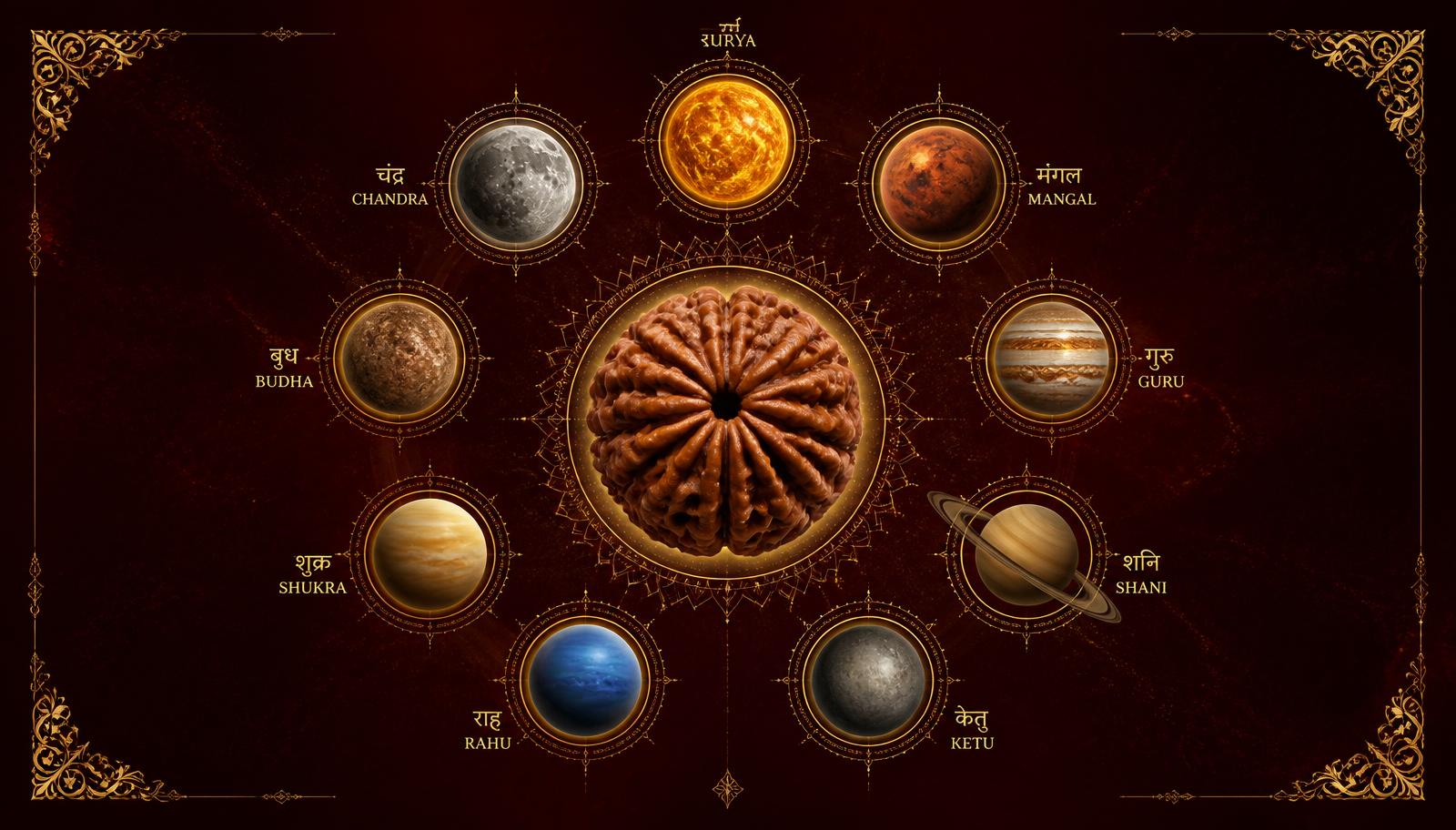
In Indian numerology every number is ruled by one of the nine grahas. Rudraksha tradition independently assigns a ruling graha to many mukhis. Put the two together and you get a simple, widely used guide:
| Number | Ruling graha | Traditional theme | Rudraksha traditionally linked |
|---|---|---|---|
| 1 | Sun (Surya) | Leadership, independence, confidence | 1 Mukhi or 12 Mukhi |
| 2 | Moon (Chandra) | Sensitivity, harmony, partnership | 2 Mukhi or Gauri Shankar |
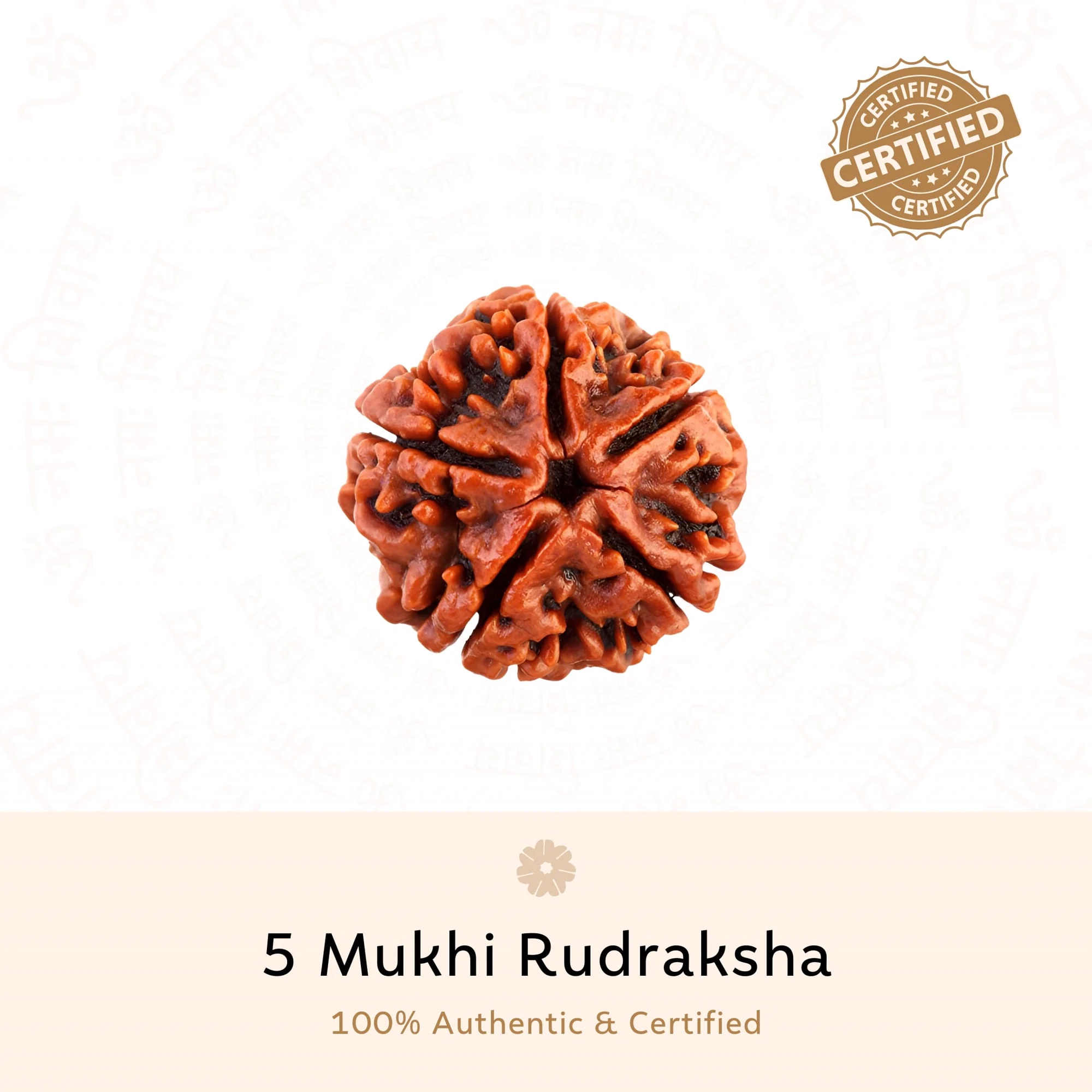
| 3 | Jupiter (Guru) | Wisdom, teaching, optimism | 5 Mukhi |
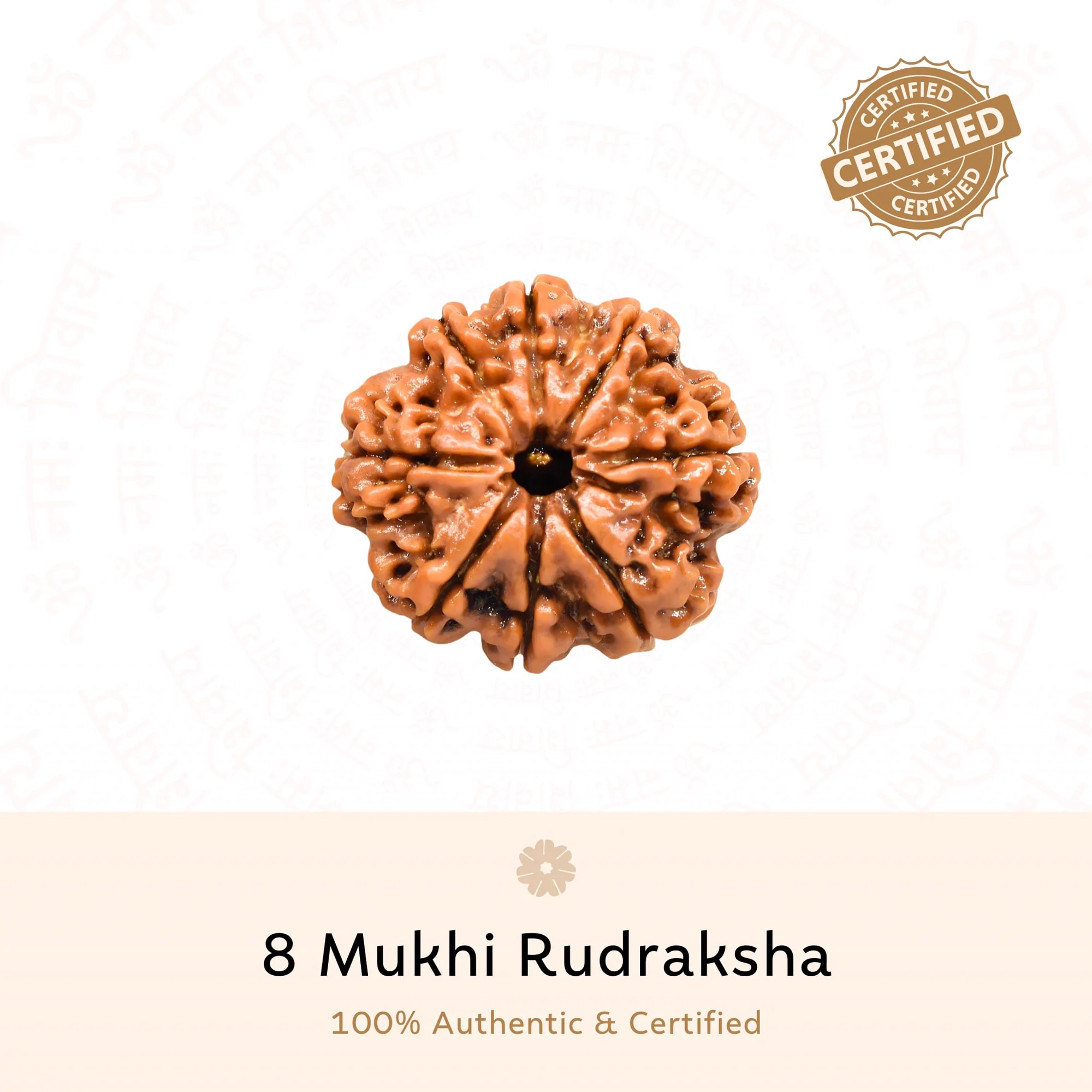
| 4 | Rahu | Unconventional thinking, hard work | 8 Mukhi |
| 5 | Mercury (Budh) | Communication, trade, adaptability | 4 Mukhi |
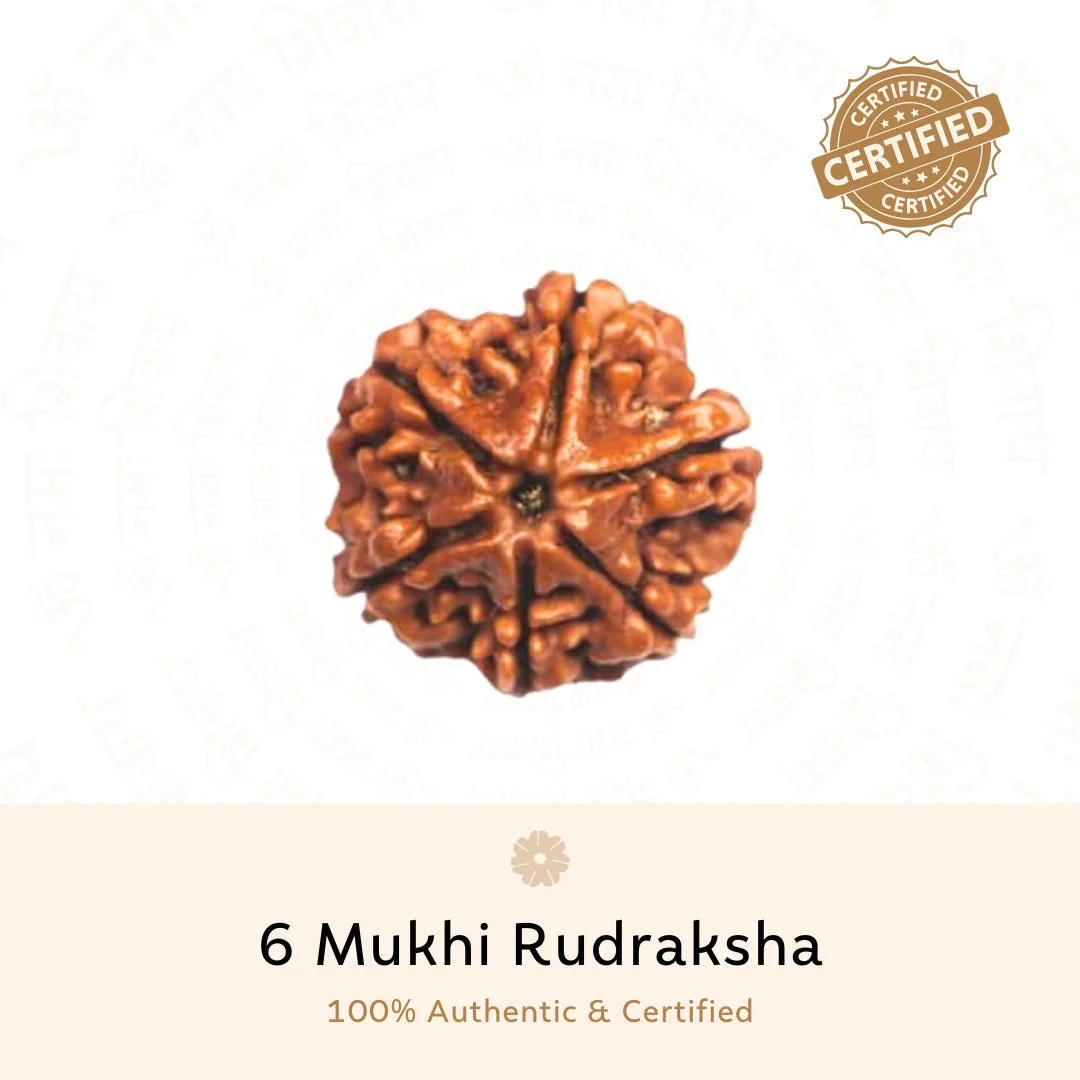
| 6 | Venus (Shukra) | Beauty, comfort, relationships | 6 Mukhi or 13 Mukhi |
| 7 | Ketu | Introspection, spirituality, research | 9 Mukhi |
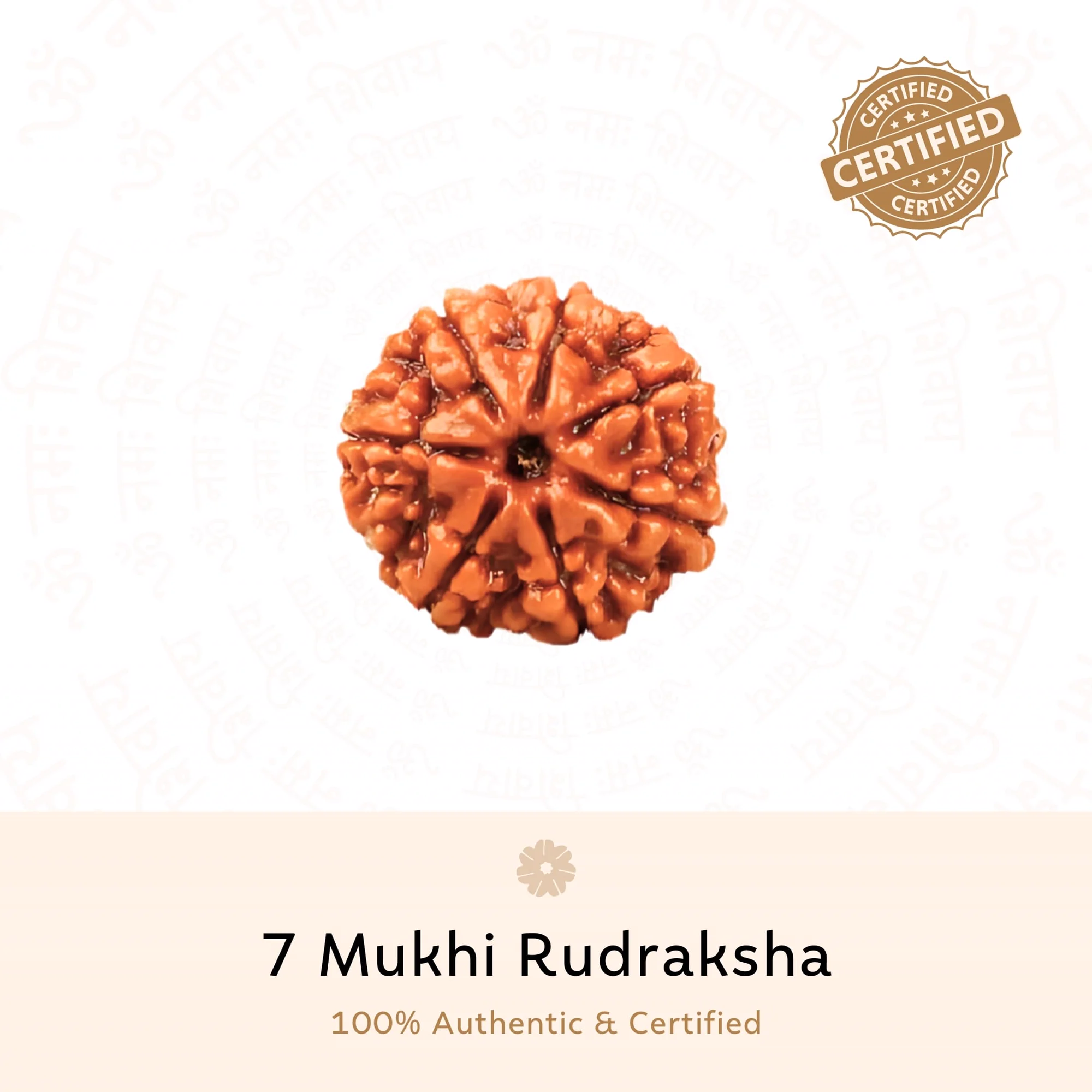
| 8 | Saturn (Shani) | Discipline, patience, responsibility | 7 Mukhi or 14 Mukhi |
| 9 | Mars (Mangal) | Courage, energy, action | 3 Mukhi |
The 5 Mukhi Rudraksha is the classic exception to any chart: tradition describes it as suitable for everyone, whatever their number, which is why it is the usual first bead.
How to use your number to choose a Rudraksha
- Start with your Moolank. It is the number most Indian numerologists use for day-to-day remedies, because it reflects your personal temperament.
- Check your Bhagyank too. If both numbers point to the same graha, that bead becomes an obvious first choice. If they differ, many people wear the Moolank bead and add the Bhagyank bead later, or choose a combination.
- Look at what you actually want. If your focus is study, a 4 Mukhi suits the intent even if your number points elsewhere. Purpose matters as much as arithmetic — see our Rudraksha by Purpose tool.
- Keep it simple. One genuine, well-cared-for bead worn with sincere practice is worth more than a crowded combination chosen from three different charts.

Is numerology scientific?
No. There is no scientific evidence that birth-date numbers determine personality or events, and psychology explains many 'it fits me perfectly' moments through the Barnum effect — our tendency to accept general statements as personal. That does not make numerology worthless as a cultural practice. Many people use it as a reflective prompt, a way to set intentions, or a link to family tradition. We recommend reading it in exactly that spirit, and never letting a number override medical, financial or legal advice.
Common mistakes beginners make
- Mixing charts. Calculating your name with a Pythagorean chart and reading the result from a Chaldean book gives confusing answers. Stick to one system.
- Chasing the 'lucky' number only. Your own Moolank is not 'bad' because it isn't 1 or 9. Every number has its strengths in tradition.
- Buying a rare bead because of a number. The bead for your number is often an affordable mukhi. Be cautious of anyone who insists a number 'requires' an expensive collector bead.
- Ignoring authenticity. A number-matched bead only matters if the bead is genuine. Ask for clear photos, origin and, for higher mukhis, an X-ray report.
Next steps
Calculate your numbers with the Lucky Number tool, read our in-depth Moolank and Rudraksha guide, and explore the Rudraksha Finder if you'd like a recommendation that also considers your Rashi and purpose.
Frequently Asked Questions
Q.What is the difference between Moolank and Bhagyank?
Moolank is calculated from your birth day only and describes temperament. Bhagyank uses the full date of birth and describes the broader direction of life. Both reduce to a single digit from 1 to 9.
Q.Which Rudraksha is linked to numerology number 1?
Number 1 is ruled by the Sun in Indian numerology, and the Sun is traditionally linked with the 1 Mukhi and 12 Mukhi Rudraksha. The 12 Mukhi is the more accessible choice for most people.
Q.Can I wear the 5 Mukhi Rudraksha whatever my number is?
Yes. Tradition describes the 5 Mukhi as suitable for everyone, which is why it is recommended as a first bead regardless of Moolank or Bhagyank.
Q.Is Chaldean or Pythagorean numerology better?
Neither is objectively better; they are different traditions. Chaldean is popular in India for name numbers. What matters is using one system consistently.
Q.Does numerology guarantee results?
No. Numerology is a traditional spiritual framework. It cannot predict events or replace professional advice, and no Rudraksha chosen by number guarantees any outcome.