16 Mukhi Nepali Rudraksha: Significance, Benefits, Rarity and Buying Guide
Why 16 Mukhi Rudraksha is so rare, its traditional link with Mahamrityunjaya and Lord Rama, who wears it, Nepali vs Java differences, X-ray verification and buying tips.
Quick answer: 16 Mukhi Rudraksha has sixteen natural lines and is one of the rare higher-mukhi beads. It is traditionally associated with Mahamrityunjaya Shiva and, in some traditions, with Lord Rama — symbolising protection and victory over fear. Nepali 16 Mukhi beads are large and very rare, so they command collector prices; Java beads are smaller and more affordable. Never buy one without an X-ray report confirming sixteen internal compartments.
Higher-mukhi Rudraksha — 15 Mukhi and above — sit in a different world from the everyday 5 Mukhi. They are harvested in tiny numbers, collected by serious devotees and often gifted to temples or kept in family altars. The 16 Mukhi is among the most sought after because of its association with protection and the Mahamrityunjaya mantra.
What Is a 16 Mukhi Rudraksha?
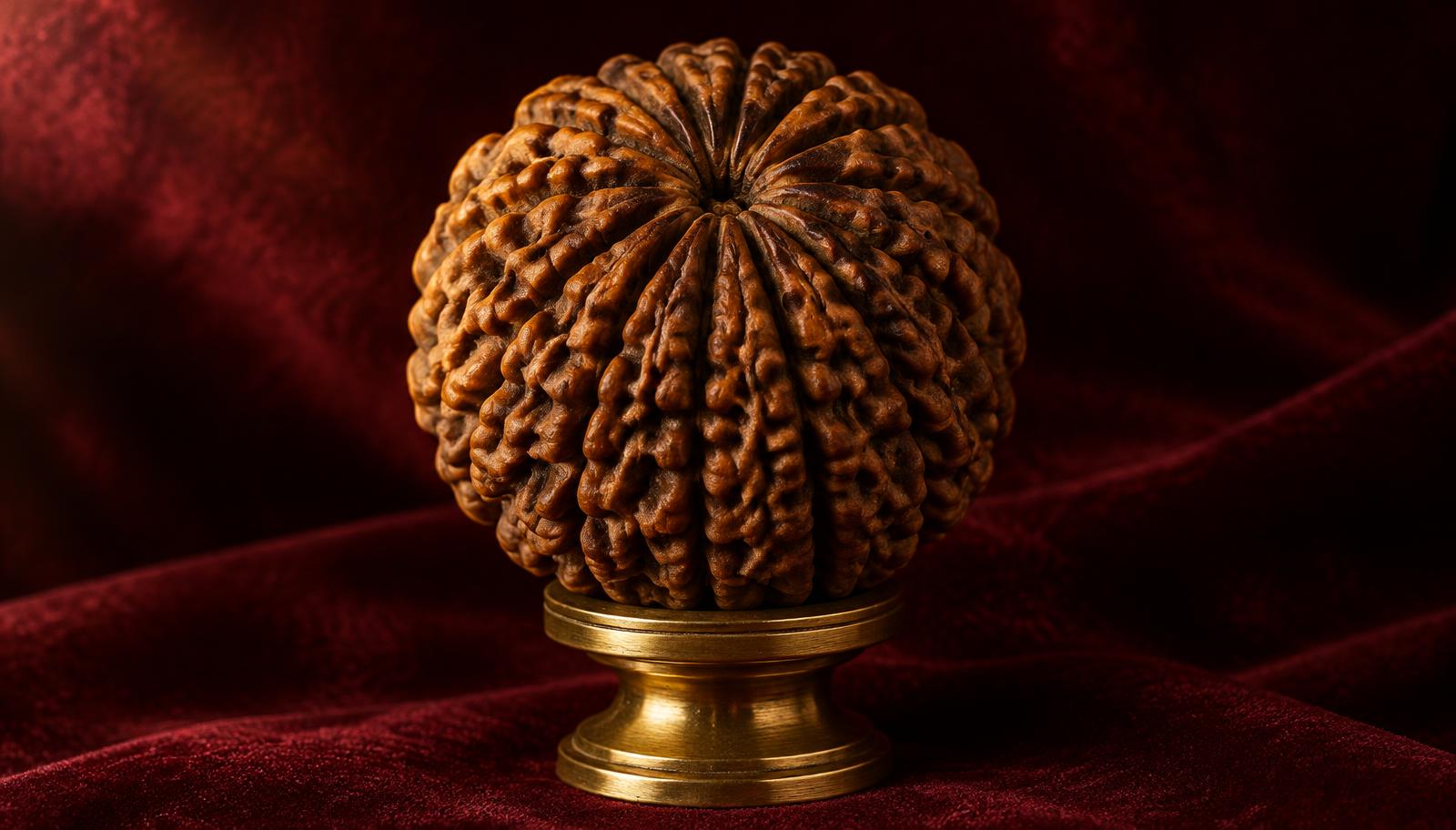
A 16 Mukhi bead has sixteen clefts running from top to bottom and, if genuine, sixteen seed compartments inside. Nepali beads are usually round and large, often 28 mm or more. Java beads are smaller and oval.
Because counting sixteen lines by eye is difficult, and because some sellers add carved lines to lower-mukhi beads, X-ray verification is essential.
Spiritual Significance
Different texts and lineages describe the 16 Mukhi slightly differently. Two associations are most common:
- Mahamrityunjaya Shiva — the conqueror of death; the bead is associated with protection and courage, and with the Mahamrityunjaya mantra.
- Lord Rama (Jaya / Vijaya) — some traditions link it with Rama and with victory, righteousness and steadiness.
In astrology it is sometimes associated with balancing the Moon and Rahu and is suggested by astrologers for people facing prolonged fear or instability.
Traditional Benefits
- A sense of protection and fearlessness.
- Support for meditation on the Mahamrityunjaya mantra.
- Steadiness during difficult phases.
- Household protection when kept on the altar.
Nepali vs Java 16 Mukhi
| Feature | Nepali | Java |
|---|---|---|
| Size | Large, often 28 mm+ | Smaller, 12–20 mm |
| Shape | Round | Oval |
| Rarity | Extremely rare | Rare |
| Price level | Collector (lakhs) | Premium (thousands) |
Shop 16 Mukhi Rudraksha
Both 16 Mukhi beads below are listed with origin and lab testing; prices are live from our catalogue.
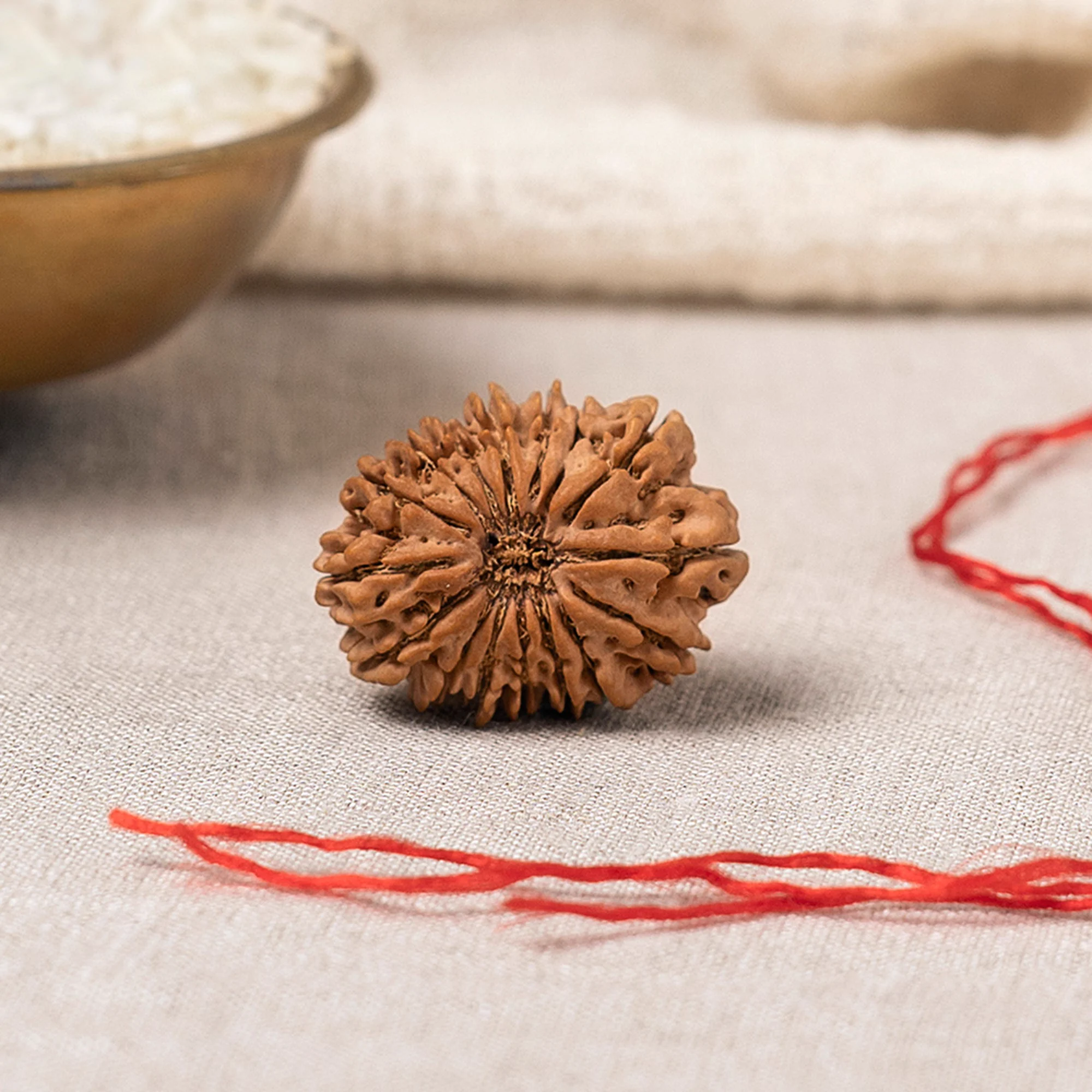
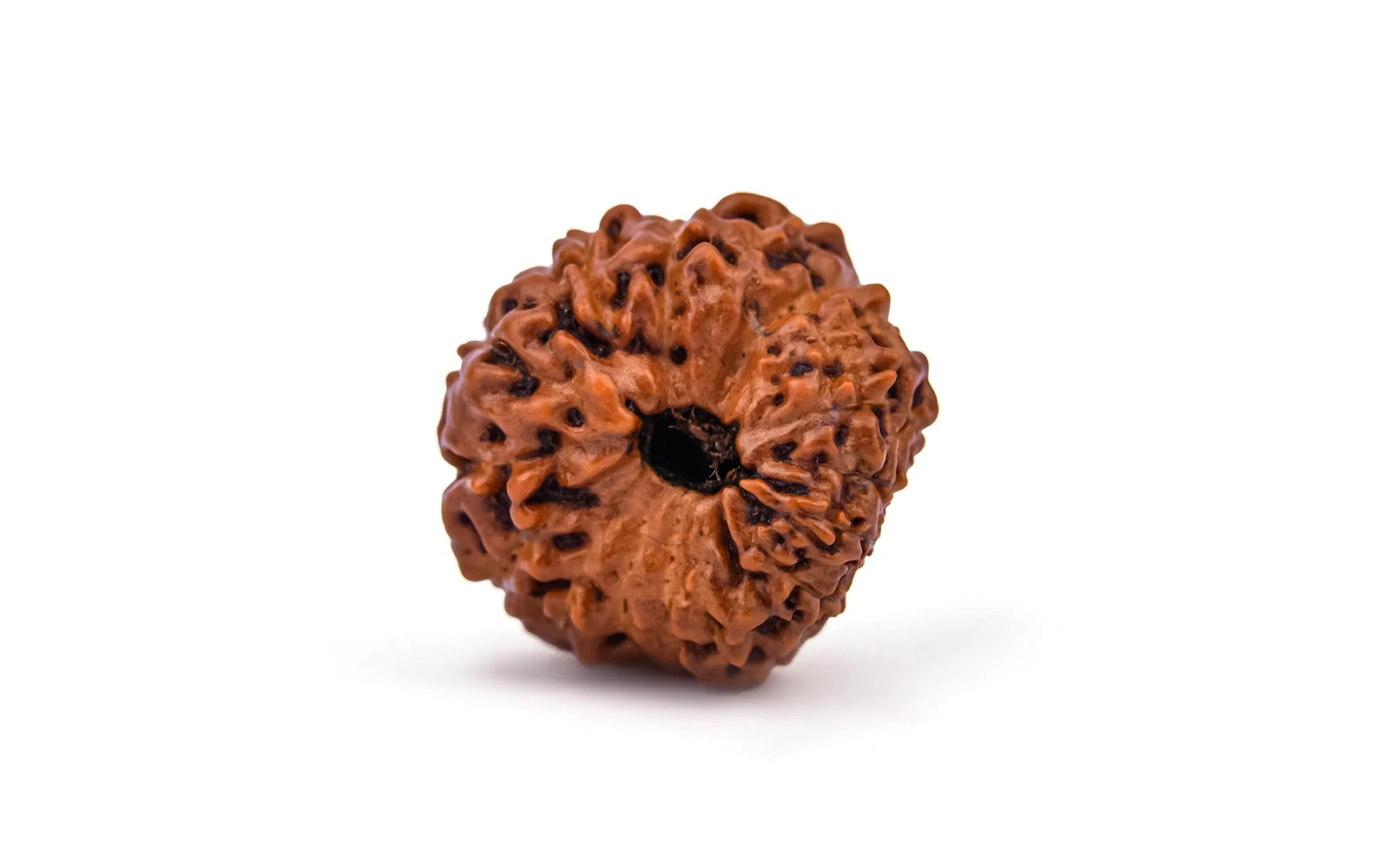
16 Mukhi Rudraksha – Original Indonesian (Java) Collector Bead
Collector-level 16 Mukhi beads also appear in complete sets such as our Siddha Malas. Read the Siddha Mala guide to compare.
How to Verify a 16 Mukhi
1. Ask for an X-ray or CT report showing sixteen compartments.
2. Check the lab name and report number, and match photos to the bead.
3. Look for natural, continuous lines with no carving marks.
4. Be wary of unusually low prices for 'Nepali' 16 Mukhi.
5. Buy from sellers who offer clear return terms — see our refund policy.
How to Wear or Keep a 16 Mukhi
Choose a Monday, purify the bead, offer it at the Shivling or altar and chant Om Hreem Hum Namah or the Mahamrityunjaya mantra 108 times. Large Nepali beads are usually worn in silver or gold capping as a pendant, or kept in a silver box on the altar. Many collectors wear a 16 Mukhi only on special days.
Where 16 Mukhi Fits Among Higher Mukhi Beads
| Mukhi | Common traditional association |
|---|---|
| 14 Mukhi | Hanuman / Shiva's third eye; intuition and courage |
| 15 Mukhi | Pashupatinath; compassion and spiritual growth |
| 16 Mukhi | Mahamrityunjaya / Rama; protection and victory |
| 17 Mukhi | Vishwakarma / Katyayani; creativity and accomplishment |
| 18 Mukhi | Bhumi Devi; grounding and stability |
| 21 Mukhi | Kubera; abundance (extremely rare) |
Associations vary between texts and lineages. Our 1 to 21 Mukhi guide covers every bead in detail.
Why Rarity Matters
On a typical Nepali Rudraksha tree, the vast majority of beads are 4, 5 and 6 Mukhi. Beads above 14 Mukhi appear only occasionally, and a well-formed, round, large 16 Mukhi is a remarkable find. That is why such beads are often sold one at a time, with photographs and reports of the exact bead rather than a generic product image.
Keeping a 16 Mukhi at Home
Many families do not wear a high-mukhi bead daily. Instead they keep it in a silver box or on a small stand in the puja room, offer it water and sandalwood on Mondays, and wear it for special pujas or festivals such as Mahashivratri. This protects a valuable bead while keeping it at the centre of household worship.
Caring for a High-Value Bead
- Oil it lightly with olive oil every few weeks, using a soft brush to clean the grooves.
- Keep it away from heat, direct sunlight and perfumes.
- Store its lab report safely with your purchase invoice.
- Have capping checked by a jeweller once a year.
Combining 16 Mukhi With Other Beads
Collectors sometimes wear 16 Mukhi with 5 Mukhi beads on either side, or as part of an Indra Mala or Siddha Mala set. Combination wearing is best planned with guidance, especially for valuable beads.
Frequently Asked Questions
Frequently Asked Questions
Q.What is 16 Mukhi Rudraksha associated with?
Traditionally it is associated with Mahamrityunjaya Shiva and, in some lineages, Lord Rama, symbolising protection and victory over fear.
Q.Why is 16 Mukhi Rudraksha so expensive?
Nepali 16 Mukhi beads are extremely rare, large and require careful verification, so they are priced as collector items.
Q.What is the mantra for 16 Mukhi Rudraksha?
Om Hreem Hum Namah is commonly cited. Many devotees chant the Mahamrityunjaya mantra.
Q.Can anyone wear 16 Mukhi Rudraksha?
Yes, there are no restrictions, though many wearers seek guidance before buying because of the cost.
Q.Is Java 16 Mukhi genuine?
Yes, naturally formed Java 16 Mukhi beads are genuine Rudraksha and a more affordable option than Nepali beads.