5 Mukhi Rudraksha: Benefits, Meaning and a Practical Wearing Guide
Explore 5 Mukhi Rudraksha meaning, traditional benefits, mantra, wearing and buying advice, with real beads and malas from Mauhurtika.
Quick answer: A 5 Mukhi Rudraksha is a natural bead with five principal faces. Devotional tradition associates it with Kalagni Rudra; many contemporary astrological systems connect it with Jupiter. Its most practical use is as a reminder of devotion and a counting aid for mantra japa. Claims that wearing it treats disease or guarantees success are not established medical facts.
For many people, a Panchamukhi bead is their first introduction to Rudraksha. It appears in simple pendants, everyday wrist malas and longer chanting strands. Its appeal need not depend on an extraordinary promise: a small object can hold personal meaning when it accompanies a regular, sincere practice. This guide separates the bead's physical identity, traditional symbolism and buying considerations so you can choose with clarity rather than anxiety.
What does 5 Mukhi Rudraksha mean?
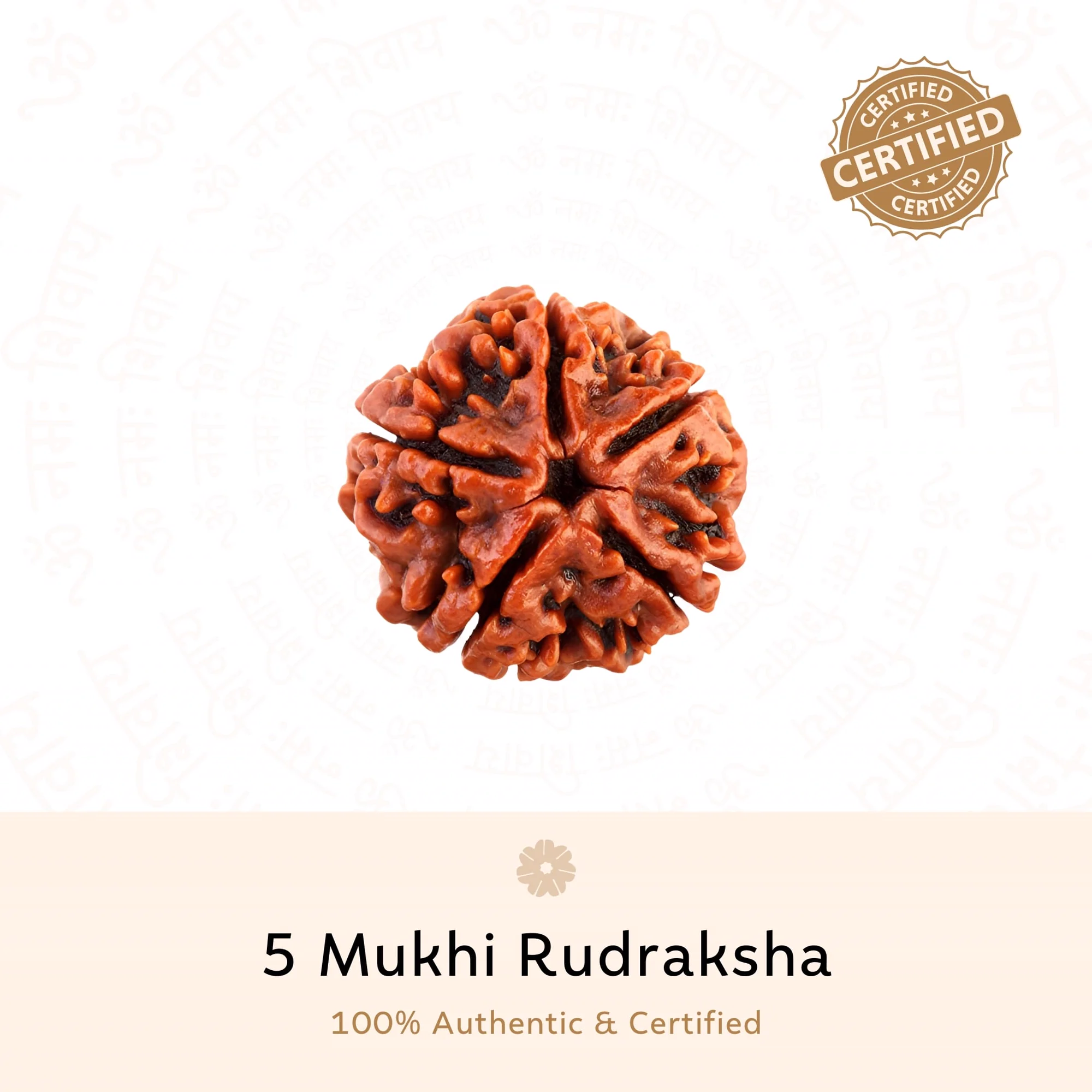
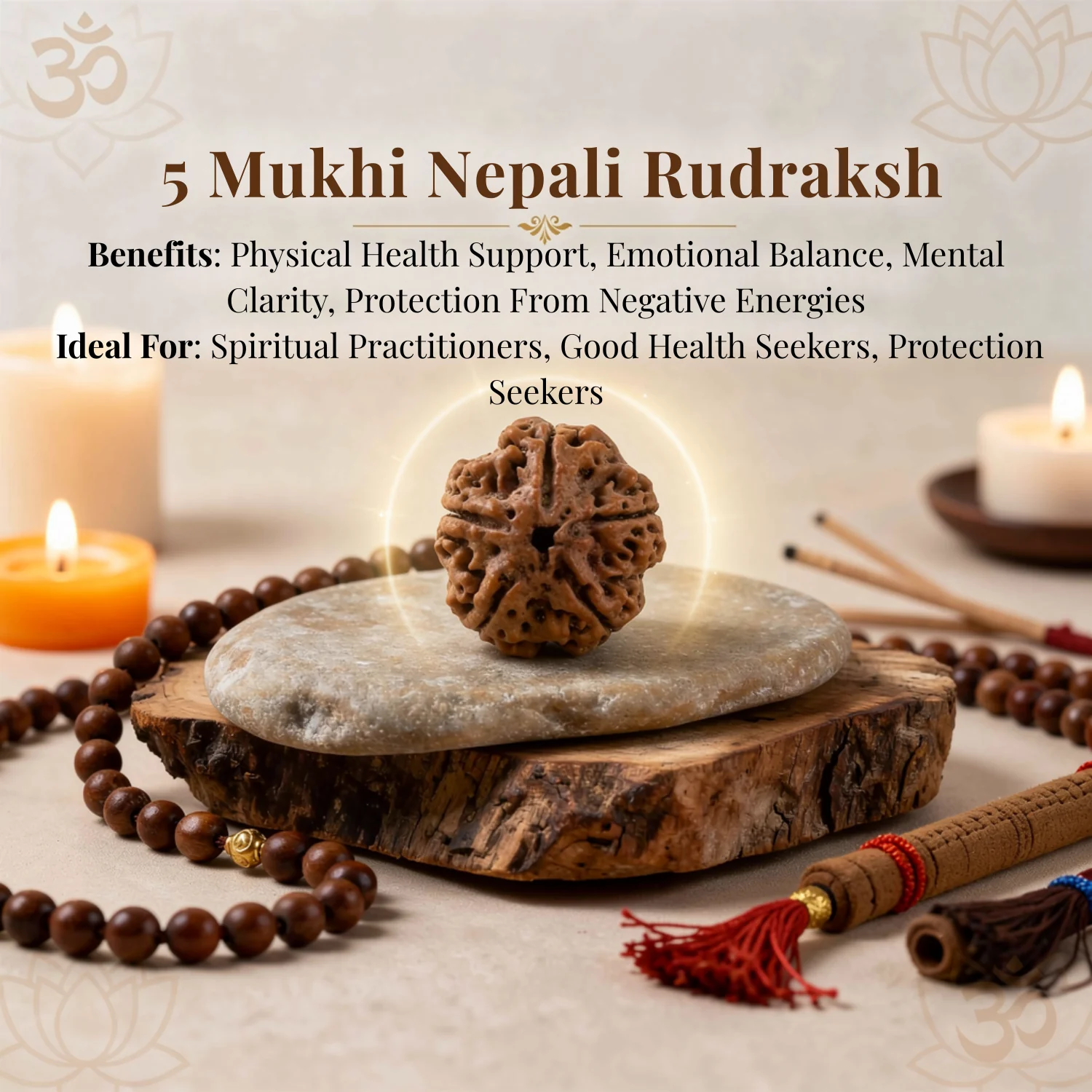
Mukhi means face. In a Rudraksha bead, the term refers to principal natural divisions visible along its surface, not every tiny wrinkle or branching groove. Panchamukhi means five-faced. A bead's texture, shape and colour naturally vary; a catalogue picture should not be treated as a diagram proving the identity of a different bead.
Rudraksha is traditionally understood as the tears of Rudra, a name of Shiva. The association is devotional, while the physical bead comes from a plant. Respecting both views means we can cherish the symbolism without inventing a scientific mechanism for it.
Kalagni Rudra, Jupiter and spiritual significance
The five-faced bead is commonly linked with Kalagni Rudra in Rudraksha traditions. Practitioners may use it while praying to Shiva or reciting Om Namah Shivaya. Jupiter, called Guru or Brihaspati in astrology, is associated with learning and guidance; the Jupiter–5 Mukhi pairing belongs to an astrological interpretive system, not a laboratory finding.
Different teachers explain these associations in different ways. If your aim is chart-based practice, ask the teacher what tradition they follow and why they recommend a bead. A general japa mala and a personalised astrological recommendation answer different needs. Neither requires buying the most expensive item on the shelf.
Ten meaningful ways people use a 5 Mukhi bead
- A devotional reminder: wearing the bead can remind you of a prayer or intention chosen before the day begins.
- Mantra counting: a strand provides a tactile way to keep track of repetitions without repeatedly checking a screen.
- A regular routine: a mala kept beside your meditation seat can make it easier to return to a daily habit.
- A focus anchor: gently moving from bead to bead gives attention a concrete task during japa.
- Connection with Shiva tradition: the bead carries a cultural and devotional identity independent of its price.
- A portable practice: a single bead or short strand can travel with you when a full puja arrangement is not practical.
- Mindful pauses: holding a bead may cue a brief pause before reacting; this is a behaviour you practise, not an automatic effect of the seed.
- A thoughtful gift: its meaning can accompany a personal note rather than an exaggerated promise of protection.
- A learning tool: counting beads offers a simple introduction to the structure of japa and the role of the guru bead.
- A modest starting point: buyers can explore devotional practice without assuming a rarer Mukhi is necessary.
These are uses and personal meanings, not ten clinically proven effects. Experiences of calm may reflect prayer, repetition, expectation and routine together. Persistent anxiety, sleep problems or blood-pressure concerns deserve qualified medical care.
Single bead, bracelet or mala: what should you choose?
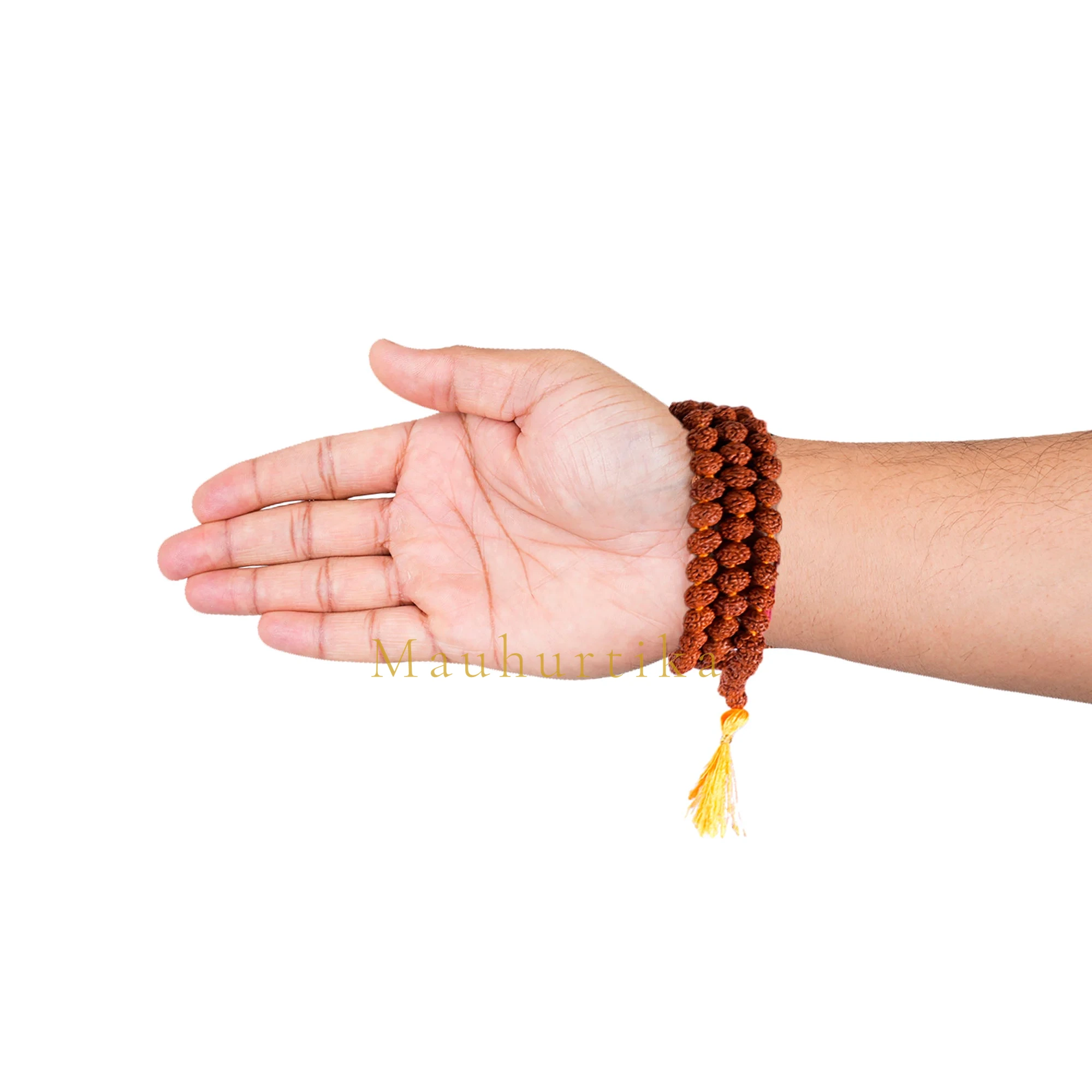
A single bead suits someone who wants a light pendant. Check the threading, dimensions and comfort before purchasing. A bracelet may be convenient, but elastic and knots need inspection; remove it for work where it can catch on equipment. A japa mala suits someone who wants to count repetitions. Confirm the actual bead count rather than assuming every necklace has 108 counting beads.
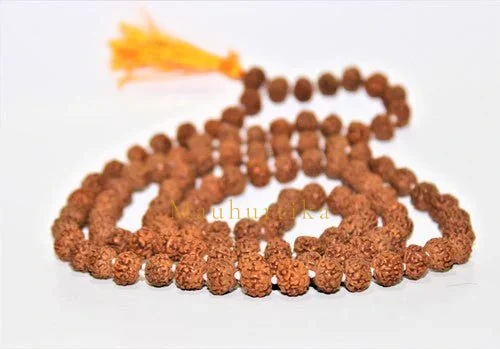
Some malas use 108 counting beads plus a guru or meru bead. Shorter strands are also used, and their count should be clearly described. A wearing necklace and a chanting strand can look similar while differing in length, knot spacing and ease of handling. Read our 5 Mukhi mala buying guide for that more specific comparison.
Explore real 5 Mukhi beads and malas
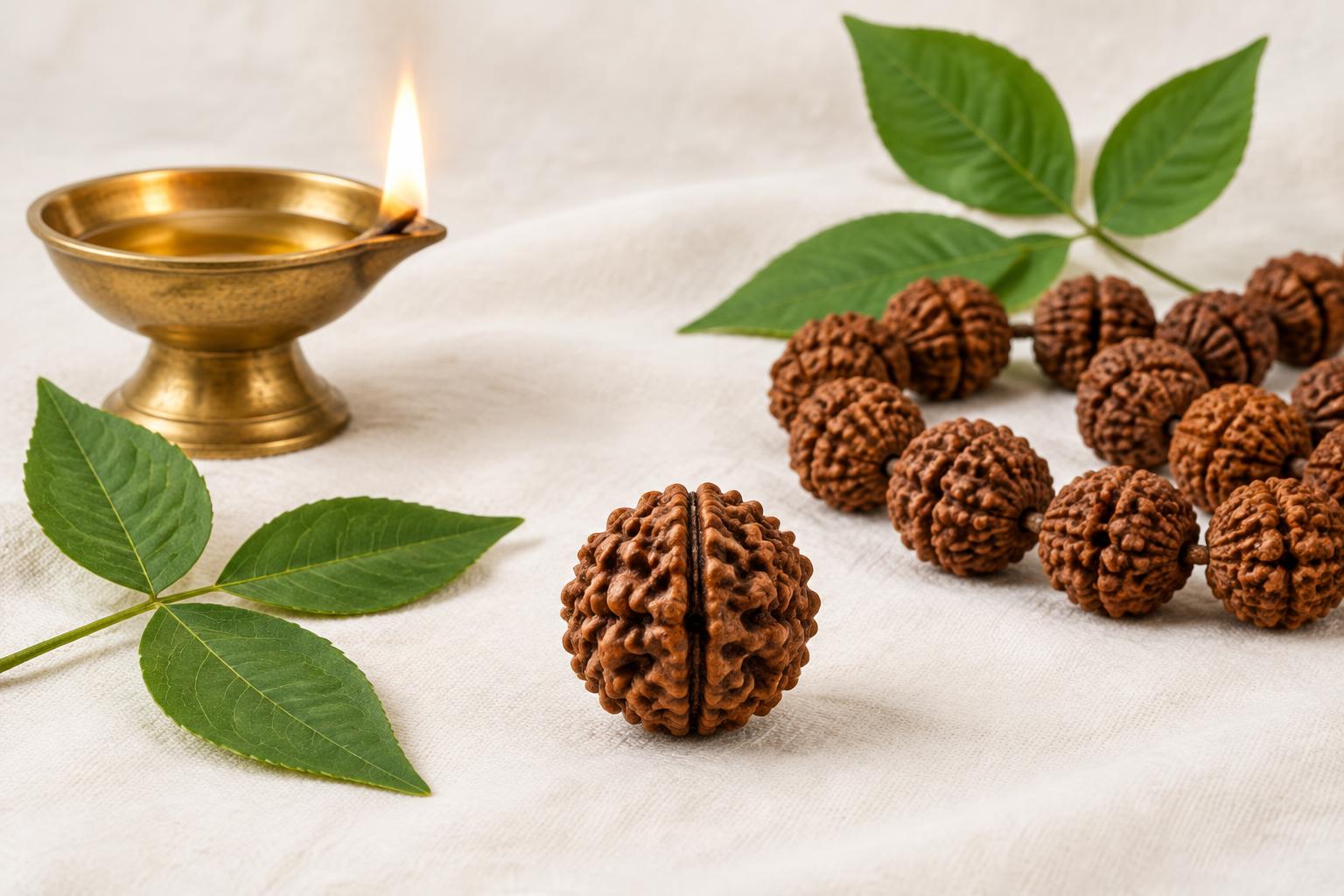
The products below are drawn from Mauhurtika's current catalogue. Their photographs, prices and availability belong to the individual listings, not to the illustration above. Compare origin, size, construction and the documentation offered for the exact item; ask for clarification where a detail is missing.
A simple mantra and first-wear practice
Om Namah Shivaya is a widely used Shiva prayer. Sit comfortably, offer a brief intention and repeat it at a pace that allows you to stay attentive. Some practitioners complete one round on a 108-bead mala; a beginner may start with fewer repetitions. A count is a structure for practice, not a guarantee of an outcome.
Monday is a customary Shiva-worship day, but you do not need to fear that beginning on another day makes the bead harmful. Follow your own teacher's instructions for any formal observance. Do not apply milk, ghee, perfume or other substances to a finished strand unless its care guidance specifically permits it: thread, adhesive and metal fittings may react differently.
How to buy without relying on home tests
Ask for clear close-up images of the exact bead, its origin as represented by the seller, dimensions and any report linked to that item. Sinking in water does not establish authenticity. Rotation between copper coins does not prove Mukhi identity. A photograph alone cannot establish all internal features or exclude every form of alteration.
For a valuable purchase, professional examination and relevant documentation are more useful than viral demonstrations. Read what a report actually covers and check whether its image or identification can be matched to your bead. See our original Rudraksha identification guide before committing to a high-value order.
Everyday care and comfort
Keep the strand dry after incidental moisture and away from soap, chlorine, perfume and prolonged soaking. Store it in a clean pouch once fully dry. Check knots and fittings regularly; a damaged cord should be replaced before the bead is lost. Remove a necklace when it could tighten, snag or become uncomfortable during sleep or exercise.
Small beads and cords can be choking or entanglement hazards for children. Spiritual suitability does not remove those physical risks. Likewise, a person with sensitive skin may react to a metal fitting even if they are comfortable handling the bead itself.
Continue your practice with confidence
Explore the Rudraksha Mala collection, learn the counting method in our japa guide, or request a free consultation if you need help choosing a comfortable form. Let your purchase support a practice you genuinely intend to keep, not a fear that one missed ritual will bring harm.
Frequently Asked Questions
Q.What are the benefits of 5 Mukhi Rudraksha?
Tradition associates it with Shiva devotion, learning and japa. It can serve as a prayer reminder and counting aid; wearing it is not an established treatment for disease or a guarantee of success.
Q.Which deity is associated with 5 Mukhi?
Kalagni Rudra is its common devotional association. Many modern astrological systems also connect it with Jupiter, though interpretations vary.
Q.Can women wear 5 Mukhi Rudraksha?
Many traditions welcome women and men to wear it. Follow your own lineage for formal observances, and prioritise physical comfort and safe construction.
Q.Is a Nepal bead always better than a Java bead?
Origin alone does not establish quality or a stronger spiritual effect. Compare the individual bead, dimensions, documentation and suitability for your intended use.
Q.Can a water test prove a bead is original?
No. Floating or sinking is not a reliable authenticity test. Seek relevant examination and documentation for the actual item.