Rudraksha According to Ancient Sciences: What the Shastras, Ayurveda and Jyotish Say
A clear guide to how ancient Indian knowledge systems — the Puranas, Ayurveda, Jyotish astrology and yoga — understand Rudraksha: where it comes from, what the mukhis mean, and why tradition considers it sacred.
Quick answer: Ancient Indian sciences treat Rudraksha as far more than a seed. The Shiva Purana and other texts describe it as born from Lord Shiva's compassion; Ayurveda-classical references mention Rudraksha in traditional preparations; Jyotish (Vedic astrology) links specific mukhis to planets; and yogic tradition uses the mala as a tool for mantra japa and steadying the mind. These are traditional beliefs passed down for centuries — this guide explains what each system says, in plain language, without exaggeration.
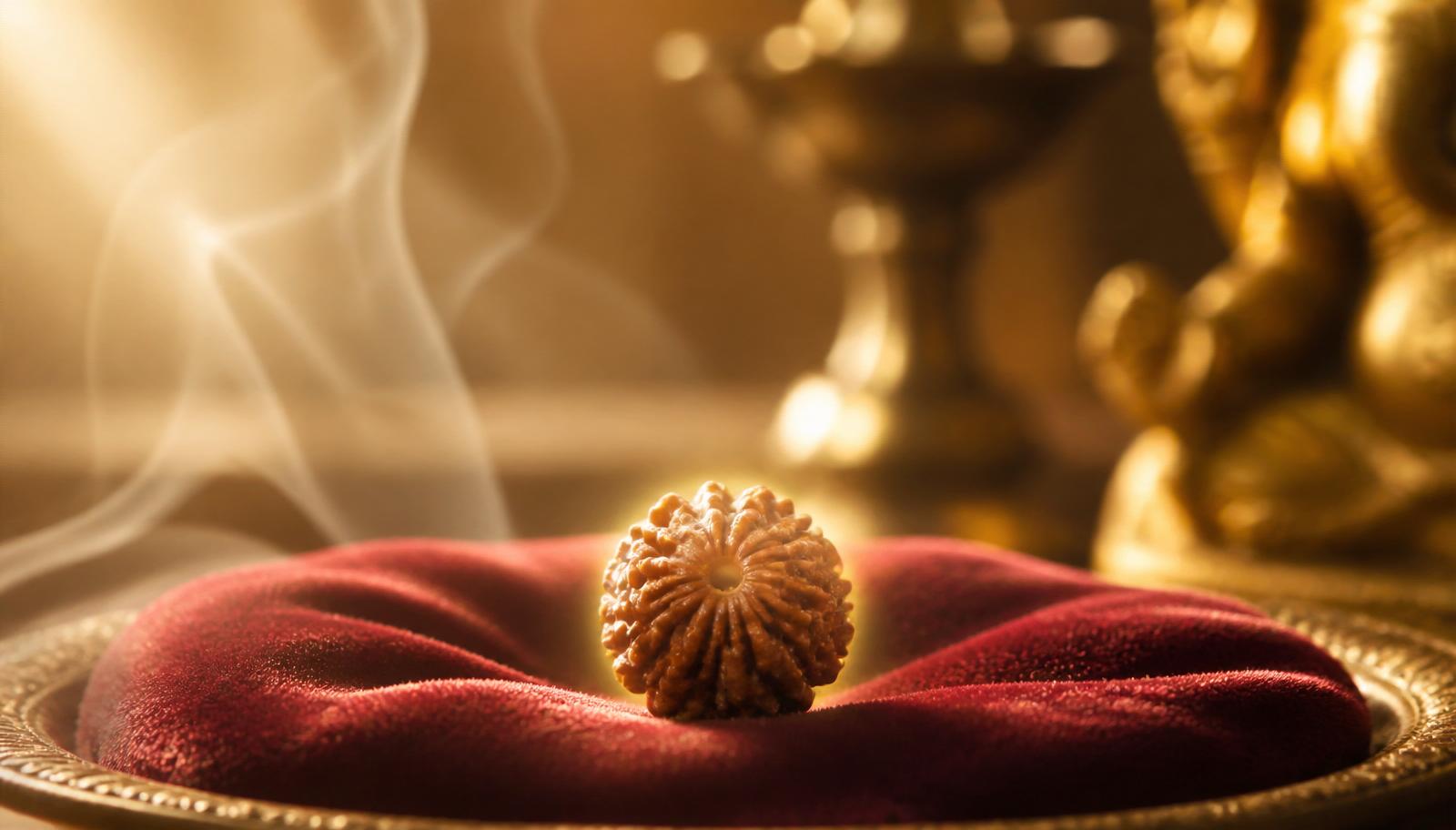
Ask a modern scientist what a Rudraksha is and you will get a botanical answer: the dried seed of Elaeocarpus ganitrus, a tree that grows in the Himalayan foothills, Nepal and parts of Indonesia. Ask the same question in a traditional Indian household and the answer is very different — it is Shiva's own bead, a carrier of blessing, a tool of sadhana. Neither answer cancels the other. To understand why Rudraksha has been worn continuously for well over a thousand years, you have to look at how India's ancient knowledge systems described it.
This guide walks through the four ancient frameworks that speak about Rudraksha most clearly: the Puranic texts, Ayurveda, Jyotish (Vedic astrology) and the yogic tradition. Wherever tradition makes a claim, we say so honestly — these are matters of faith and classical literature, not laboratory proof.
The Puranic Origin: Tears of Compassion
The word Rudraksha itself carries the story. *Rudra* is a name of Shiva; *aksha* means eye or tear. The Shiva Purana relates that Lord Shiva, after a long period of meditation performed for the welfare of the world, opened his eyes and tears of compassion fell to the earth. Where those tears landed, the Rudraksha tree grew.
Different Puranas tell the story with small variations — in some accounts the tears fell during Shiva's battle with the demon Tripurasura; in others they fell when Shiva saw the suffering of beings. The details differ, but the meaning is constant: Rudraksha is traditionally understood as a physical form of Shiva's compassion toward humanity.
This is why, in Shaiva tradition, wearing Rudraksha is not seen as wearing jewellery. It is considered wearing a reminder of the divine — which is also why traditional rules ask the wearer to keep the bead clean, handle it respectfully and remove it in situations considered impure.
What the Shastras Say About Wearing Rudraksha
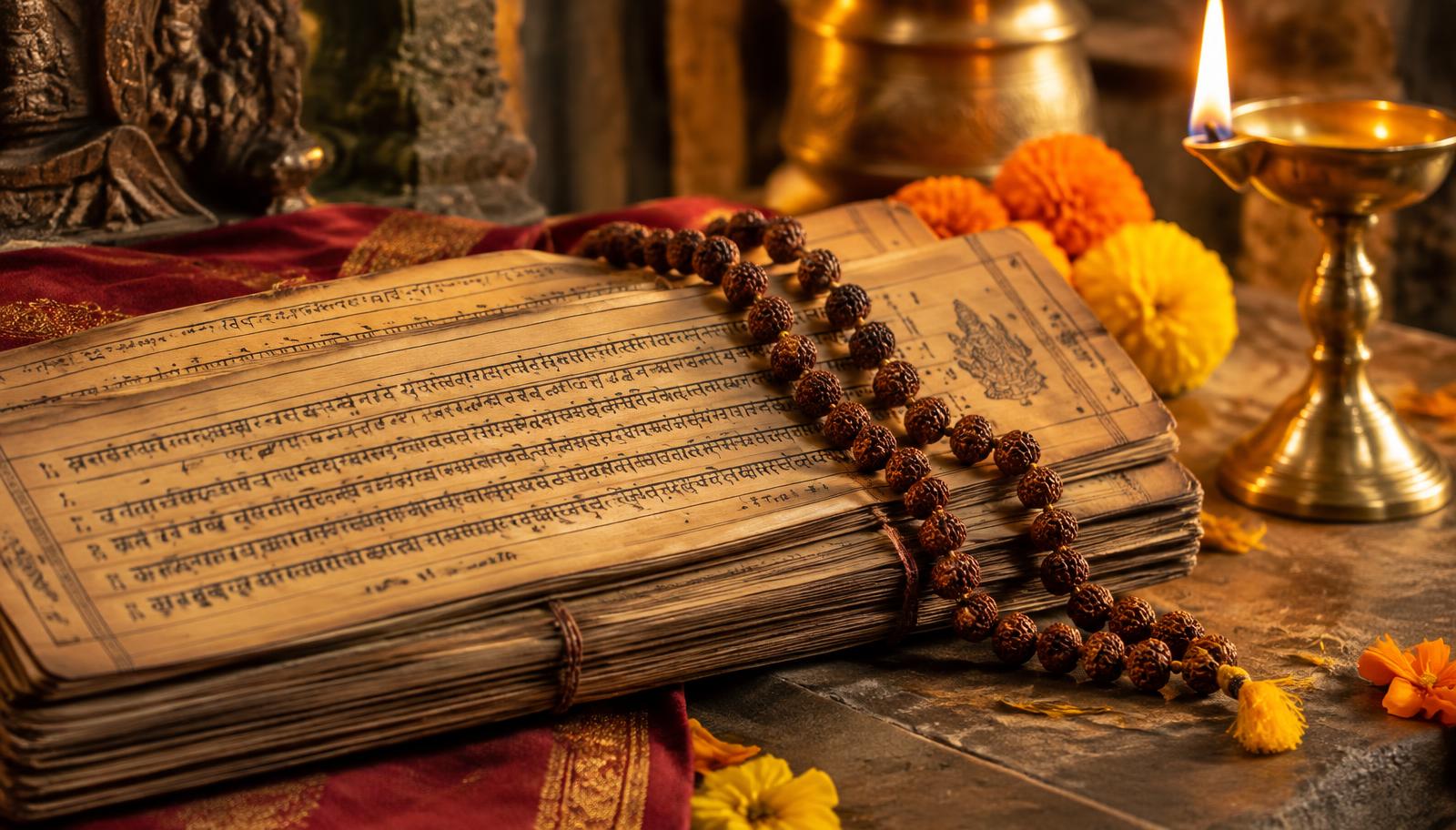
Several classical texts discuss Rudraksha directly, including the Shiva Purana, the Padma Purana, the Skanda Purana and the Rudraksha Jabala Upanishad — a short Upanishad devoted entirely to the bead. Common themes across these texts:
- Rudraksha is dear to Shiva. The texts describe the bead as pleasing to Lord Shiva and traditionally recommend it for his devotees.
- Wearing is a form of discipline. The texts associate Rudraksha with purity of conduct, regular worship and mantra practice — the bead supports the practice rather than replacing it.
- The mukhis matter. Classical verses assign different deities and qualities to beads with different numbers of faces (mukhis), from 1 Mukhi upward.
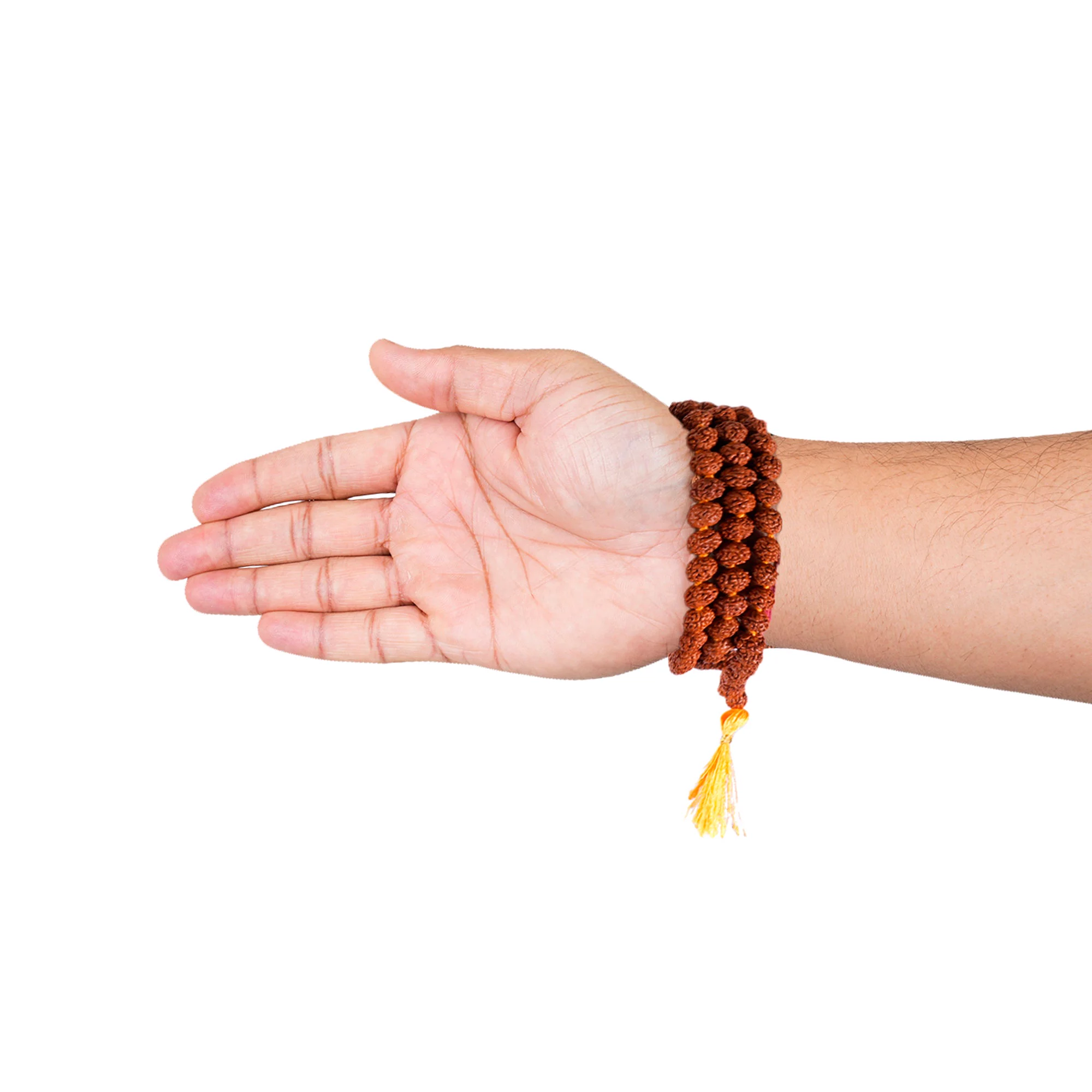
- Japa multiplies merit. Tradition holds that mantra recitation counted on a Rudraksha mala carries special merit, which is why the 108-bead mala became the standard japa tool.
Mukhis in Classical Literature
The classical mukhi system assigns each face count a ruling deity and a traditional association. A few widely cited examples:
| Mukhi | Traditional deity association | Traditional theme |
|---|---|---|
| 1 Mukhi | Lord Shiva himself | Detachment, highest consciousness |
| 2 Mukhi | Ardhanarishvara (Shiva-Shakti) | Harmony, relationships |
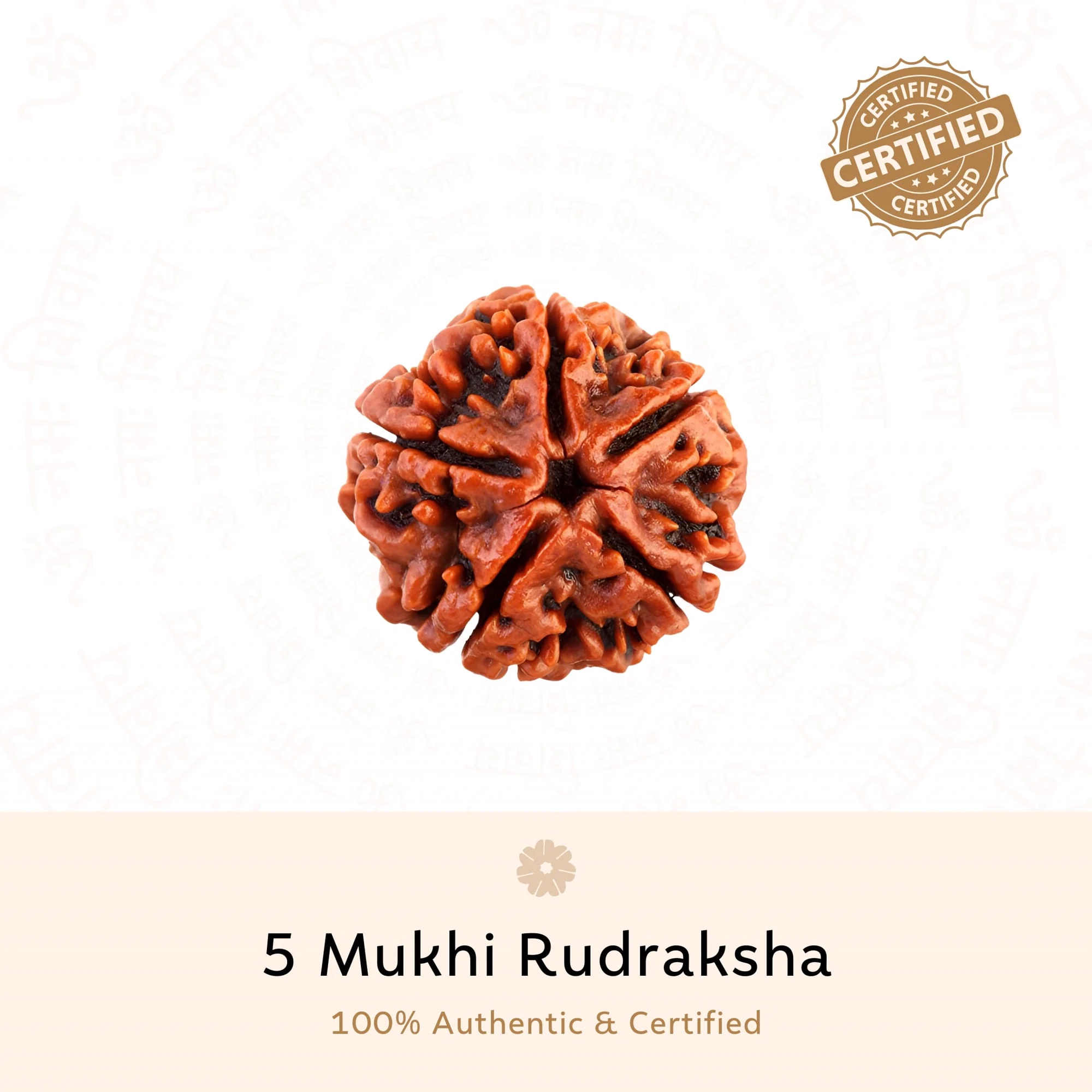
| 5 Mukhi | Kalagni Rudra | General wellbeing, the most commonly worn bead |
| 6 Mukhi | Kartikeya | Focus, willpower |
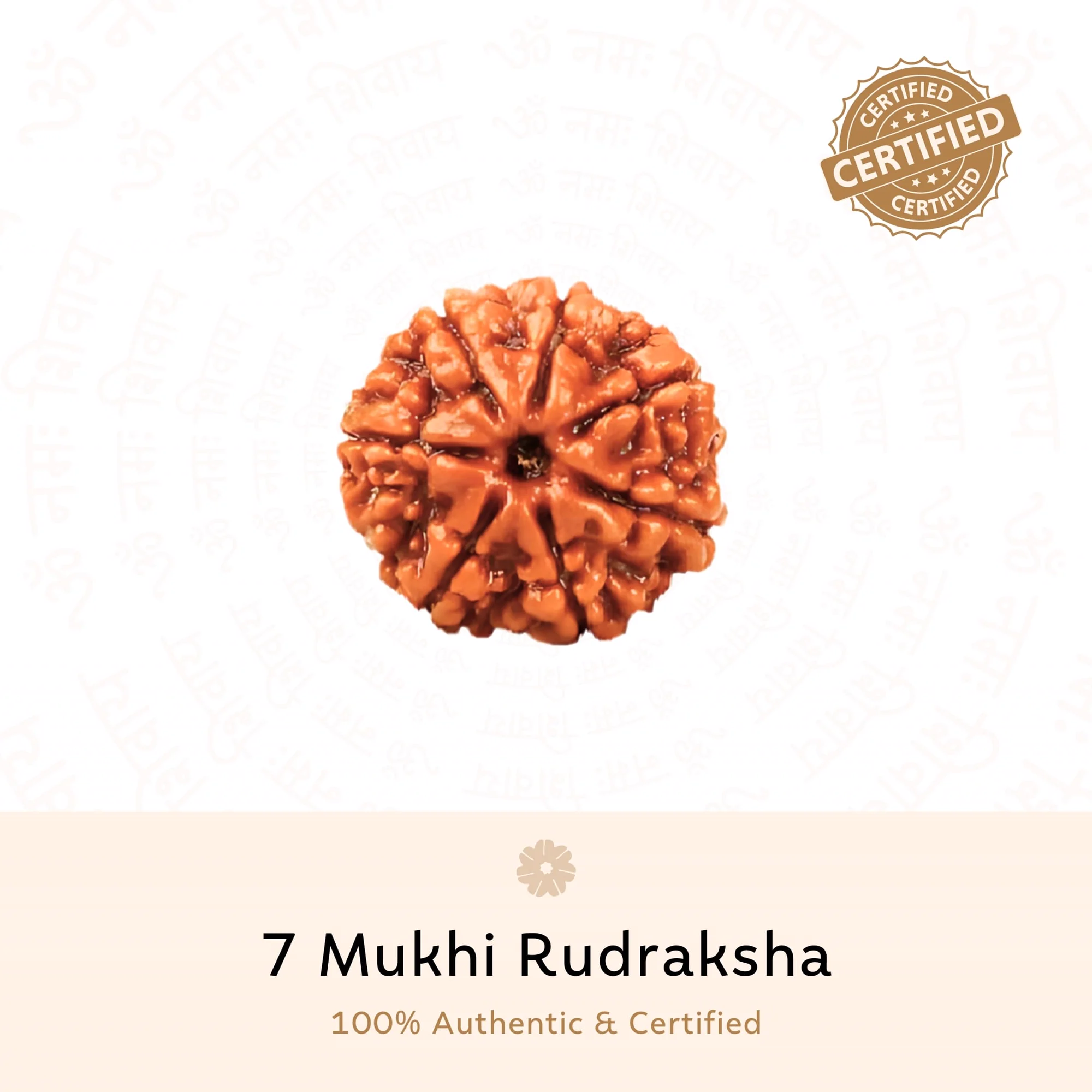
| 7 Mukhi | Mahalakshmi | Prosperity |
| 9 Mukhi | Goddess Durga | Courage, energy |
| 14 Mukhi | Hanuman / Shiva as Deva Mani | Protection, intuition |
These associations come from classical verses and centuries of commentary. They are the reason a devotee chooses a particular mukhi — not because the bead is a machine that delivers results, but because tradition connects each form with a specific quality to contemplate and cultivate.
Rudraksha in Ayurveda
Ayurveda, India's classical system of medicine, approaches Rudraksha from a different angle. Classical Ayurvedic and related traditional literature mentions Rudraksha in the context of calming preparations — beads were traditionally kept in water overnight and the water consumed, and powdered bead appears in some traditional formulations described in later compendia.
The framework Ayurveda uses is the tridosha system — Vata, Pitta and Kapha. Rudraksha is traditionally described as having a balancing, cooling influence, and wearing the bead on the skin is traditionally believed to have a steadying effect on a restless mind and an agitated constitution.
Important honesty note: these are traditional uses described in classical and folk literature. They are not recognised medical treatments, and modern clinical evidence is very limited. Rudraksha is not a medicine, and no bead should ever replace a doctor's advice, diagnosis or treatment.
Rudraksha in Jyotish (Vedic Astrology)
Jyotish, the classical astrological science, connects Rudraksha to planetary remedies. In this system, each mukhi is linked to a graha (planet), and wearing the corresponding bead is one of the traditional upayas (remedial measures) recommended when that planet is weak or troubled in a birth chart:
- 1 Mukhi — Surya (Sun): traditionally suggested for confidence and vitality themes.
- 2 Mukhi — Chandra (Moon): emotional balance and harmony.
- 4 Mukhi — Budha (Mercury): learning and communication.
- 5 Mukhi — Guru (Jupiter): wisdom and general wellbeing; this is why 5 Mukhi is considered safe for everyone.
- 6 Mukhi — Shukra (Venus): relationships and comfort.
- 7 Mukhi — Shani (Saturn): endurance through difficult Saturn periods.
- 8 Mukhi — Rahu and 9 Mukhi — Ketu: the shadow planets.
This planetary mapping is why a consultation matters. Wearing a bead matched to your chart is a different thing from buying whatever looks attractive. You can start with our free Rudraksha calculator or the Rudraksha by zodiac guide, and for a personal reading you can book a free consultation.
Rudraksha in the Yogic Tradition
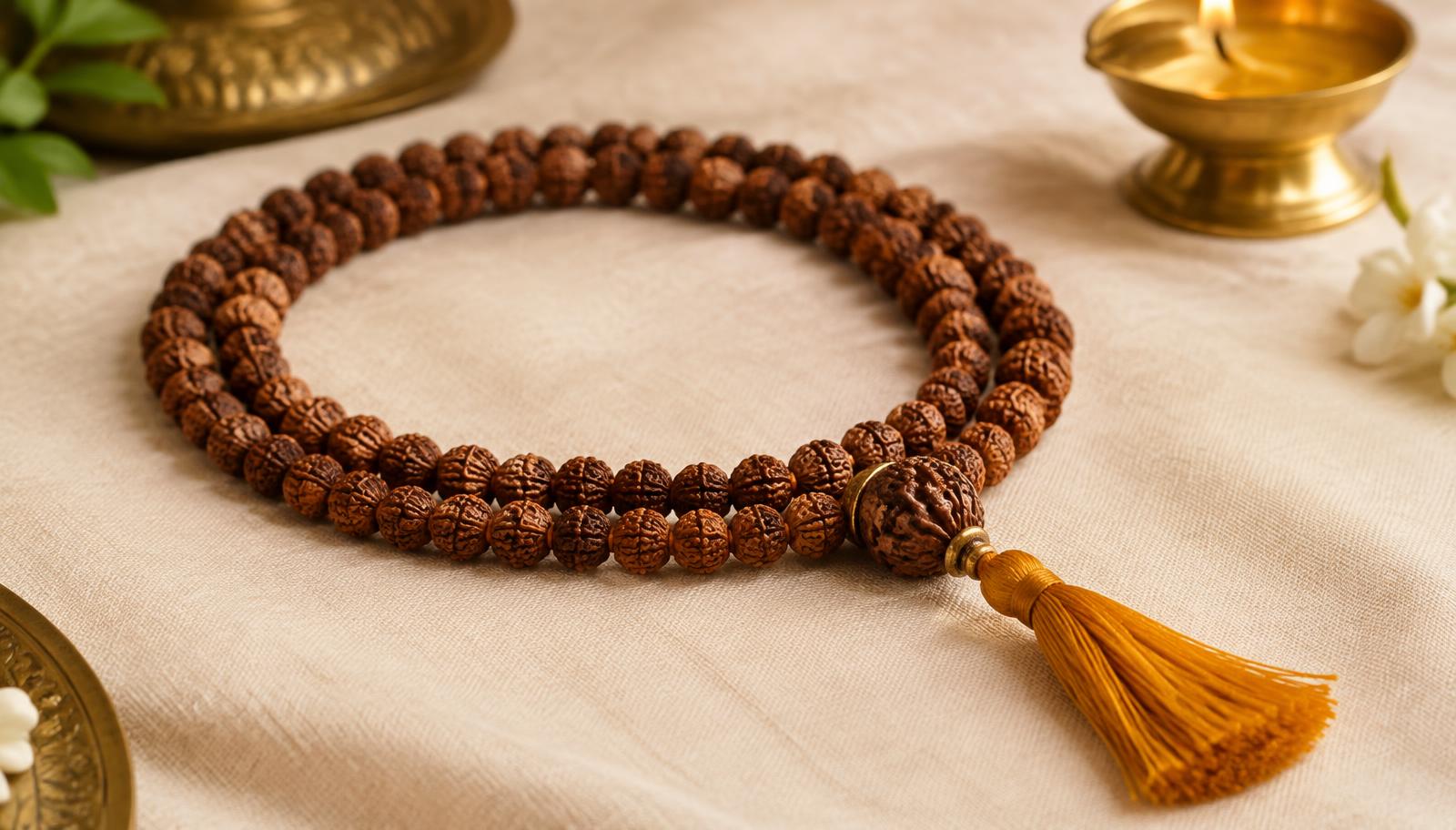
In yoga and tantra, Rudraksha is above all a practical tool. The 108-bead mala is the standard counting instrument for mantra japa: the fingers move bead by bead, the mind stays anchored to the mantra, and the count happens without mental arithmetic. Yogis have used Rudraksha malas for exactly this reason for centuries — the bead keeps the body busy so the mind can go deep.
Yogic tradition also describes Rudraksha as supportive for dharana (concentration) and dhyana (meditation). Wandering sadhus, Nath yogis and householder practitioners alike wear the bead as a marker of their path. In this tradition the value of Rudraksha is not magical — it is that a sacred object, treated with daily respect, slowly trains the mind toward steadiness.
If you want to begin a japa practice, read our Rudraksha japa mala guide and the powerful Shiva mantras for japa.
What Ancient Science Gets Right — and How to Read It Today
It is striking how much of the traditional guidance is simply sensible: wear a natural object that reminds you of your values; keep a daily practice; count your mantra on beads so the mind does not wander; choose your bead thoughtfully rather than impulsively. Stripped of religious language, this is a system for building calm, consistent habits — something every modern psychologist would recognise.
At the same time, honesty matters. Ancient texts are scripture, not clinical trials. We present what they say because our customers ask — but we will never tell you a bead will cure an illness or guarantee wealth. What tradition genuinely promises is a companion for your practice.
Choosing Your First Bead the Traditional Way
If the ancient sciences have one common message, it is this: begin simply. A genuine 5 Mukhi Rudraksha — the bead of Kalagni Rudra, linked with Jupiter and considered suitable for everyone — is the classical starting point. Wear it after proper energisation, keep a small daily practice, and let the relationship with the bead grow naturally.
Every bead at Mauhurtika is lab-certified, sourced from Nepal or Indonesia with the origin stated, and energised before dispatch. Explore certified Rudraksha beads, read how to identify an original Rudraksha, or see which Rudraksha is best for you.
Frequently Asked Questions
Frequently Asked Questions
Q.Which ancient texts mention Rudraksha?
The Shiva Purana, Padma Purana, Skanda Purana and the Rudraksha Jabala Upanishad discuss Rudraksha most directly, describing its origin, the meaning of the mukhis and rules for wearing and japa.
Q.What does 'Rudraksha' literally mean?
It comes from Rudra (a name of Shiva) and aksha (eye or tear) — traditionally understood as the tears of compassion Shiva shed for the world, from which the Rudraksha tree grew.
Q.Does Ayurveda really use Rudraksha?
Classical and folk Ayurvedic literature mentions Rudraksha in traditional calming preparations, such as bead-infused water. These are traditional practices, not recognised medical treatments — never replace a doctor's care with a bead.
Q.How is Rudraksha connected to planets in astrology?
Jyotish links each mukhi to a graha — for example 5 Mukhi to Jupiter, 7 Mukhi to Saturn and 2 Mukhi to the Moon — and traditionally recommends the matching bead as a remedial measure for that planet.
Q.Which Rudraksha does tradition recommend for beginners?
The 5 Mukhi Rudraksha. Classical texts describe it as suitable for everyone, and it is the bead most commonly worn for general wellbeing and japa practice.
Q.Do I need to follow all the ancient rules to wear Rudraksha?
Traditional rules — cleanliness, respectful handling, removing the bead in impure situations — are matters of personal devotion. Follow what your family tradition and conscience suggest; sincerity matters more than perfection.