Capricorn (Makara Rashi): Personality, Career, Love & Rudraksha
A Vedic-astrology view of Makara Rashi: Saturn's rulership, earth element, sidereal dates, Sun sign vs Moon sign, traditional traits, career and relationship tendencies, and the Rudraksha traditionally linked with Capricorn.
Makara (Capricorn) is the tenth sign of the zodiac. In Vedic astrology it is an earth sign ruled by Saturn (Shani). It is traditionally associated with patience, responsibility and slow, steady achievement. The Rudraksha most often linked with Makara Rashi in traditional practice are 7 Mukhi and 14 Mukhi.
Everything in this guide describes traditional Vedic (Jyotisha) associations. Astrology is a cultural and spiritual framework, not a proven science, and no description of a sign can define an individual. Use it as a lens for reflection, not as a verdict.
Capricorn / Makara Rashi at a Glance
| Attribute | Traditional association |
|---|---|
| Sign number | 10th of 12 |
| Sanskrit name | Makara |
| Symbol | Makara — a mythic sea-creature; in Western astrology, the sea-goat |
| Element | Earth (Prithvi) |
| Quality | Movable (Chara) |
| Ruling planet | Saturn (Shani) |
| Exalted planet | Mars (Mangal) |
| Debilitated planet | Jupiter (Guru) |
| Nakshatras | Uttara Ashadha (padas 2–4), Shravana, Dhanishta (padas 1–2) |
| Natural house | 10th — career, status, public life |
The Capricorn Symbol
In Indian tradition the Makara is a composite water creature, often shown with features of a crocodile, fish and elephant. It is the vahana of Goddess Ganga and of Varuna, and appears on temple gateways and in jewellery as the makara-kundala. Western astrology depicts the sign as a goat with a fish's tail. Both images join land and water — a fitting picture for a sign associated with climbing patiently from humble beginnings.
Element and Ruling Planet
As an earth sign, Makara is traditionally associated with practicality, structure and tangible results. Its ruler Saturn is the planet of time, discipline, karma and endurance in Jyotisha. Saturn rewards effort sustained over long periods and is seen as a strict but fair teacher. Mars is exalted here, which astrologers interpret as disciplined, well-directed energy.
Vedic Dates and the Sun Sign vs Moon Sign
Western (tropical) astrology places the Sun in Capricorn from roughly 22 December to 19 January. Vedic astrology uses the sidereal zodiac, which is currently about 24 degrees behind, so the Sun traditionally enters Makara around 14–15 January (the festival of Makar Sankranti) and stays until about 12–13 February. Exact dates vary by a day from year to year.
More importantly, in Vedic practice your Rashi usually means your Moon sign — the sign the Moon occupied at your birth — not your Sun sign. The Moon changes sign roughly every two and a quarter days, so you need your exact birth date, time and place to know it. Our free Rashi Finder works this out for you.
Traditional Personality Traits
Classical and modern astrologers commonly describe Makara natives as:
- Patient, methodical and willing to work towards long-term goals
- Responsible and dependable, often taking on duty early in life
- Reserved, practical and cautious with new people
- Respectful of tradition, structure and earned authority
- Dry in humour and quietly ambitious
Strengths
- Discipline and perseverance
- Planning and organisation
- Loyalty and reliability
- Calm under pressure
Challenges
- A tendency towards pessimism or excessive caution
- Overwork and difficulty relaxing
- Holding emotions back, which others can read as coldness
- Rigidity when plans change
Career Tendencies
With the 10th house as its natural home, Makara is traditionally linked with careers built through structure and gradual promotion: administration and government service, management, finance and accounting, engineering, construction and real estate, law, mining and agriculture, and long-term entrepreneurship. Astrologers often say Capricorn success comes later but lasts longer.
Money and Financial Approach
Traditional descriptions see Makara as a saver and planner — cautious with risk, drawn to property and steady investments, and uncomfortable with debt. The usual advice is to balance prudence with generosity and allow some enjoyment along the way.
Relationships and Compatibility
In love, Makara is described as slow to open up but deeply committed once trust is built, expressing care through practical support rather than words. Traditional compatibility lists often pair Makara well with the other earth signs (Vrishabha/Taurus, Kanya/Virgo) and with the water signs Vrischika (Scorpio) and Meena (Pisces), with its opposite Karka (Cancer) seen as complementary but demanding.
Lucky Colours and Numbers (Traditional)
Because Saturn rules the sign, traditional lists often give dark blue, black and grey as favourable colours, 8 as the associated number, and Saturday as the significant day. These appear in folk astrology and vary between sources.
Spiritual Practices for Makara Rashi
- Worship of Lord Shiva and Lord Hanuman, both traditionally said to soften Saturn's challenges
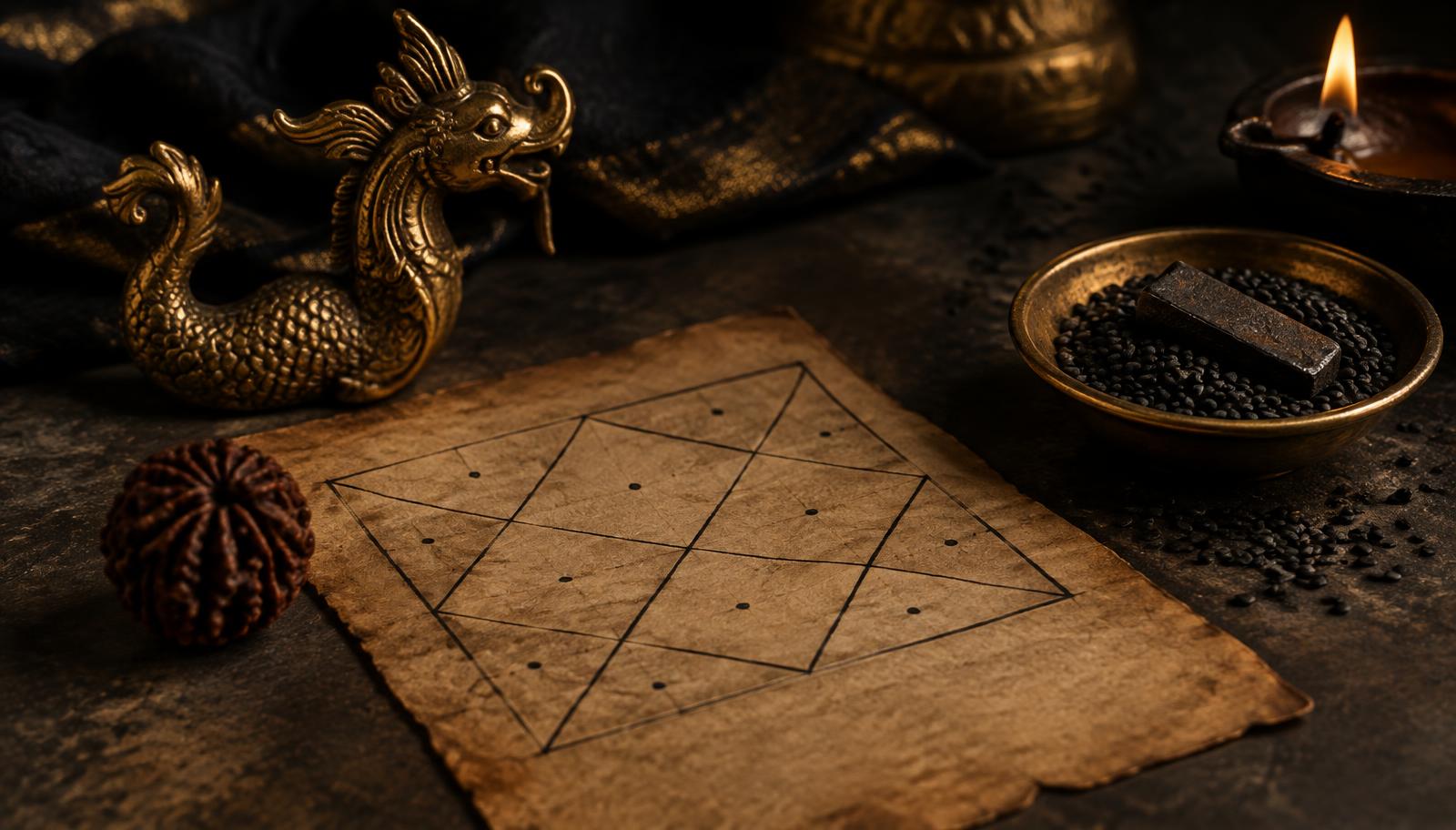
- Lighting a sesame-oil lamp on Saturdays
- Chanting the Shani mantra “Om Sham Shanaishcharaya Namah” or Hanuman Chalisa
- Service to elders, workers and those in need — Saturn is traditionally associated with seva
- Recitation of the 108 names of Lord Hanuman
Rudraksha Traditionally Associated With Capricorn
| Rudraksha | Traditional association | Why it is linked with Makara |
|---|---|---|
| 7 Mukhi | Goddess Mahalakshmi, Saturn | Traditionally recommended for Saturn-ruled signs; associated with stability and prosperity |
| 14 Mukhi | Lord Hanuman / Shiva, Saturn | Traditionally regarded as a strong Saturn bead; associated with intuition and courage |
Mauhurtika's Rudraksha for Capricorn page shows the beads currently available for Makara Rashi. You can also read our 14 Mukhi Rudraksha guide, use the Rudraksha Calculator or try the Rudraksha Finder for a recommendation based on your details.
These are traditional associations. Rudraksha is a spiritual practice and is not a substitute for professional, financial or medical advice.
Frequently Asked Questions
Q.Which planet rules Capricorn in Vedic astrology?
Saturn (Shani) rules Makara Rashi. Mars is traditionally exalted in this sign and Jupiter debilitated.
Q.What are the Vedic dates for Capricorn?
In the sidereal zodiac the Sun is in Makara from about 14–15 January to 12–13 February. But your Vedic Rashi normally refers to your Moon sign, which needs your birth time and place.
Q.Is my Rashi my Sun sign or Moon sign?
In Vedic astrology, Rashi usually means Moon sign. Use our Rashi Finder to calculate it.
Q.Which Rudraksha is recommended for Capricorn?
7 Mukhi and 14 Mukhi are the beads most often traditionally linked with Makara Rashi because of their association with Saturn.
Q.Which signs are traditionally compatible with Capricorn?
Traditional lists favour Taurus, Virgo, Scorpio and Pisces, but proper Vedic matching considers the full charts.
Q.Is astrology scientifically proven?
No. Vedic astrology is a traditional spiritual and cultural system. Use it for reflection, not as a scientific forecast.