Dakshineswar Kali Temple: History, Ramakrishna, Architecture and Complete Darshan Guide
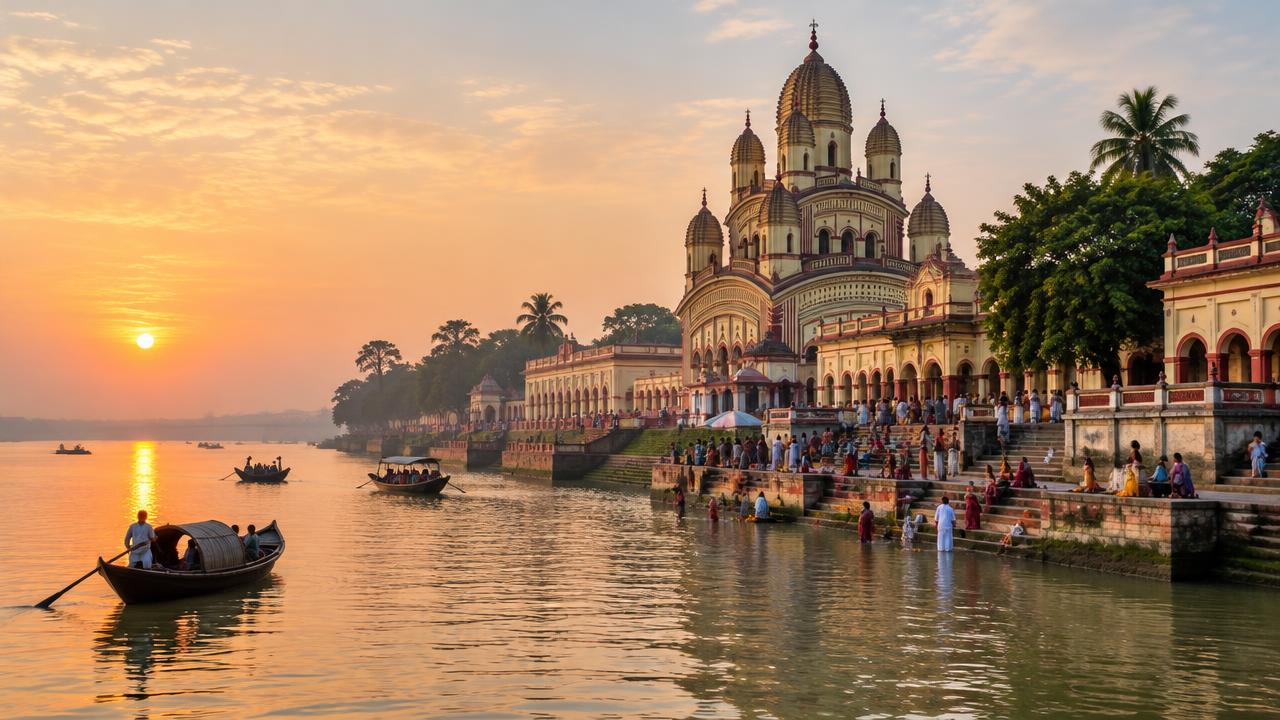
On the banks of the Hooghly near Kolkata stands Dakshineswar, home of Maa Bhavatarini and of Sri Ramakrishna's sadhana. Here is its history and a practical visitor guide.
Quick facts: Dakshineswar Kali Temple is on the east bank of the Hooghly River in North Kolkata, West Bengal. It was founded by Rani Rashmoni and consecrated in 1855. The presiding deity is Maa Bhavatarini, a form of Kali — “she who carries devotees across the ocean of existence”. The temple is world-famous as the place where Sri Ramakrishna Paramahamsa served as priest and practised his sadhana.
The Story of Rani Rashmoni
Rani Rashmoni was a wealthy, devout widow of Kolkata known for her charity and courage against injustice. According to tradition, she was preparing for a pilgrimage to Kashi when the Divine Mother appeared to her in a dream and asked her to build a temple on the banks of the Ganga instead and worship her there.
She bought land at Dakshineswar and construction took around eight years. Because she was born into a caste then considered low by orthodox priests, many refused to serve at the temple. Ramkumar Chattopadhyay agreed to become priest, and his younger brother Gadadhar — later known as Sri Ramakrishna — came with him. The temple was consecrated on the Snana Yatra day in May 1855.
Sri Ramakrishna and Dakshineswar
Ramakrishna soon became the priest of Maa Bhavatarini. His intense longing to see the Mother directly, his ecstatic states and his experiments with many spiritual paths — Tantra, Vaishnava devotion, Advaita Vedanta, and even Islamic and Christian practices — made Dakshineswar a spiritual landmark. His wife Sri Sarada Devi lived in the Nahabat nearby, and his young disciple Narendranath — later Swami Vivekananda — met him here.
Visitors can still see Ramakrishna's room in the north-west corner of the courtyard, the Panchavati grove where he meditated, and the Nahabat. For many pilgrims, these places are as important as the main shrine.
Architecture of the Temple
- Navaratna style: The main temple follows the Bengal *navaratna* (nine-spire) style, standing on a high platform with steps.
- Sanctum: Maa Bhavatarini stands on the chest of Shiva lying on a silver thousand-petalled lotus.
- Twelve Shiva temples: A row of twelve identical *aatchala* Shiva temples lines the riverfront ghat.
- Radha-Krishna temple: Dedicated to Radha and Krishna (Radhakanta) in the same complex.
- Ghats: Bathing ghats on the Hooghly where devotees take a dip and offer prayers.
Darshan Tips and Timings
The temple usually opens early in the morning, closes for a few hours in the afternoon, and reopens until night. Timings change seasonally and on festival days, so check the official Dakshineswar Kali Temple information before visiting.
- Best time: Early morning, on weekdays, to avoid long queues.
- Festivals: Kali Puja (Diwali night), Snana Yatra (foundation day), and Ramakrishna's birth anniversary attract huge crowds.
- Dress: Modest clothing; footwear and phones are typically deposited at counters before entering the sanctum area.
- Photography: Not allowed inside the main shrine.
- Offerings: Red hibiscus flowers, sweets and incense are sold outside.
How to Reach Dakshineswar
- Metro: Dakshineswar Metro Station is the northern terminus of Kolkata Metro's Blue Line, with a skywalk to the temple.
- Train: Dakshineswar railway station on the Sealdah–Dankuni line is a short walk away.
- Road: About 10–15 km from central Kolkata, near the Vivekananda Setu and Nivedita Setu bridges.
- Ferry: River ferries connect Dakshineswar to Belur Math, headquarters of the Ramakrishna Mission, across the river — a popular combined visit.
Kali Worship and Rudraksha
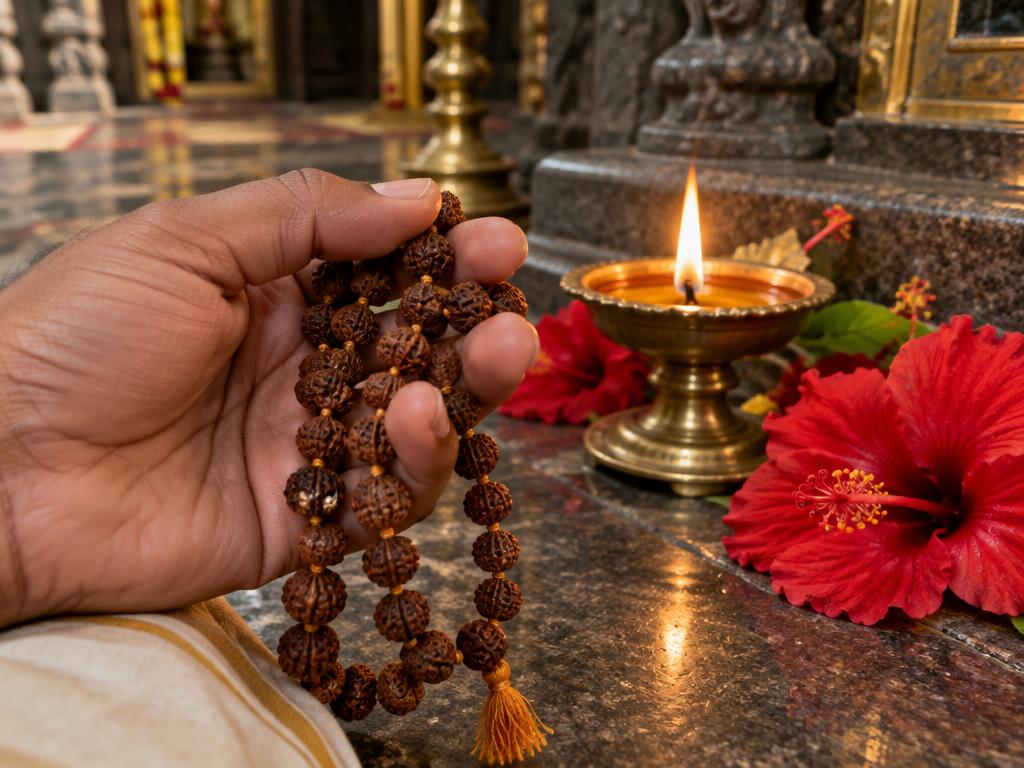
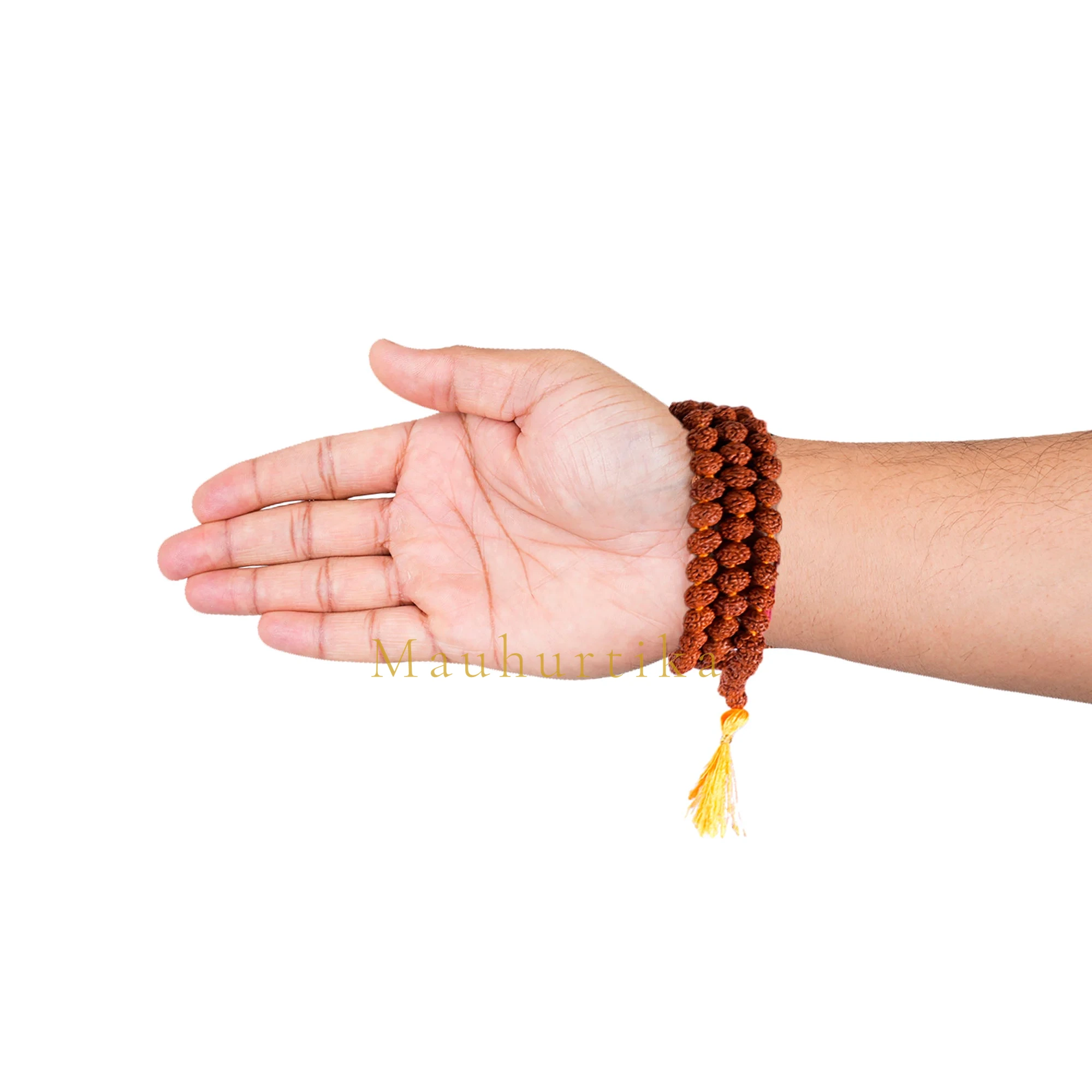
Many Kali devotees chant on a Rudraksha mala. In Rudraksha traditions, the 9 Mukhi Rudraksha is associated with Goddess Durga and Shakti forms, and the 5 Mukhi mala is the most common japa mala. Protective kavach pendants are chosen by some devotees as a reminder of the Mother's protection. These are devotional associations, not guarantees.

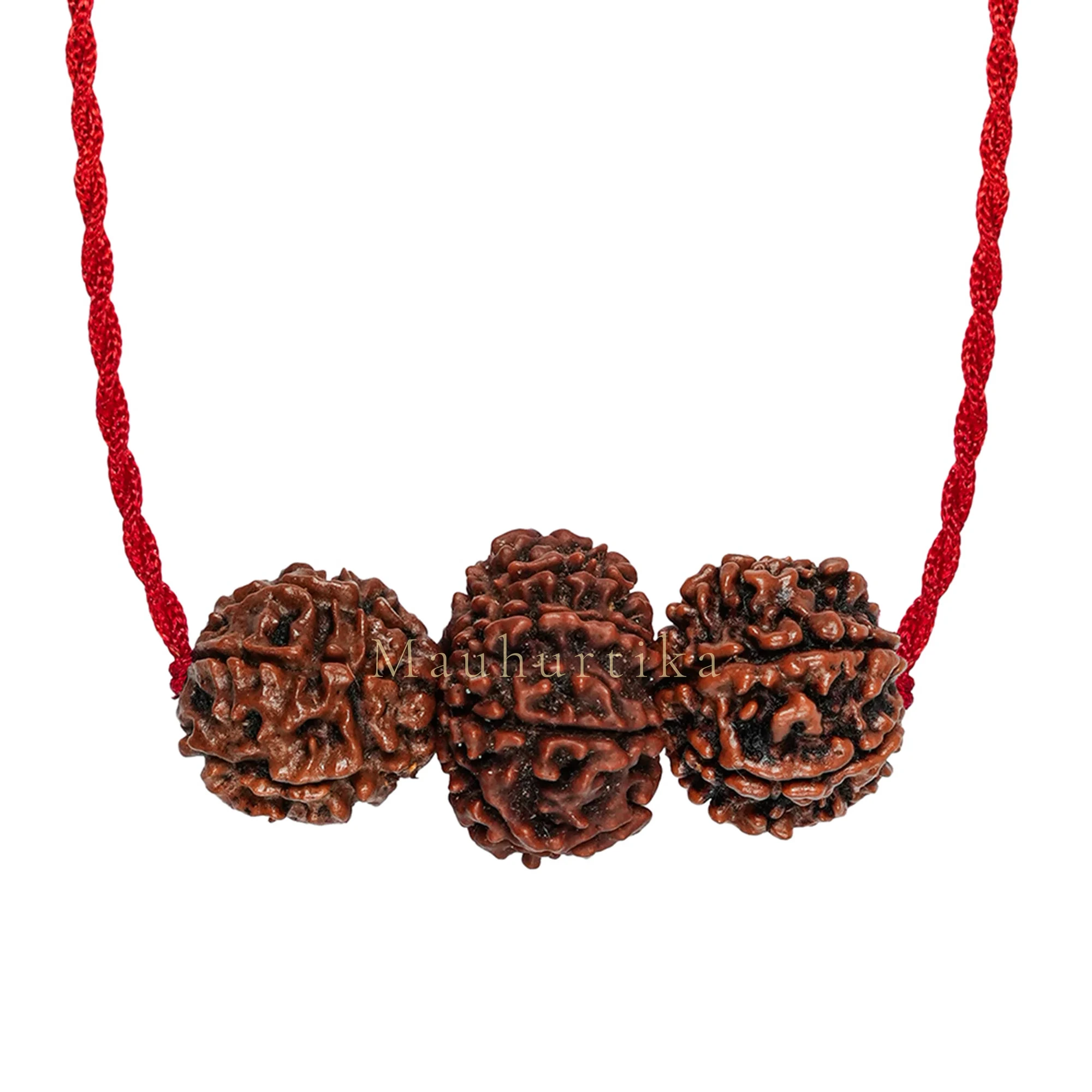
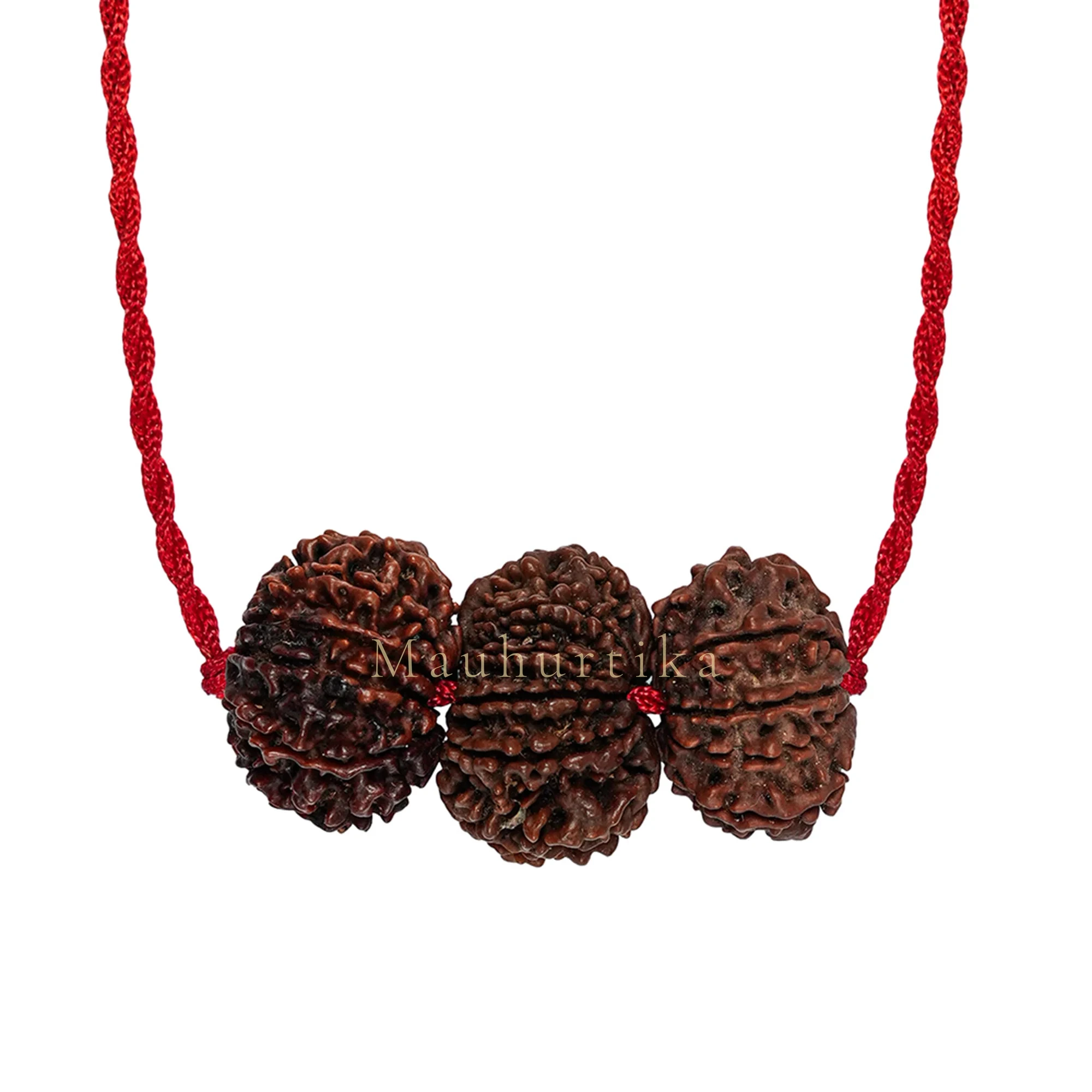
Plan more pilgrimages with our list of the most powerful Kali temples in India, read about Ambubachi Mela 2027 at Kamakhya or see Rudraksha guidance for Kolkata.
Frequently Asked Questions
Q.Who built Dakshineswar Kali Temple?
Rani Rashmoni, a philanthropist of Kolkata, built it after a dream of the Divine Mother. It was consecrated in 1855.
Q.Which goddess is worshipped at Dakshineswar?
Maa Bhavatarini, a form of Kali, standing on Lord Shiva.
Q.What is the connection between Ramakrishna and Dakshineswar?
Sri Ramakrishna served as priest of the temple and performed his spiritual practices here for about thirty years.
Q.How do I reach Dakshineswar Temple?
Take the Kolkata Metro Blue Line to Dakshineswar station, the suburban train to Dakshineswar, a road vehicle, or a ferry from Belur Math.
Q.Is photography allowed inside Dakshineswar Temple?
Photography is not permitted inside the main shrine; follow the rules displayed on site.