Real vs Fake Rudraksha: 12 Tests to Identify an Original Bead (2026)
How to tell an original Rudraksha from a fake — X-ray compartment counts, grain and mukhi tests, the truth about the water and copper coin tests, and what a genuine IGL/GTL certificate looks like.
Quick answer: The only conclusive test for a real Rudraksha is an X-ray or CT scan showing internal compartments that match the external mukhi count, backed by an IGL or GTL lab certificate with a verifiable report number. The popular water-sink test, copper-coin rotation test and milk test are not reliable and can be faked easily.
Rudraksha fraud is a real, industrial problem. Fakes fall into four categories: plastic and resin moulds, cheaper seeds like bhadraksha or areca carved to look like Rudraksha, genuine low-mukhi beads with artificially carved extra lines, and glued composites where two beads are joined to imitate a Gauri Shankar. This guide gives you the tests that actually work, in order of reliability.
The Reliability Ladder — Which Tests Actually Prove Anything
| Test | What it shows | Reliability | Can be faked? |
|---|---|---|---|
| X-ray / CT scan | Internal compartments vs external mukhi | Conclusive | No |
| Lab certificate (IGL / GTL) | Species, origin, mukhi count | Conclusive | Only by forged paperwork — verify the report number |
| 10x loupe grain inspection | Carving marks across the mukhi line | High | Very difficult |
| Mukhi line continuity check | Lines run pole to pole, unbroken | High | Difficult |
| Surface texture & thorn pattern | Natural irregularity | Medium | Possible with resin casts |
| Weight & density feel | Hollow plastic feels light | Medium | Possible with weighted resin |
| Hot needle test (destructive) | Plastic melts, seed chars | Medium | No, but it damages the bead |
| Water sink / float test | Nothing conclusive | Low | Yes |
| Copper coin rotation test | Nothing conclusive | Low | Yes |
| Milk colour-change test | Nothing conclusive | Low | Yes |
Test 1 — X-Ray the Bead (the gold standard)
Every genuine Rudraksha has internal seed compartments, and their count equals the number of external mukhi lines. A 7 Mukhi bead must show 7 chambers. Carved fakes fail instantly: the surface says 7, the X-ray says 3. This is why Mauhurtika X-rays every high-value bead before dispatch and ships the scan with the order — see examples on our Rudraksha certificate page.
Test 2 — Read the Certificate Properly
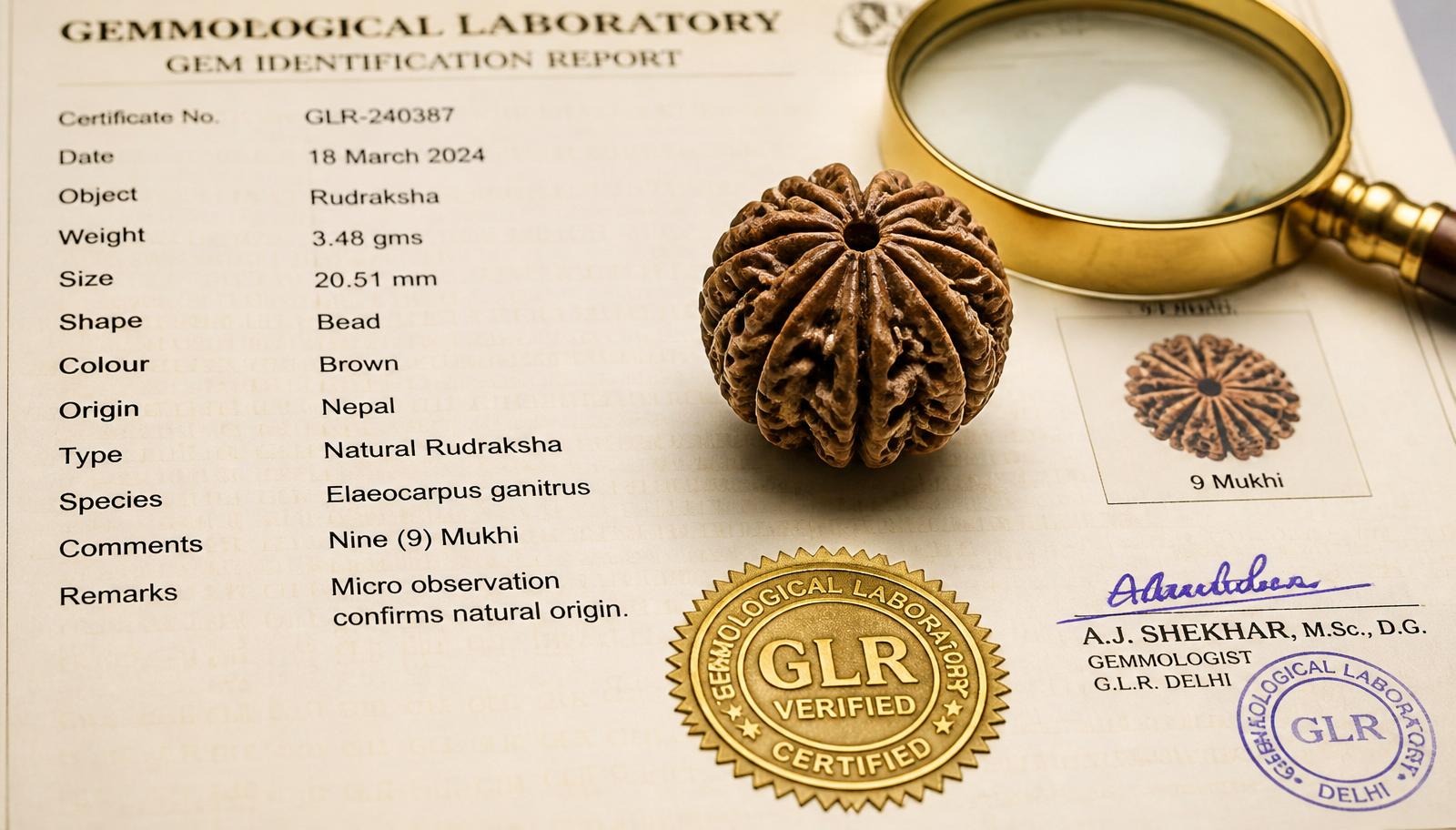
A real certificate names the issuing lab (IGL, GTL, Vegga and other recognised gem labs), carries a unique report number you can verify with the lab, states the botanical species *Elaeocarpus ganitrus*, records the mukhi count, dimensions in mm and weight, and includes a photograph of the exact bead. Reject any 'certificate' that is a generic printed card with no report number.
Test 3 — Follow Each Mukhi Line End to End
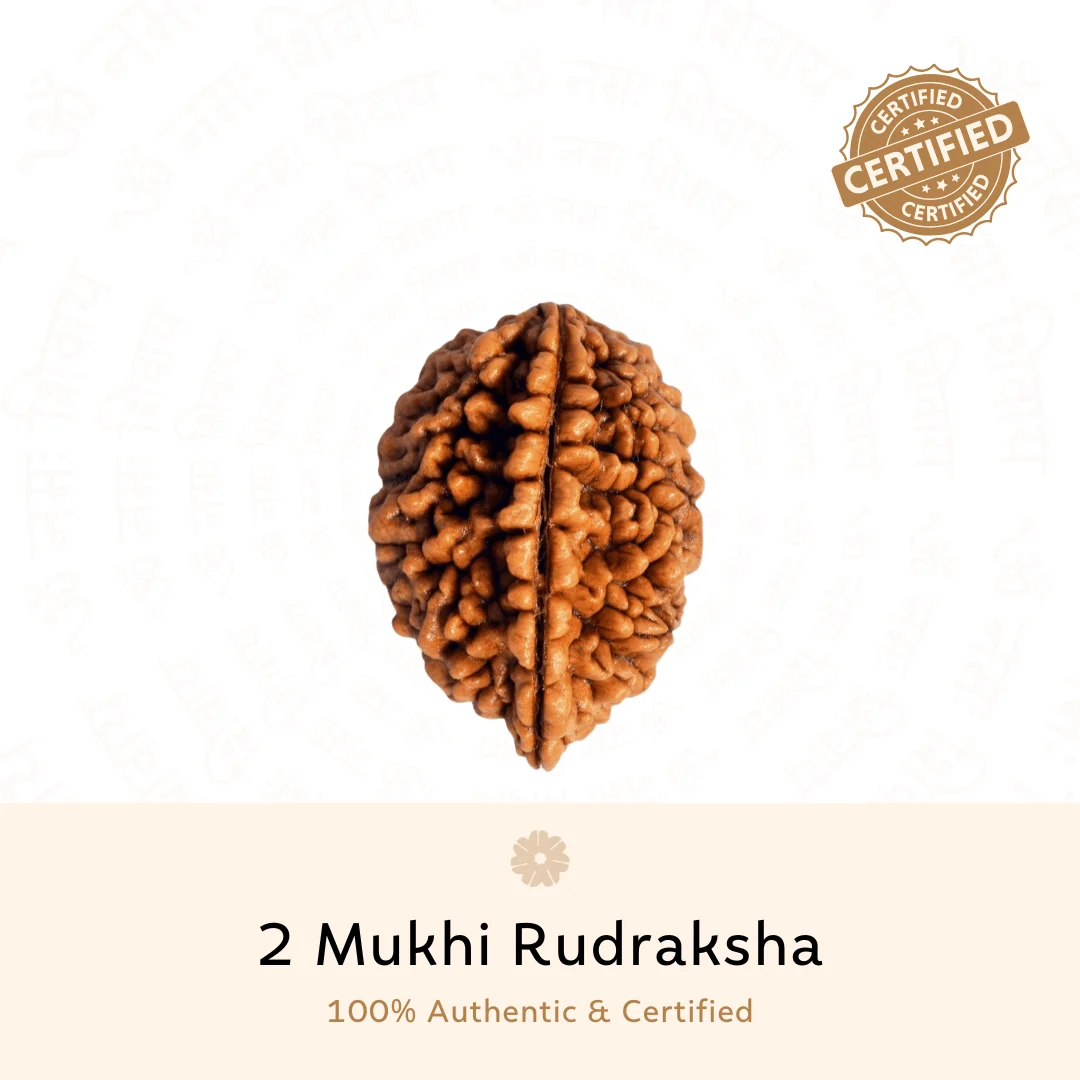
Natural mukhi lines run continuously from the top hole to the bottom hole and follow the bead's natural contour, sometimes waving slightly. Carved lines stop short, run unnaturally straight, or change depth abruptly where the tool lifted.
Test 4 — Look for Tool Marks Under 10x Magnification
Buy a ₹200 jeweller's loupe. On a carved bead you will see parallel scratch striations inside the groove and fresh, lighter-coloured fibre where the outer skin was cut away. Natural grooves show the same aged patina inside as outside.
Test 5 — Check the Thorn Pattern
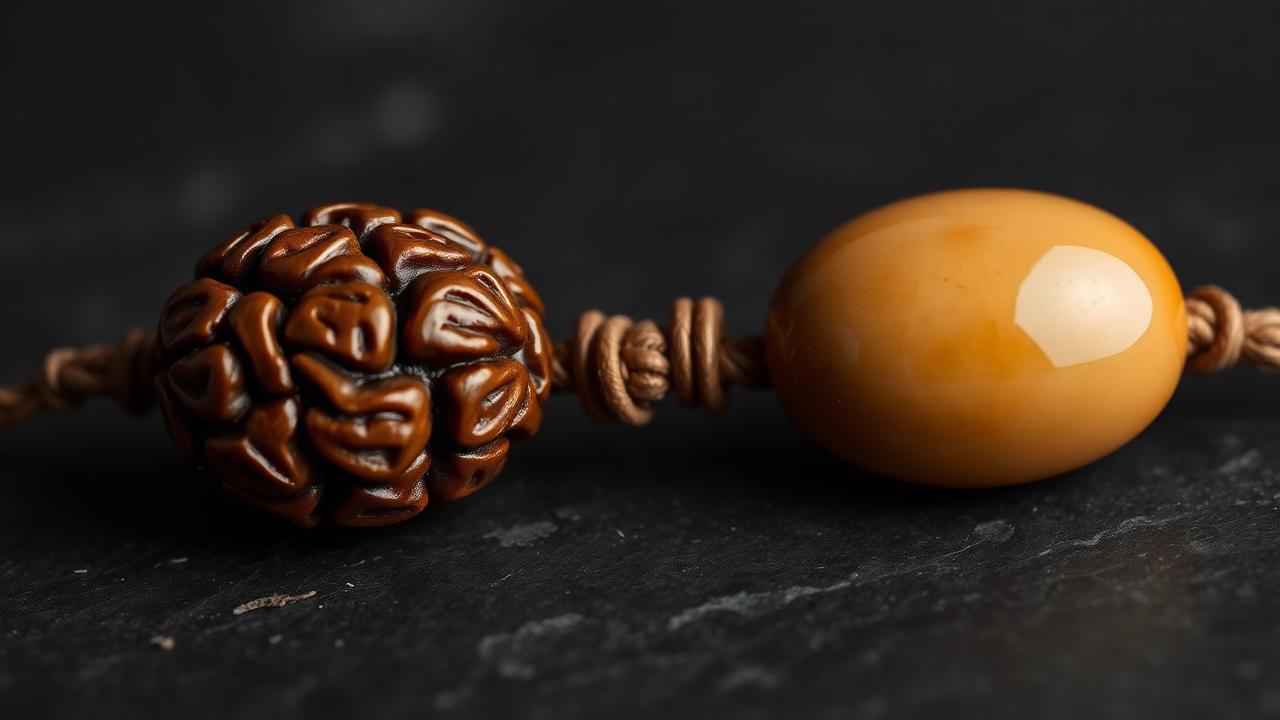
The raised 'thorns' between mukhi lines on a natural Nepali bead are irregular in size and spacing. Resin moulds repeat a pattern — if you can find two identical thorn clusters on the same bead, or the same pattern on two beads in a lot, it is a mould.
Test 6 — Inspect the Drill Hole
A naturally drilled bead shows fibrous seed material inside the hole. Plastic shows a smooth glossy bore, and glued composites show a seam or adhesive residue near the join.
Test 7 — The Gauri Shankar Join Test
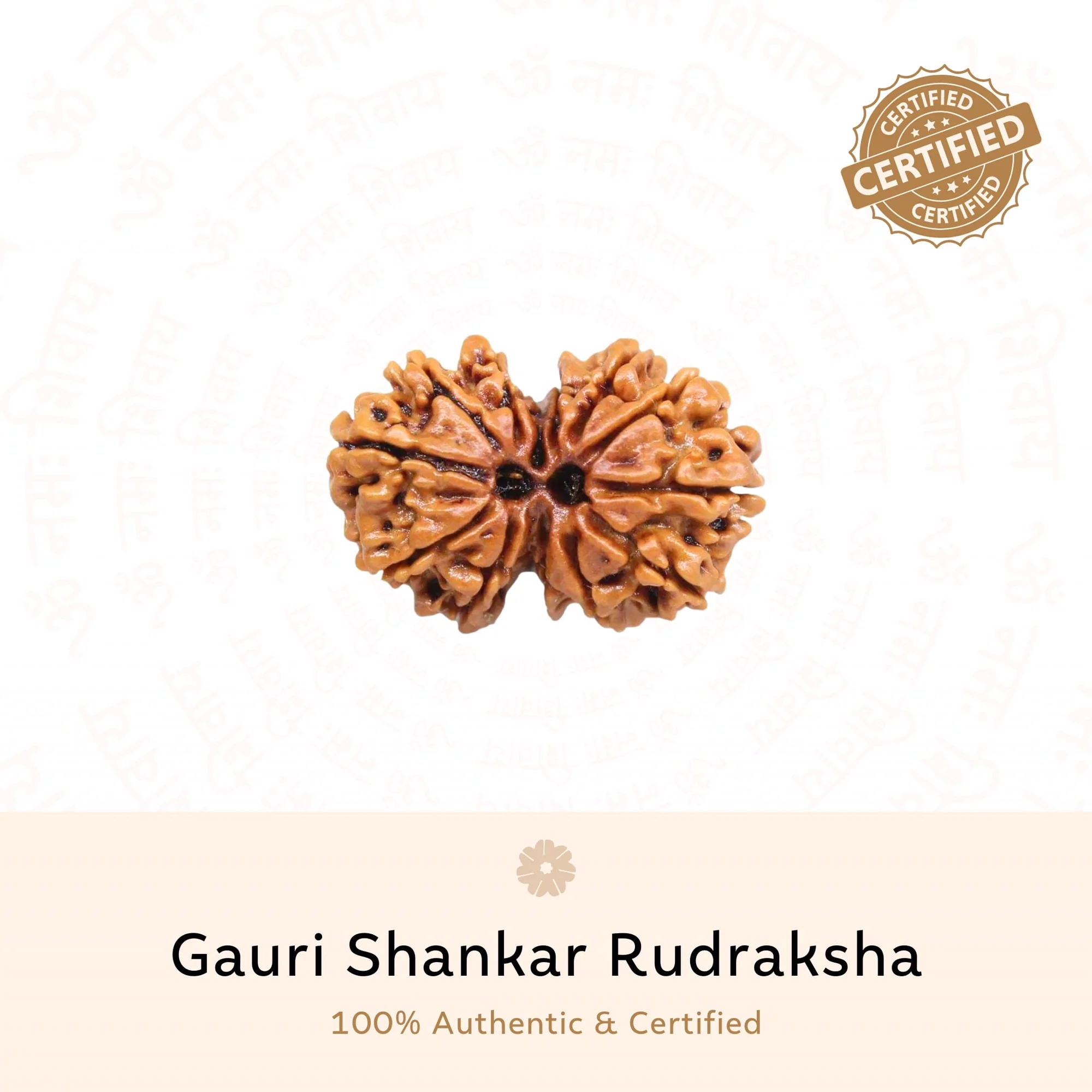
A genuine Gauri Shankar is two beads fused while growing — there is a continuous natural ridge and the mukhi lines of both halves flow into the join. Fakes are two ordinary beads glued and polished; hold the join under strong light and look for adhesive sheen or a perfectly straight seam.
Test 8 — Weight and Density Sanity Check
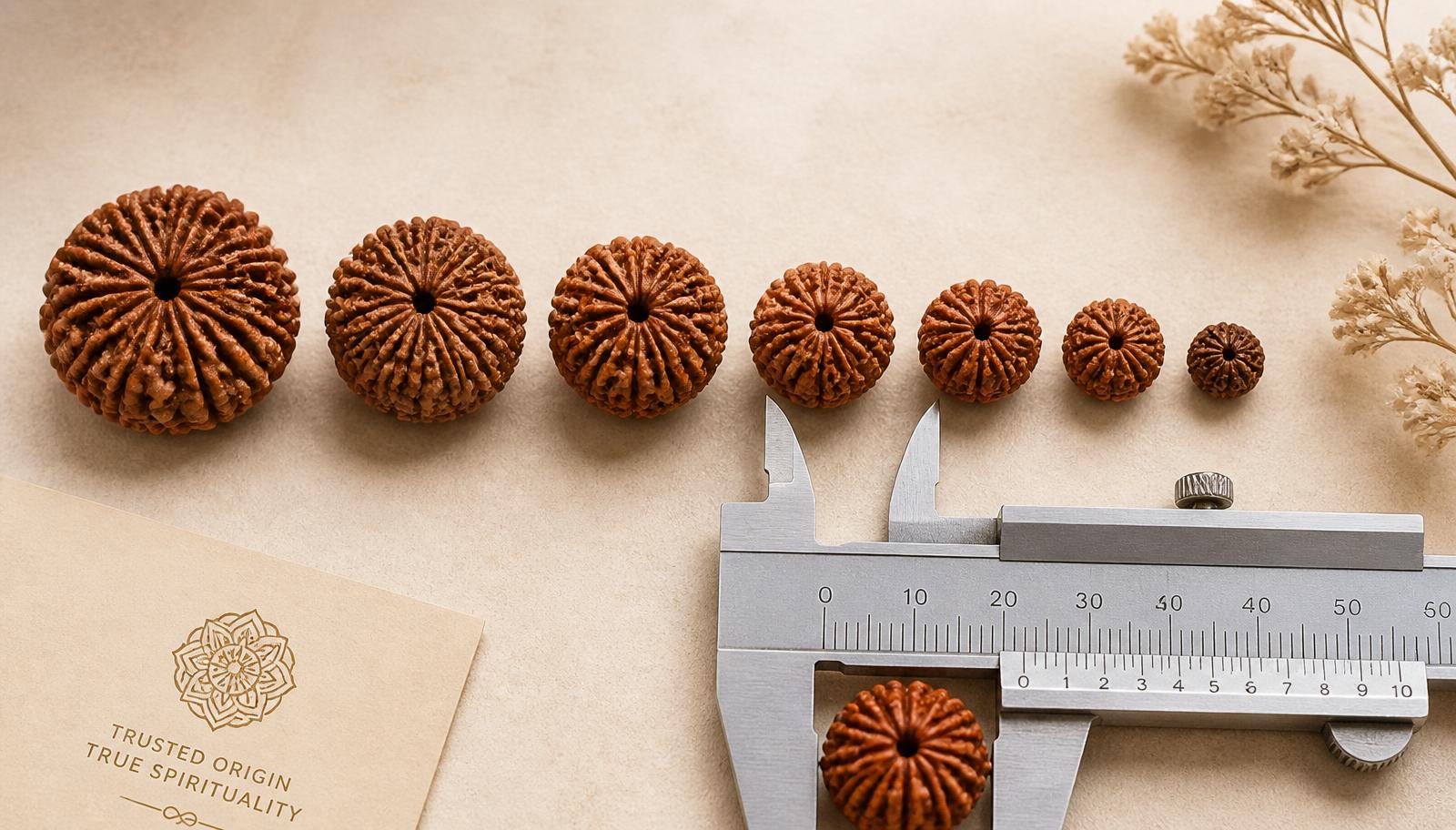
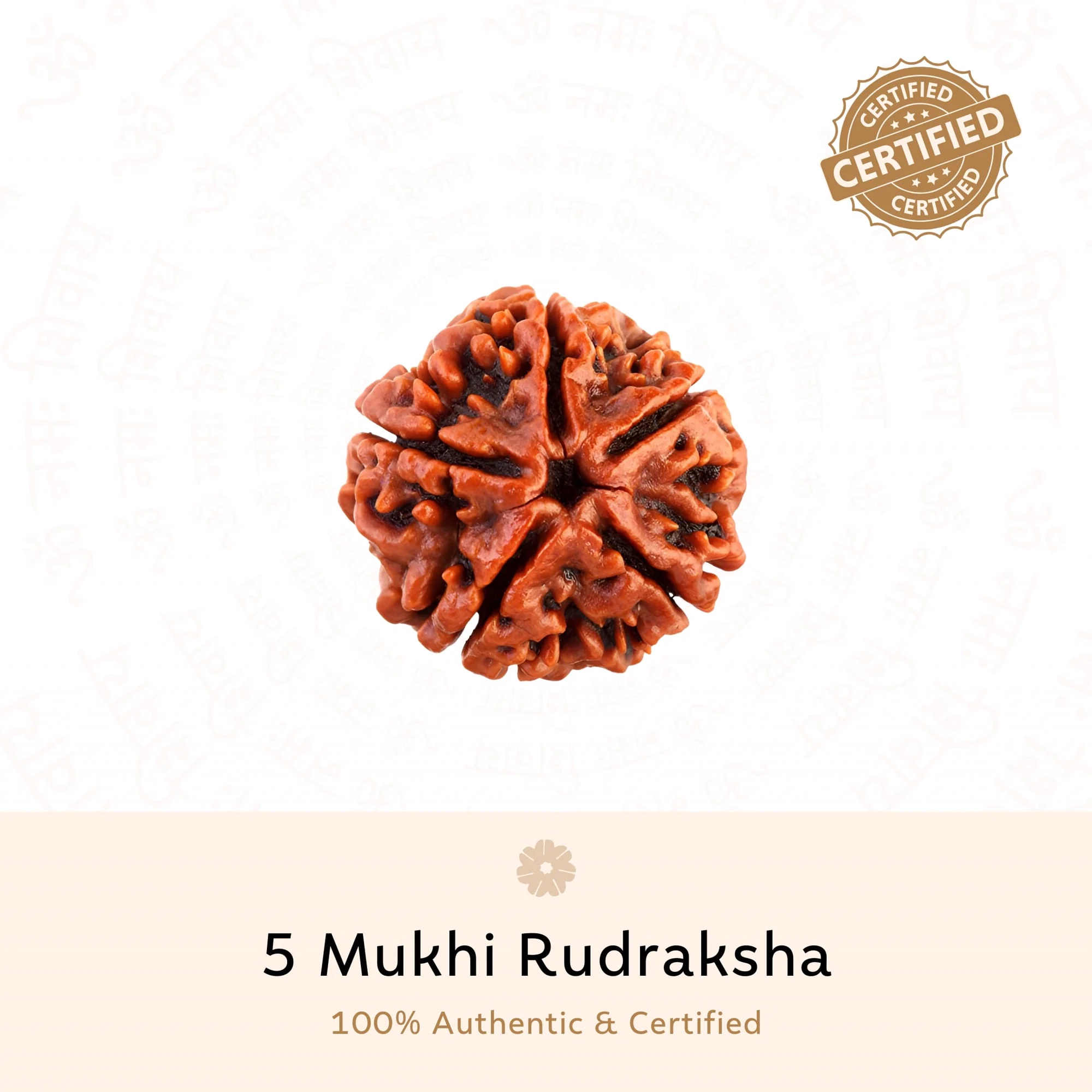
A Nepali 5 Mukhi of 22–24 mm typically weighs about 2.5–4 g. A hollow plastic bead of the same size feels conspicuously light; an over-weighted resin bead feels dead and cold, with none of the warm feel of seed material.
Test 9 — Soak, Don't Boil
Soak a bead in room-temperature water for 24 hours. Natural Rudraksha absorbs a little water and may release a faint brown tint from the natural oils. Painted fakes release colour heavily and turn the water cloudy. Never boil a bead — it damages a genuine one.
Test 10 — The Hot Needle Test (last resort only)
Touch a heated needle to an inconspicuous spot. Plastic melts and smells acrid; a real seed chars and smells woody. This damages the bead, so use it only on a suspect purchase you intend to return.
Test 11 — Price Sanity
| Bead | Honest certified price band | Red-flag price |
|---|---|---|
| Java 5 Mukhi (single) | ₹100–₹600 | Free 'gift' beads |
| Nepali 5 Mukhi (single) | ₹500–₹2,500 | Under ₹150 |
| Nepali 1 Mukhi | ₹25,000+ | ₹500–₹2,000 |
| Gauri Shankar (Nepali) | ₹8,000–₹25,000 | Under ₹1,000 |
| 108-bead Nepali mala | ₹15,000+ | ₹999 'Nepali' mala |
A 1 Mukhi round Nepali Rudraksha for ₹999 does not exist. The bead is genuinely rare; the price reflects that.
Test 12 — Vet the Seller, Not Just the Bead
- A verifiable GST number and legal entity on the invoice
- Origin stated in writing (Nepal or Java)
- Lab report shipped with the bead, not 'available on request'
- Return and buy-back policy if the bead fails an independent retest
- A physical address and a reachable phone number
Myths That Waste Your Money
- 'Real Rudraksha sinks in water.' False. Buoyancy depends on density, moisture and oil content; genuine beads float and fakes sink.
- 'A real bead rotates between copper coins.' False. This is a magnetism-and-balance parlour trick.
- 'Genuine beads never crack.' False. Age, dryness and impact crack real beads too.
- 'The darker the bead, the more authentic.' False. Colour usually reflects oil treatment or age, not authenticity.
What Mauhurtika Does Before a Bead Ships
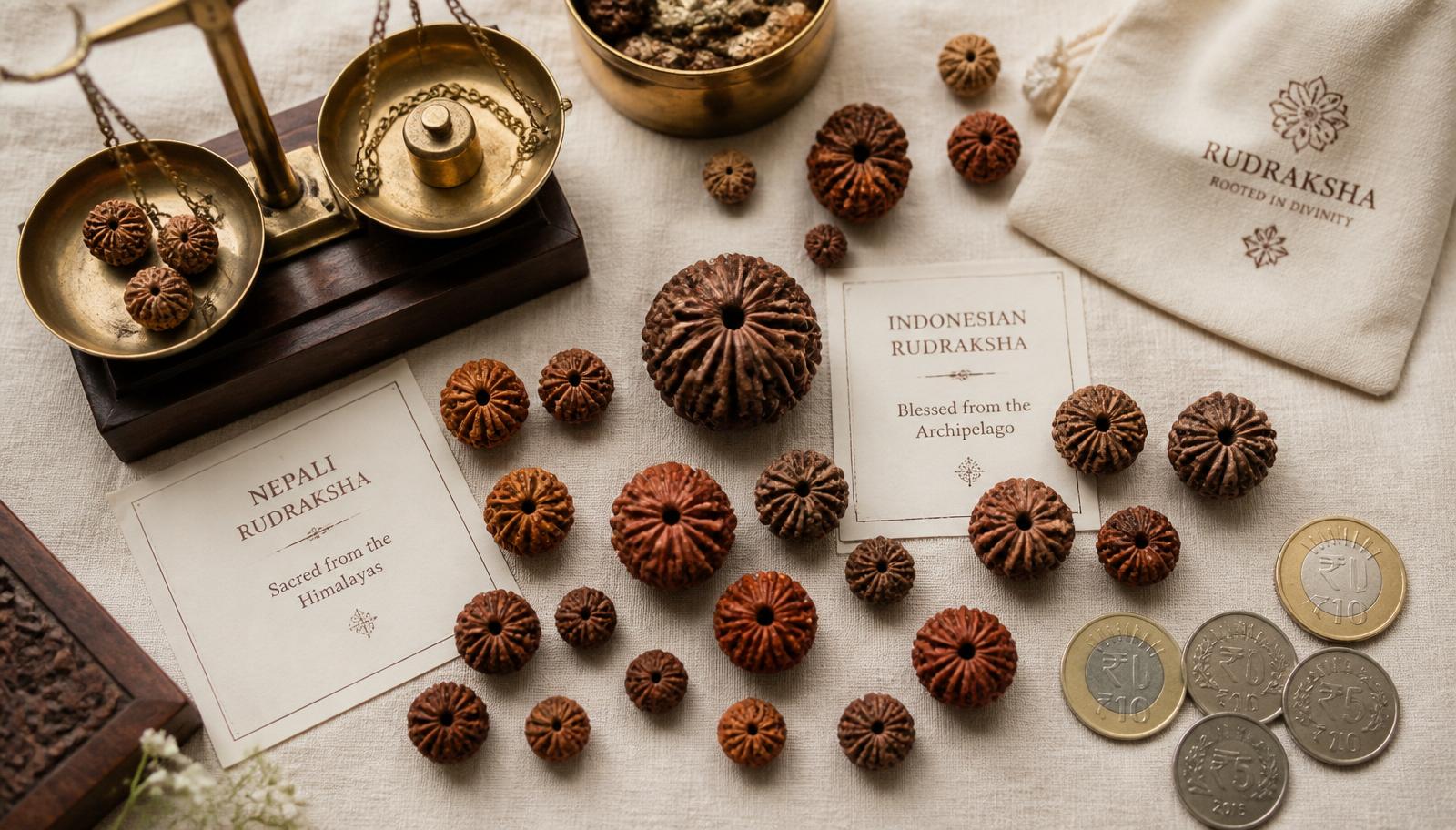
Direct sourcing from Nepali and Javanese growers, in-house 10x inspection, X-ray verification of internal compartments, IGL/GTL certification with a traceable report number, Pran-Pratishtha energisation, and a lifetime buy-back if a bead ever fails a lab retest. Explore certified Rudraksha or read our buying guide.
The Most Common Fakes in 2026
| Fake type | How it is made | How to spot it |
|---|---|---|
| Carved mukhi | Extra lines cut into a lower-mukhi bead | Uneven, sharp-edged grooves; X-ray mismatch |
| Glued Gauri Shankar / Trijuti | Two or three beads stuck together | Visible joint line, glue residue |
| Moulded resin or wood | Cast in a mould from a real bead | Identical beads, plastic feel, no internal seeds |
| Bhadraksha substitute | Look-alike seed of another species | Different texture; lab identification |
| Carved symbols | Om, snake or trishul cut on surface | Too perfect; artificial carving marks |
How Mauhurtika Reduces the Risk
We source from established growers and suppliers, have beads tested by recognised labs, list origin on every product and accept returns under our refund policy. Read more about our certification process and see the identification guide for at-home checks.
Frequently Asked Questions
Q.What is the most reliable way to identify a real Rudraksha?
An X-ray or CT scan showing internal compartments equal to the external mukhi count, confirmed by an IGL or GTL certificate with a verifiable report number.
Q.Does a real Rudraksha sink or float in water?
Both are possible. The water test is not a valid authenticity test — buoyancy depends on density, moisture and oil content.
Q.Does the copper coin test prove a Rudraksha is real?
No. Rotation between coins depends on balance and surface friction, and fake beads can be made to rotate too.
Q.How can I spot a carved fake Rudraksha?
Use a 10x loupe. Carved grooves show tool striations, lighter freshly cut fibre and lines that stop short of the drill holes.
Q.Can a real Rudraksha have artificial extra mukhi lines?
Yes. This is the most common fraud — a genuine low-mukhi bead is carved into a 'high mukhi' bead. Only an X-ray exposes it.
Q.How do I know if a Gauri Shankar Rudraksha is genuine?
A genuine one is naturally fused during growth, with continuous mukhi lines across the join and no adhesive seam. X-ray confirms two connected internal cavities.
Q.Are IGL and GTL certificates trustworthy?
Yes, when the report number is verifiable with the lab and the certificate shows a photograph of the exact bead with mukhi count, dimensions and weight.
Q.Is a cheap Rudraksha always fake?
Not always — Java 5 Mukhi beads are genuinely inexpensive. But a cheap 1 Mukhi, high-mukhi or Gauri Shankar bead is almost certainly fake.
Q.Can a fake Rudraksha harm me?
It carries no spiritual benefit, and plastic or chemically treated beads can irritate the skin. The real cost is a wasted remedy and lost trust.
Q.Does a real Rudraksha crack?
Yes. Real beads crack with age, dryness or impact. A cracked bead is traditionally retired from wear and kept in the puja space.
Q.Is the milk test valid for Rudraksha?
No. Colour change in milk reflects oil and tannin content, not authenticity, and treated fakes can mimic it.
Q.Should the certificate come with the bead or later?
With the bead, in the box. Mauhurtika ships the lab report and X-ray with every certified order.
Q.What should I do if my bead fails an independent test?
Return it. Mauhurtika offers a buy-back guarantee if any bead we sold fails a recognised lab retest.