Rudraksha Price Guide 2026: How Much Does an Original Rudraksha Cost in India? (Real Market Rates)
Fair 2026 price benchmarks for every Rudraksha mukhi — Nepali vs Indonesian, single beads vs 108+1 malas. Learn what determines the price, when a price is suspicious, and how to negotiate.
Quick Answer: In 2026, a genuine lab-certified 5 Mukhi Nepali Rudraksha (18-22 mm) costs ₹1,200–1,800, an Indonesian 5 Mukhi costs ₹150–300, and a Nepali 108+1 japa mala costs ₹3,500–5,500. Prices vary dramatically by mukhi count — a 1 Mukhi Nepali can range from ₹8,000 to ₹25,000+. Prices significantly below these ranges usually indicate a fake, machine-carved or misrepresented bead.
One of the biggest frustrations for genuine Rudraksha seekers is the wildly inconsistent pricing. The same 5 Mukhi bead is sold for ₹99 on Amazon, ₹499 in a local temple shop, and ₹1,800 on a certified retailer's website. Which price is real? Which is a scam?
After 12 years in this industry and personally auditing over 40,000 beads, I have prepared this transparent 2026 pricing benchmark — covering every popular mukhi, both Nepali and Indonesian origins, and the honest factors that justify each price point.
What Determines the Price of a Rudraksha?
Five key factors determine fair market pricing:
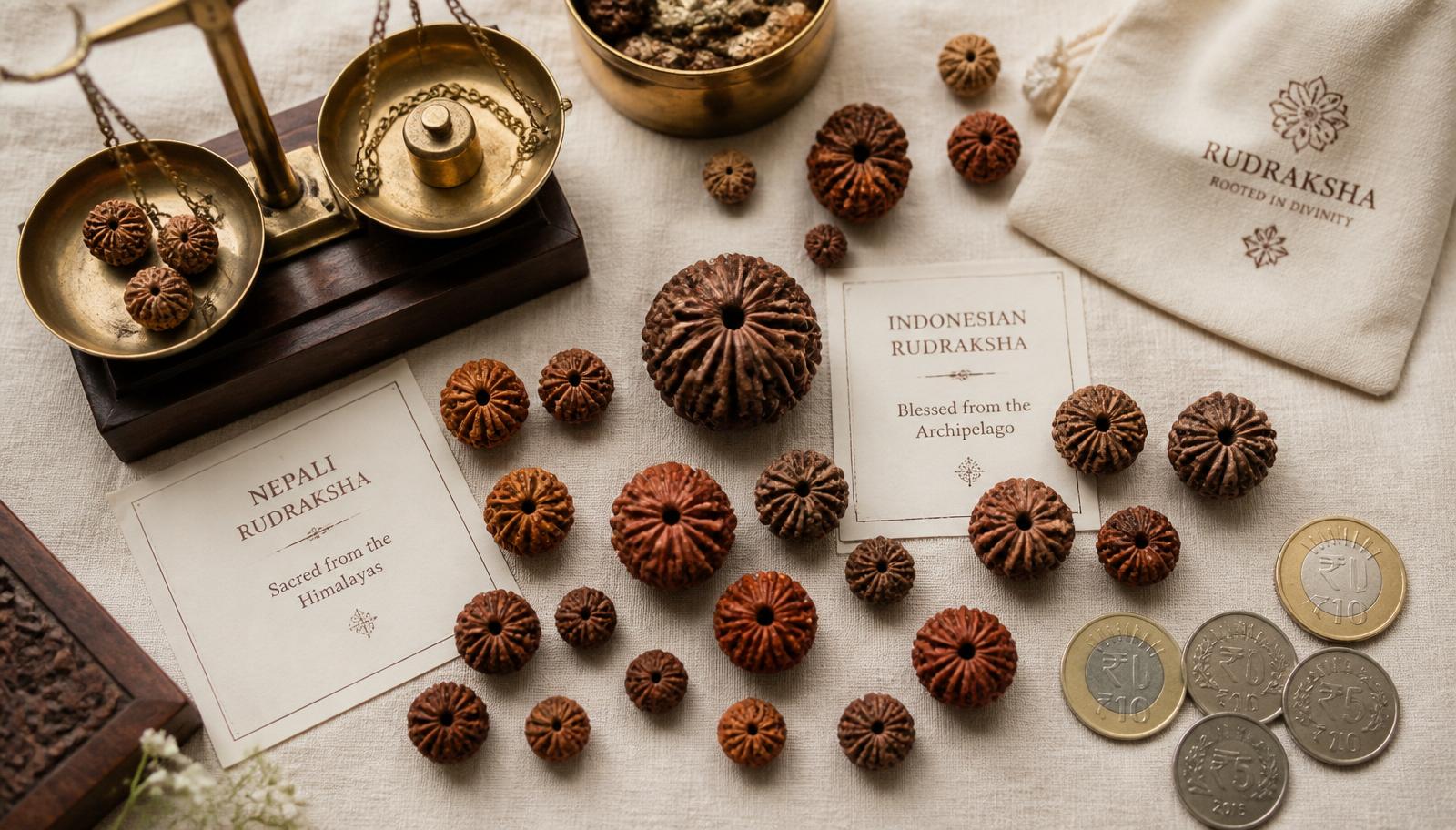
1. Origin — Nepali beads (18-30 mm, deeper mukhi lines) are 5-10× more expensive than Indonesian Java beads (5-15 mm, uniform).
2. Mukhi count — 5 Mukhi is the most common (60-70% of harvest) and cheapest. 1, 14, 19, 21 Mukhi are extremely rare and command lakhs.
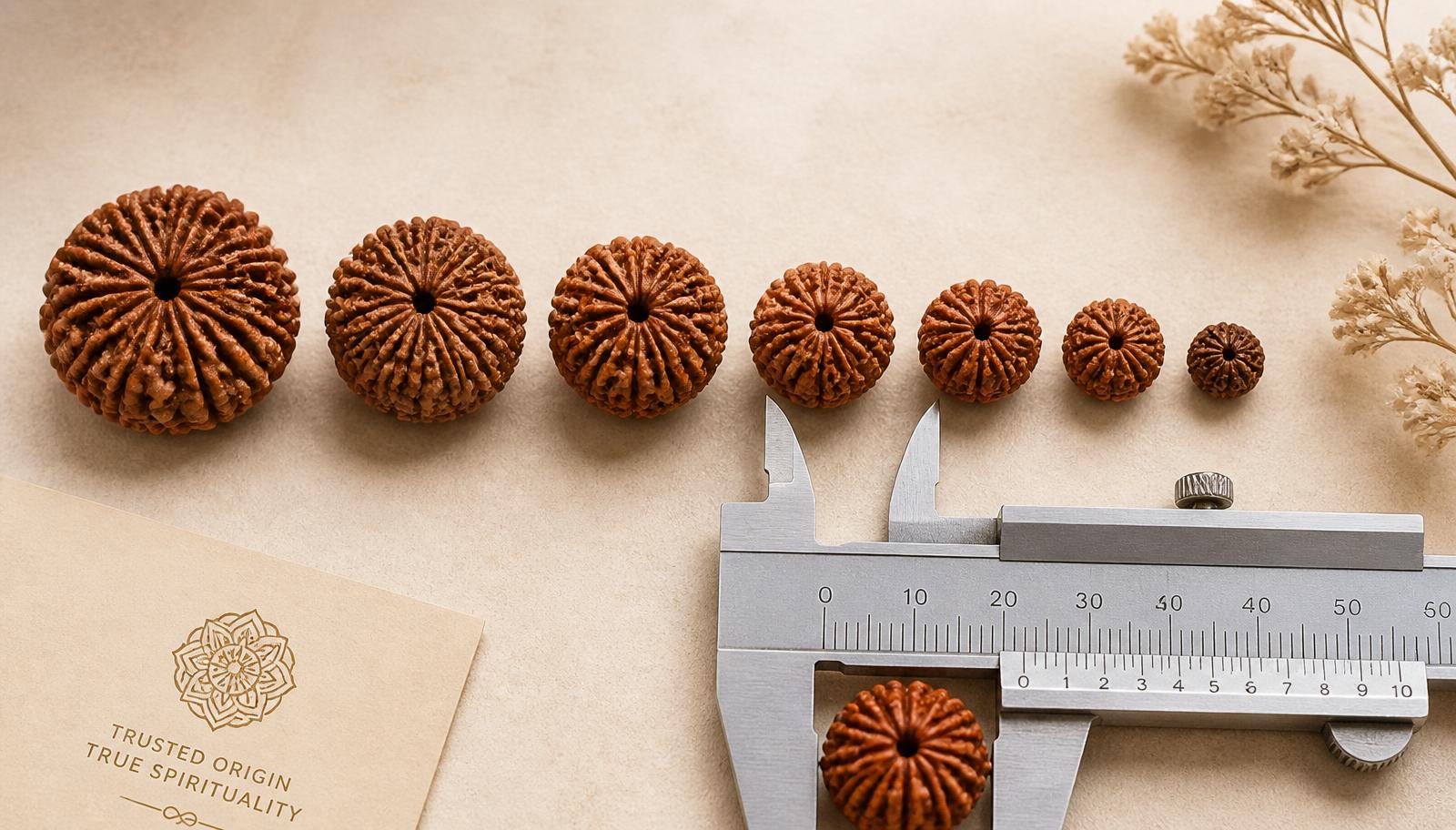
3. Size — larger Nepali beads (22+ mm) cost 2-3× more than smaller ones of the same mukhi.
4. Physical quality — deep unbroken mukhi lines, symmetrical shape, no cracks, natural reddish-brown colour.
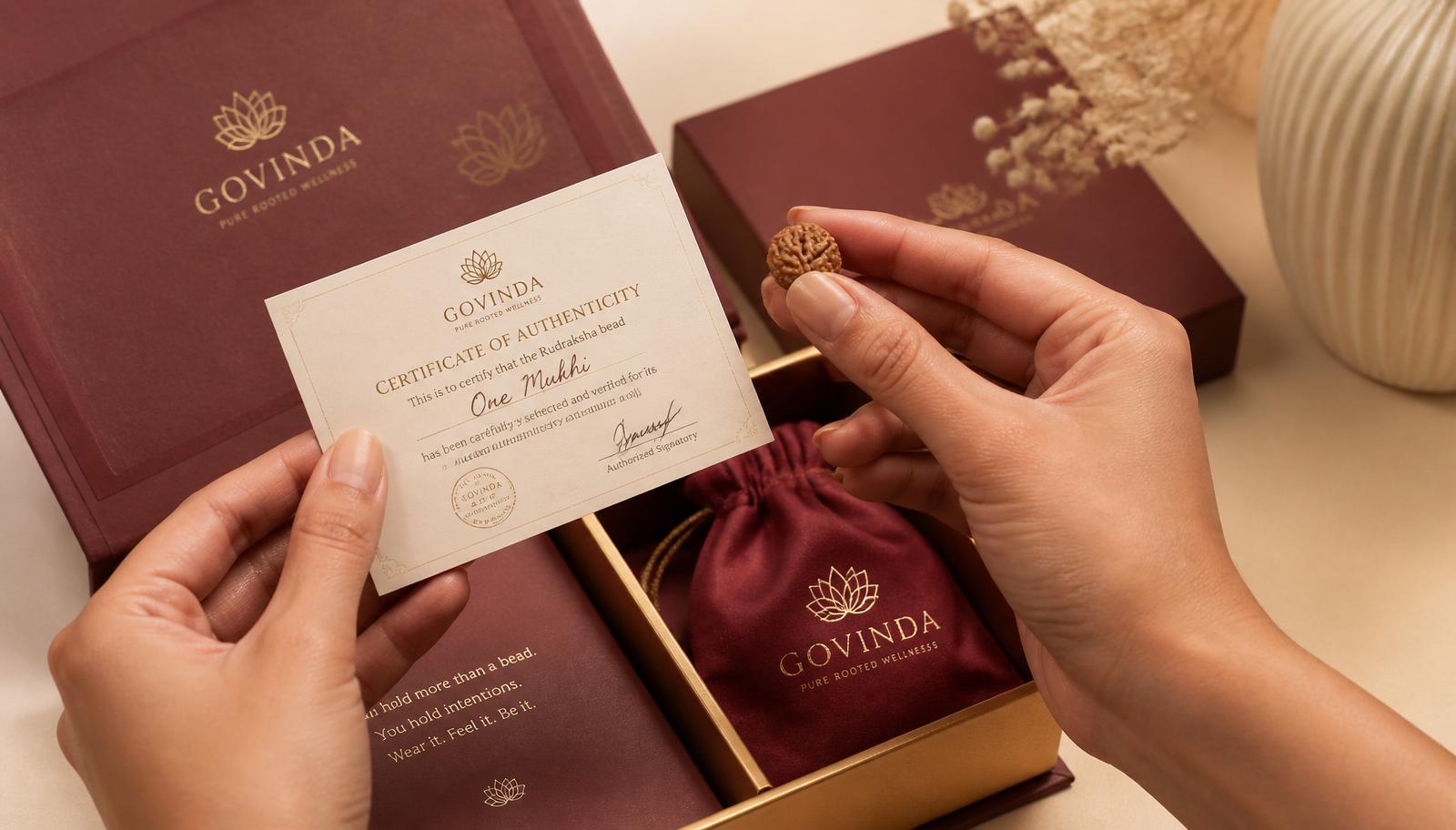
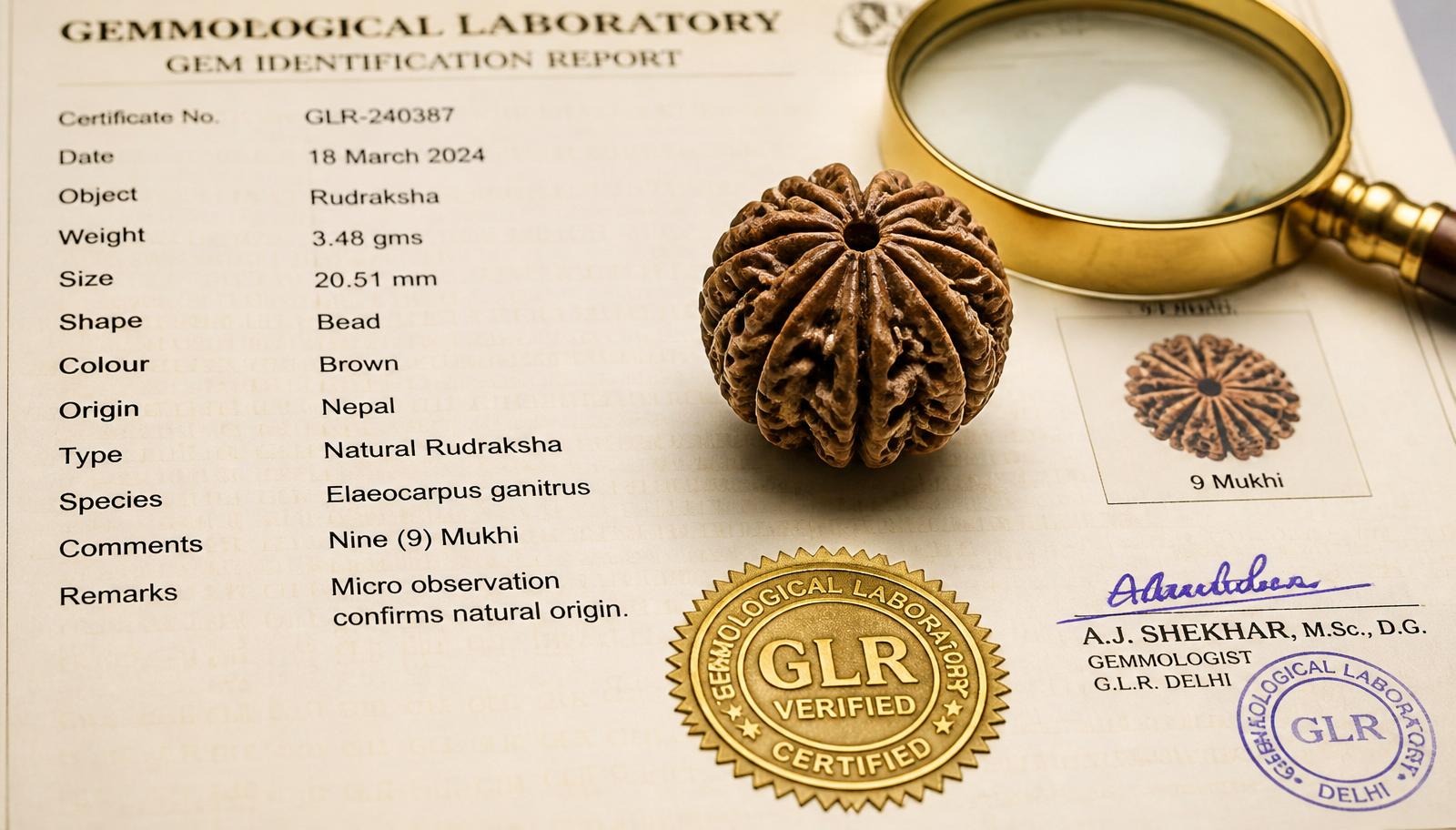
5. Certification — an independent lab report (IGL, GTL, GJEPC) adds ₹500-1,500 to the price but is essential.
Complete 2026 Price Benchmark — Nepali Rudraksha
| Mukhi | Small (14-18mm) | Medium (18-22mm) | Large (22-30mm) | Collector |
|---|---|---|---|---|
| 1 Mukhi (Round) | — | ₹8,000-15,000 | ₹18,000-40,000 | ₹80,000+ |
| 2 Mukhi | ₹800-1,200 | ₹1,500-2,500 | ₹3,000-5,000 | ₹8,000+ |
| 3 Mukhi | ₹500-800 | ₹1,000-1,800 | ₹2,000-3,500 | ₹5,000+ |
| 4 Mukhi | ₹400-700 | ₹800-1,500 | ₹1,800-3,000 | ₹4,000+ |
| 5 Mukhi | ₹300-600 | ₹1,200-1,800 | ₹2,500-4,000 | ₹6,000+ |
| 6 Mukhi | ₹500-900 | ₹1,500-2,500 | ₹3,000-5,000 | ₹8,000+ |
| 7 Mukhi | ₹800-1,500 | ₹2,500-4,500 | ₹5,000-8,000 | ₹15,000+ |
| 8 Mukhi | ₹1,200-2,000 | ₹3,000-5,500 | ₹6,000-10,000 | ₹18,000+ |
| 9 Mukhi | ₹1,500-2,500 | ₹3,500-6,000 | ₹7,000-12,000 | ₹20,000+ |
| 10 Mukhi | ₹1,800-3,000 | ₹4,000-7,000 | ₹8,000-14,000 | ₹25,000+ |
| 11 Mukhi | ₹2,000-3,500 | ₹4,000-7,000 | ₹8,000-15,000 | ₹28,000+ |
| 12 Mukhi | ₹3,000-5,000 | ₹6,000-12,000 | ₹14,000-25,000 | ₹40,000+ |
| 13 Mukhi | ₹5,000-8,000 | ₹10,000-18,000 | ₹20,000-35,000 | ₹60,000+ |
| 14 Mukhi | ₹15,000-25,000 | ₹30,000-55,000 | ₹60,000-1,20,000 | ₹2,00,000+ |
| Gauri Shankar | ₹8,000-15,000 | ₹18,000-30,000 | ₹35,000-60,000 | ₹1,00,000+ |
| Ganesh Mukhi | ₹3,000-5,000 | ₹6,000-10,000 | ₹12,000-20,000 | ₹35,000+ |
Complete 2026 Price Benchmark — Indonesian (Java) Rudraksha
| Mukhi | 5-8mm bead | 108+1 Mala |
|---|---|---|
| 3 Mukhi | ₹80-150 | ₹600-1,000 |
| 4 Mukhi | ₹80-150 | ₹600-1,000 |
| 5 Mukhi | ₹100-200 | ₹1,000-1,500 |
| 6 Mukhi | ₹150-300 | ₹1,400-2,200 |
| 7 Mukhi | ₹250-500 | ₹2,500-4,000 |
| 8 Mukhi | ₹300-600 | ₹3,000-5,000 |
| 9 Mukhi | ₹400-800 | ₹4,000-6,500 |
| 10 Mukhi | ₹500-1,000 | ₹5,000-8,000 |
Why Are There Such Huge Price Differences?
Legitimate Reasons for Price Variation
- Sourcing — direct-from-Nepal beads are 30% cheaper than beads that pass through 3 middlemen
- Quality grading — museum-grade vs commercial-grade of the same mukhi
- Certification cost — a proper IGL/GTL report costs the seller ₹500-1,500 per bead
- Pran-Pratishtha puja — genuine consecration by a Vedic acharya adds real value
- Silver/gold capping — 92.5 silver adds ₹500-1,500, 22K gold adds ₹8,000-15,000
Fraudulent Reasons for Low Pricing
- Machine-carved bel wood or bhadraksh sold as Rudraksha
- Glued fake mukhi lines on 5 Mukhi beads to sell as 6, 7, or higher
- Indonesian beads sold at Nepali prices (or the reverse)
- No lab certificate, no origin proof, no return policy
Signs of Overpricing (Yes, This Happens Too)
- Celebrity-endorsed 5 Mukhi at ₹5,000+ — you're paying for the endorsement, not the bead
- "Guru-blessed" beads at 3-5× market price — pran-pratishtha is genuine but should add ₹200-500, not thousands
- Luxury packaging premiums — a nice box is worth ₹200-500 extra, not ₹3,000
- "Astrologer-selected" upsells — genuine consultation is often free with purchase
Where to Buy — Fair Price Guarantee
The fairest sources for authentic Rudraksha in India are direct-from-Nepal certified retailers who publish their sourcing chain transparently. At Mauhurtika Rudraksha, we hold all our beads to a strict pricing formula: sourcing cost + certification + Pran-Pratishtha + 40-45% margin. This is why our prices are consistently 10-20% lower than most competitors while including everything they charge extra for.
Expert Recommendation
Expert Recommendation: For a first purchase, budget ₹2,500-3,500 total for: (1) one certified Nepali 5 Mukhi bead in 92.5 silver capping (₹1,800), and (2) a Nepali 108+1 japa mala (₹1,500-2,000). This covers you completely for daily wear and meditation. Skip the "kit" and "combination" upsells until you understand what you actually need.
Updated: How to Read Any Rudraksha Price in 60 Seconds
Before comparing sellers, check these five points on any listing:
1. Origin stated clearly — Nepal, Indonesia (Java) or India.
2. Size in millimetres — a price without size is meaningless.
3. Lab report for the exact bead — not a generic sample certificate.
4. Capping and thread — silver or gold capping adds metal and making charges.
5. Return policy — honest sellers accept returns if a report does not match.
Bracelets, Kawach and Siddha Malas
Price questions increasingly involve combinations rather than single beads. A 5 Mukhi wrist mala remains the most affordable genuine option; kawach combinations combine several mukhis and are priced on the beads they contain; complete 1 to 14 or 1 to 21 Mukhi Siddha Malas are collector purchases. Explore live prices on our Siddha Mala collection, the Rudraksha Mala collection and the full shop.
Price Is Not Power
Tradition does not say that a more expensive bead is spiritually stronger for you. The right bead is the one suited to your intention, worn with respect and regular practice. Use our free Rudraksha finder to narrow your choice before considering budget.
People Also Ask (FAQ)
Shop with Confidence
Browse our transparently-priced Rudraksha collection or 108+1 malas — every bead has a published price backed by lab certification, free acharya consultation and 7-day money-back guarantee. Prices start at ₹135 for Indonesian and ₹1,080 for Nepali.
Frequently Asked Questions
Q.Why is Nepali Rudraksha so much more expensive than Indonesian?
Nepali beads are 3-5× larger, have deeper mukhi lines, come from harsh Himalayan altitude (producing stronger vibration), and are harvested in much smaller quantities. Both are equally authentic — Nepali is simply the premium grade.
Q.Are ₹99 Rudraksha on Amazon fake?
99% of the time, yes. Genuine Rudraksha of any origin cannot be sold at ₹99 with a real profit margin. These are typically machine-carved bel wood, resin imitations, or unlabeled generic tree seeds.
Q.Should I pay extra for silver capping?
If you plan to wear the bead daily as a pendant — yes, absolutely. 92.5 silver capping (₹500-1,500 extra) prevents cracking, allows secure threading, and looks premium. For a mala worn only during meditation, capping is not needed.
Q.Is a lab certificate really necessary?
Yes, for any bead priced above ₹500. The certificate proves authenticity, origin, and mukhi count via X-ray. Without it, you have no legal or spiritual recourse if the bead turns out to be fake.
Q.What is the price of a 5 Mukhi Rudraksha mala?
Nepali 108+1 mala: ₹3,500-5,500 (medium beads). Indonesian 108+1 mala: ₹1,000-1,500. Premium large Nepali mala (10-12mm beads): ₹8,000-14,000.
Q.How can I get a discount on genuine Rudraksha?
Buy directly from source-based retailers (skip 3-4 middlemen), buy in the off-season (October-February), buy combinations rather than individual beads, and ask about the annual Shivratri sale (typically 15-25% off).
Q.Do prices go up during Shravan or Shivratri?
Yes — demand spikes 3-4×. Premium mukhis (7, 11, 14, Gauri Shankar) can see 20-30% price increases during Shravan. Best time to buy: October-January.
Q.What's a fair price for a beginner starter kit?
A genuine starter kit (5 Mukhi bead + 108+1 mala + puja instructions + free consultation) should cost ₹2,500-4,000. Anything under ₹1,500 is suspicious; anything over ₹6,000 has excessive markup.