
What is a 20 Mukhi Rudraksha?
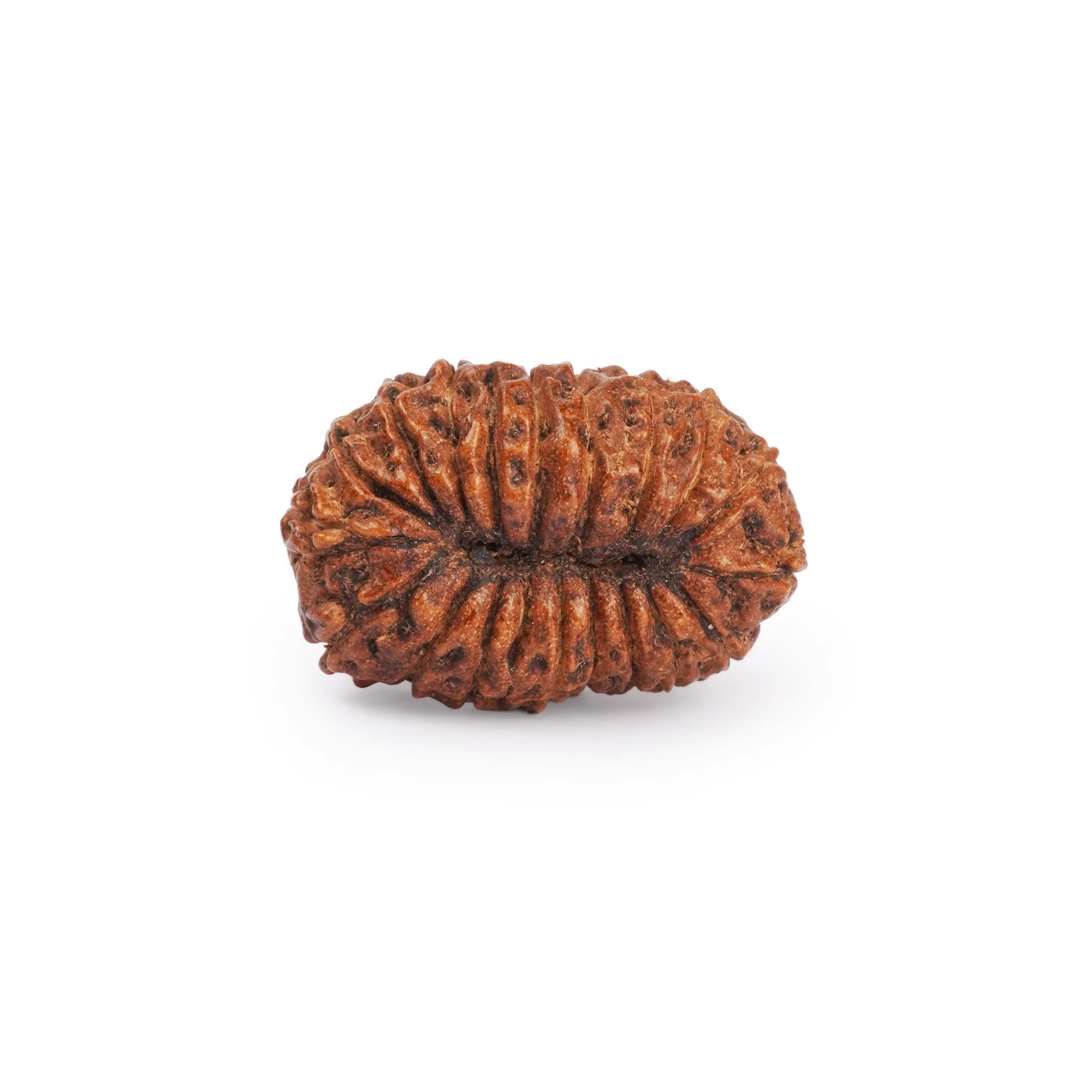
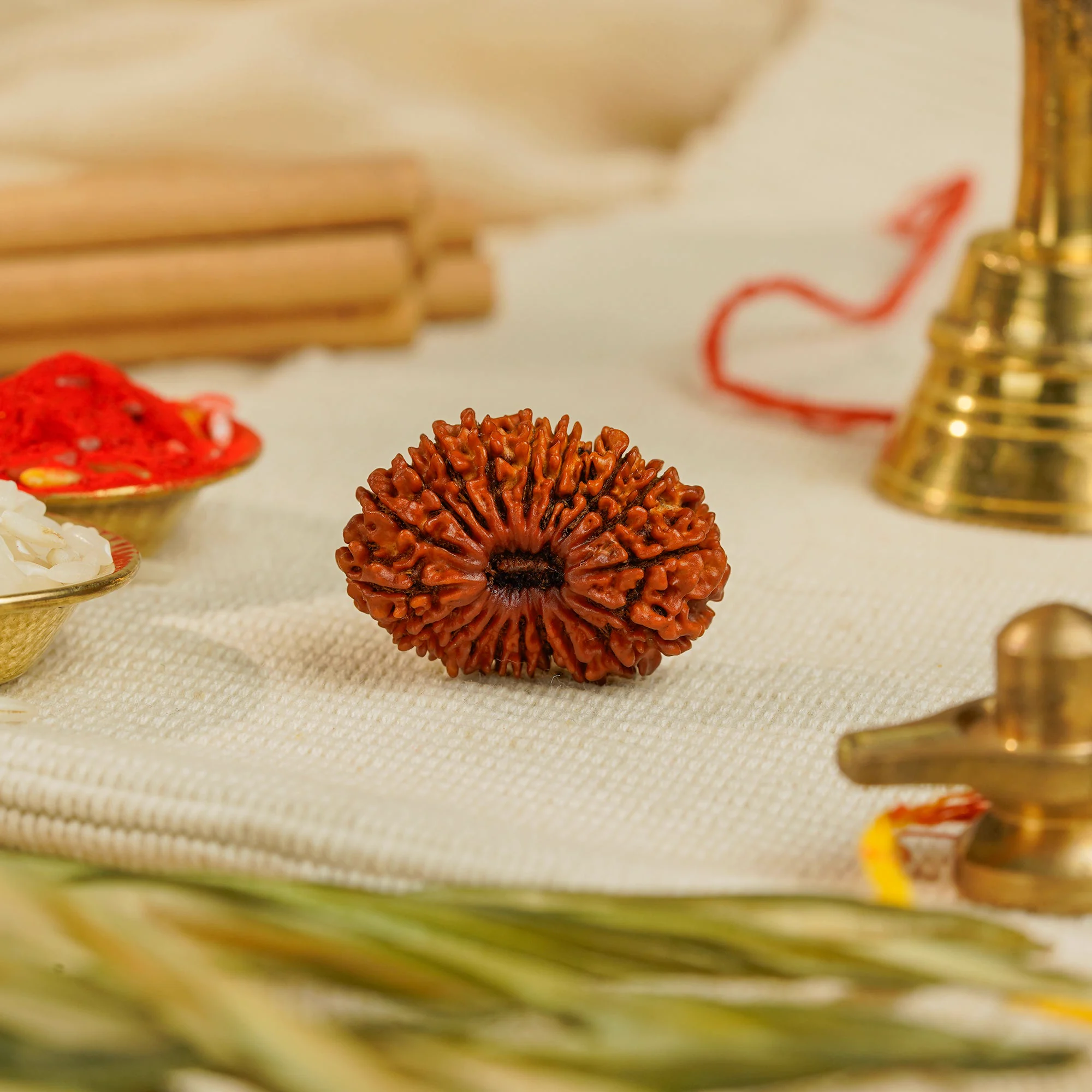
A 20 Mukhi Rudraksha has twenty natural lines. It is very rare and seldom available.
The Mukhi count is the number of natural lines running from the top of the bead to its base. Rarity, rather than spiritual rank, is the main reason higher Mukhis cost more.
Traditional meaning and significance
The 20 Mukhi is traditionally associated with Brahma, the creator, and with knowledge, vision and creative power.
Its associations come mainly from later tradition; classical texts focus on lower Mukhis.
Associated deity and planet
The 20 Mukhi Rudraksha is traditionally associated with Lord Brahma. It is not tied to a single Graha.
Mauhurtika describes Rudraksha from the standpoint of Hindu tradition, scripture and Jyotish practice. These are religious and cultural associations, not medical or scientific claims, and a Rudraksha is not a substitute for professional medical, financial or psychological advice.
Traditional uses and commonly cited purposes
These are the purposes most often associated with the 20 Mukhi Rudraksha in tradition and Jyotish practice:
- Devotion and sadhana.
- Knowledge and vision — traditional associations with Brahma.
- Kept as a sacred object.
Who traditionally wears a 20 Mukhi?
Experienced practitioners and collectors traditionally consider the 20 Mukhi.
If you are unsure, the Mauhurtika Rudraksha Finder and a consultation can help you compare options.
How to wear it
It can be worn as a single bead on red or yellow thread, in a silver cap on a chain, or in a bracelet. Rare beads are often kept in the puja space instead of being worn every day.
Before first wearing, many people wash the bead in clean water or Gangajal, place it before an image of the deity, offer a flower and incense, and chant the mantra 108 times. A traditional day to begin: Monday.
Traditional mantra
The mantra most commonly given for the 20 Mukhi Rudraksha is 'Om Hreem Hreem Hum Hum Brahmane Namah'. This mantra is the one commonly given in modern guides; follow your teacher.
How to identify a genuine 20 Mukhi
Carving extra lines into a lower Mukhi is the most common way beads are misrepresented. Check these points:
- Twenty natural lines.
- X-ray report essential.
- Insist on photographs of the exact bead.
Nepal vs Indonesia, size and quality
Very rare from any origin.
Size is mainly a matter of comfort and preference. Look for a well-formed bead with clearly defined Mukhis and a sound surface.
Price factors
Very high and highly variable.
Mauhurtika does not quote fixed market prices — see the current prices on the products below.
How to care for it
Take it off before bathing with soap and avoid perfumes. Rinse it now and then in plain water, let it dry naturally and apply a drop of natural oil every few months. Store it in a clean cloth or box when not worn.
Related Rudraksha
Readers interested in the 20 Mukhi Rudraksha often compare it with the following beads.
Shop 20 Mukhi Rudraksha
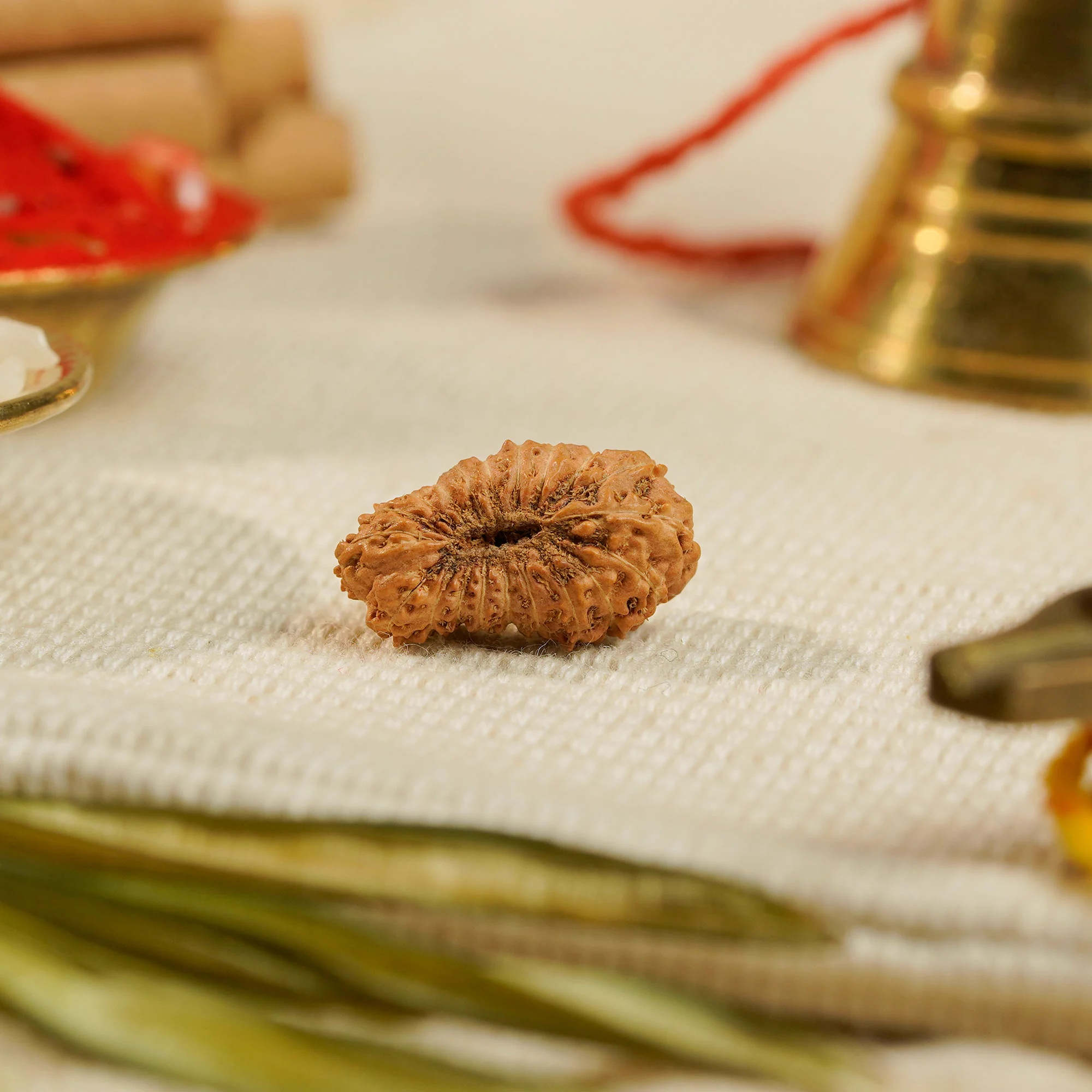
20 Mukhi Rudraksha – Original Indonesian (Java) Collector Bead
Frequently asked questions
Who can wear a 20 Mukhi Rudraksha?
Tradition does not restrict the 20 Mukhi Rudraksha by gender or age. Experienced practitioners and collectors traditionally consider the 20 Mukhi.
What is the mantra for 20 Mukhi Rudraksha?
'Om Hreem Hreem Hum Hum Brahmane Namah' is the mantra most commonly given. This mantra is the one commonly given in modern guides; follow your teacher.
Which day is best to start wearing a 20 Mukhi?
Traditionally: Monday.
How can I tell if a 20 Mukhi is genuine?
Count natural, continuous lines, check for cut or filled grooves, and ask for a lab or X-ray report showing the matching number of internal chambers.
Why does the 20 Mukhi Rudraksha price vary so much?
Very high and highly variable.