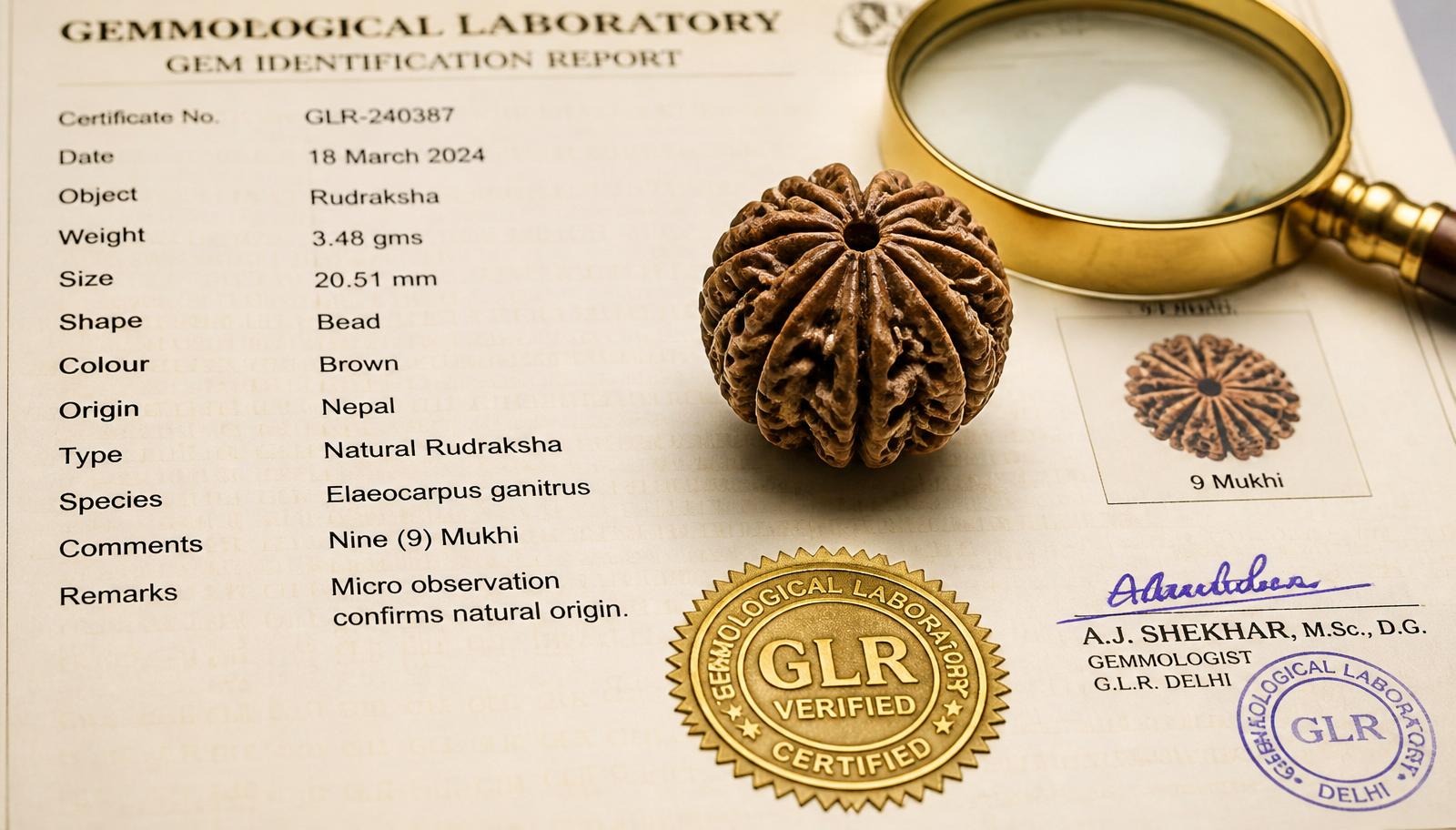
5 Things to Check Before Buying a Rudraksha in Indore
Rajwada aur Khajrana ke saste Rudraksha se bachna hai? These 5 practical checks — mukhi lines, X-ray certificate, origin, price sanity and energisation — protect Indore buyers from fake beads in 2026.
Quick Answer
Before buying a Rudraksha in Indore, check five things: (1) natural, uneven mukhi lines running pole to pole, (2) an IGL/GTL lab certificate with an X-ray image, (3) written Nepali or Java origin, (4) a realistic price for that mukhi, and (5) whether Pran-Pratishtha energisation is included. Skip any one and you are guessing.
Why This Checklist Matters in Indore
Around Rajwada, Sarafa, Khajrana Ganesh Mandir and Bada Ganpati you will be offered Rudraksha at prices that look like a bargain — ₹100 for a '7 Mukhi', ₹300 for a 'Gauri Shankar'. These prices are the clearest signal that the bead is not what it is claimed to be. A real Rudraksha shop in Indore will never undercut wholesale rates by 80%.
Check 1 — Mukhi Lines Must Look Natural
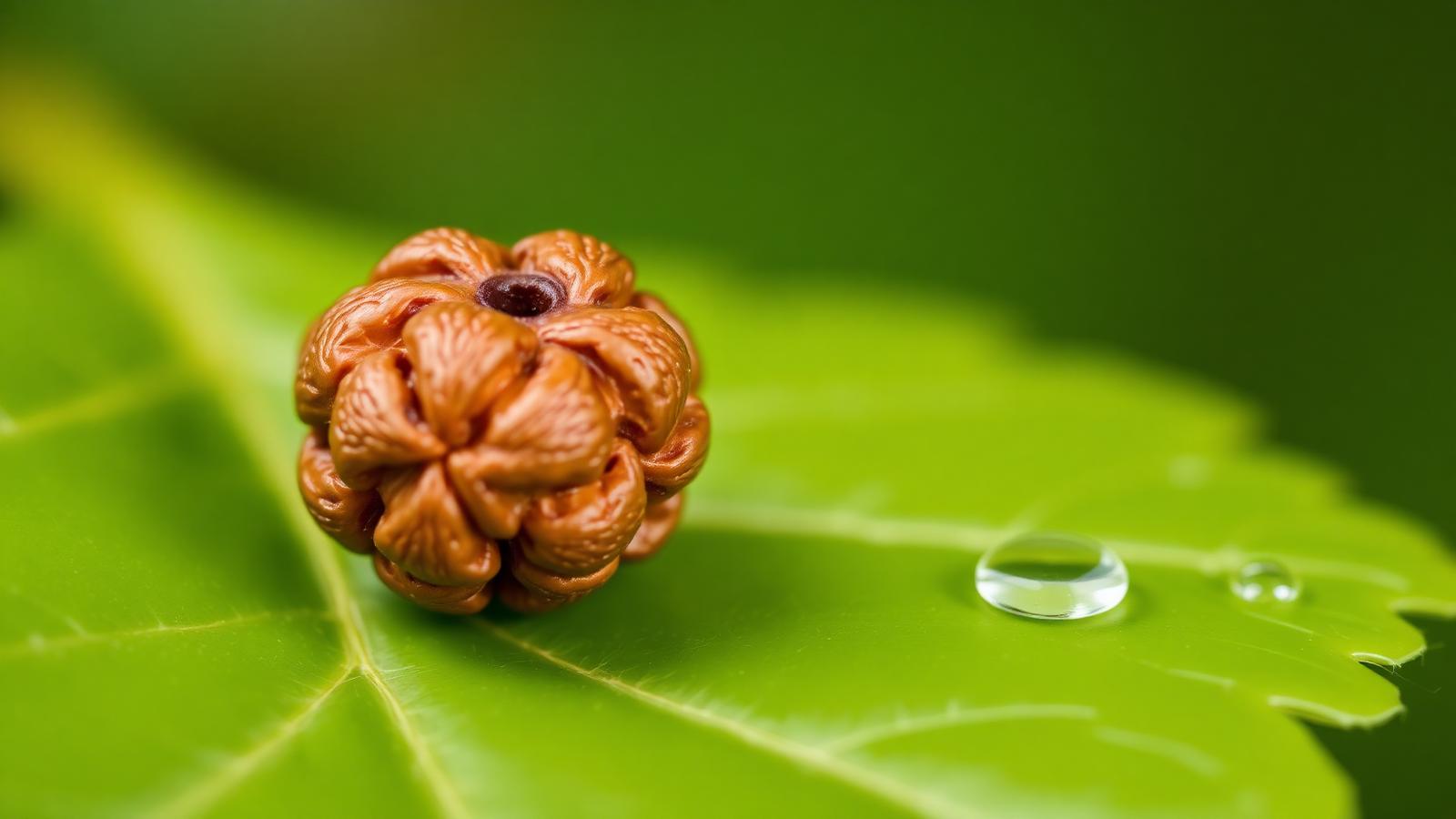
Genuine mukhi (faces) are natural clefts formed as the seed grows. They run continuously from the top hole to the bottom hole, and they are never perfectly uniform.
- Carved fakes have lines of identical width and depth
- Carved lines often stop before reaching the ends
- Natural lines wander slightly and vary in depth along their length
- Under a 10x loupe, natural grooves show fibre texture; carved ones show tool marks
Check 2 — Insist on a Lab Certificate With X-Ray
This is non-negotiable for any bead above ₹1,000. An IGL, GTL or equivalent report should state the species, origin, weight, dimensions, mukhi count, and include an X-ray or CT image showing internal compartments equal to the external lines. A shop's own stamped slip proves nothing.
Learn how to read one properly in Certified vs non-certified Rudraksha.
Check 3 — Confirm Origin in Writing
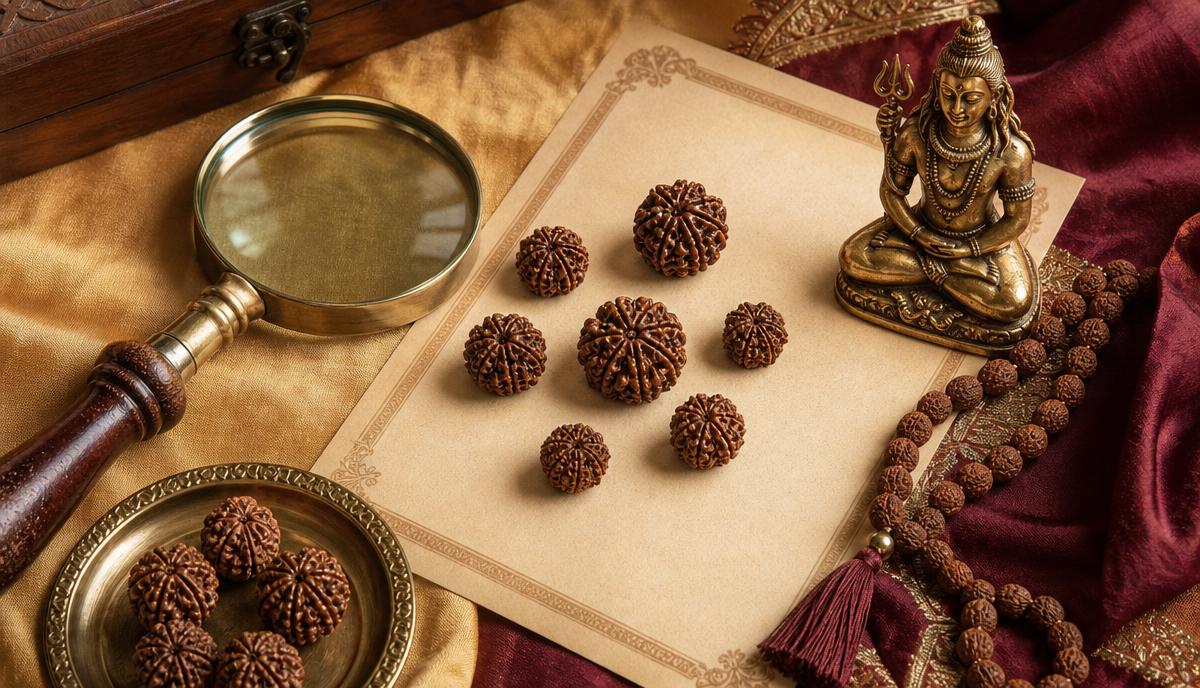
Nepali and Java beads differ 3–5× in price. A verbal 'Nepali hai sir' is worthless. Ask the seller to print the origin on the invoice. If they refuse, the bead is likely Java.
| Clue | Nepali | Java |
|---|---|---|
| Diameter | 16–35 mm | 4–14 mm |
| Groove depth | Deep | Shallow |
| Feel | Heavy, rugged | Light, smooth |
| Typical 5 Mukhi price | ₹350+ | ₹150+ |
Check 4 — Apply the Price Sanity Test
Rudraksha pricing follows rarity. Roughly 90% of all beads are 5 Mukhi, which is why they are affordable. Rare mukhis are rare in nature, and no shop can defy that.
| Bead | Suspicious Price | Realistic Certified Price |
|---|---|---|
| 5 Mukhi Nepali | Below ₹250 | ₹350 – ₹1,800 |
| 7 Mukhi Nepali | Below ₹1,000 | ₹2,500 – ₹6,000 |
| Gauri Shankar Nepali | Below ₹2,000 | ₹5,500 – ₹18,000 |
| 1 Mukhi round | Below ₹10,000 | ₹18,000+ |
Full breakdown: Rudraksha price in Indore 2026.
Check 5 — Ask About Energisation and After-Sales
An unenergised bead is spiritually inert. Ask whether Pran-Pratishtha is performed, with which mantra, and by whom. Also confirm: return window, exchange policy, buy-back, and whether a GST invoice is issued.
Home Tests — Useful but Not Conclusive
- Water test: genuine beads usually sink, but sinking alone does not prove authenticity
- Copper coin test: unreliable, depends on bead weight and surface
- Hot needle test: damages the bead, only exposes glued fakes
- Milk test: an old myth with no scientific basis
Red Flags at an Indore Counter
- Seller discourages you from examining the bead closely
- No certificate, or a certificate without a report number
- 'Special muhurat discount, only today' pressure tactics
- Refuses a GST bill or writes only 'mala' on the receipt
- Rare mukhis available in large quantity, all identical
Buy With Confidence in Indore
Visit our Indore experience centre at 38, Pumarth Meadows, Manglaya Sadak, Indore 453771 (M.P.) or call +91-9009231652. Shop certified Rudraksha · Book a free consultation
Related Reading
- Where to Buy Lab-Certified Rudraksha in Indore
- Original Rudraksha Identification Guide
- How to Wear and Care for Rudraksha
Frequently Asked Questions
Q.How can I check if a Rudraksha is real in Indore?
Examine mukhi lines under magnification, demand an IGL/GTL certificate with X-ray, verify origin in writing, sanity-check the price, and confirm energisation.
Q.Are cheap Rudraksha near Rajwada genuine?
Very often they are Bhadraksha, betel-nut carvings or Java beads sold as Nepali. Always ask for certification.
Q.Does the water test prove a Rudraksha is real?
No. It is only an indicator; density varies naturally and fakes can be weighted.
Q.Is a shop stamp the same as a lab certificate?
No. Only an independent lab report with a verifiable number and X-ray image counts.
Q.What is the safest Rudraksha for a first-time buyer?
A certified 5 Mukhi Nepali bead — universally suitable with no wearing restrictions.
Q.Can I get my existing Rudraksha tested in Indore?
Yes, bring it to our Manglaya Sadak centre and we will guide you through lab verification.
Q.Why are Gauri Shankar beads so expensive?
They are naturally conjoined twin beads and extremely rare, which is why glued fakes are common.
Q.Should I buy Rudraksha online or offline in Indore?
Either works if the seller is certified. Online adds a documented invoice and return window.
Q.How many mukhi options are there?
1 to 21 mukhi occur naturally; above 14 is exceptionally rare. See our mukhi guide.
Q.Does Mauhurtika allow inspection before payment?
Yes, at our Indore experience centre you inspect the bead and certificate first.