Can We Wear Two Different Rudraksha Together? A Practical Guide
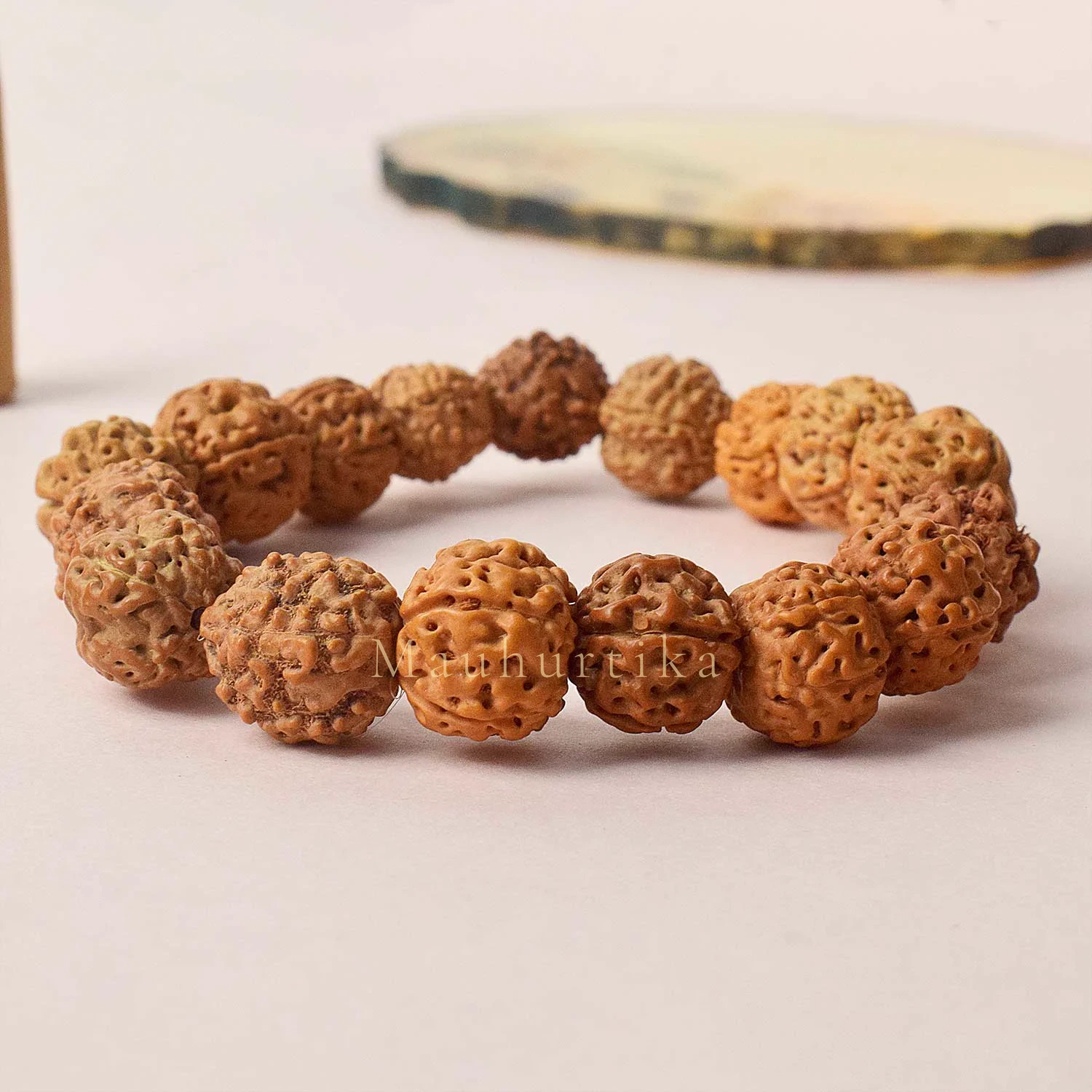
Different mukhis are worn together in contemporary Rudraksha combinations. Mauhurtika's Siddha Mala collection includes mixed-bead strands. Their existence does not establish a universal rule that every combination is right for every practice, nor that two beads provide a guaranteed combined effect.
Different mukhis are worn together in contemporary Rudraksha combinations. Mauhurtika's Siddha Mala collection includes mixed-bead strands. Their existence does not establish a universal rule that every combination is right for every practice, nor that two beads provide a guaranteed combined effect.
For a two-bead choice, distinguish religious guidance from physical construction. Your teacher can explain an initiated practice. The seller should clarify the actual beads, mounting, fit and available reports. Neither role should be replaced by a frightening list of invented incompatibilities.
Two different mukhis versus two different origins
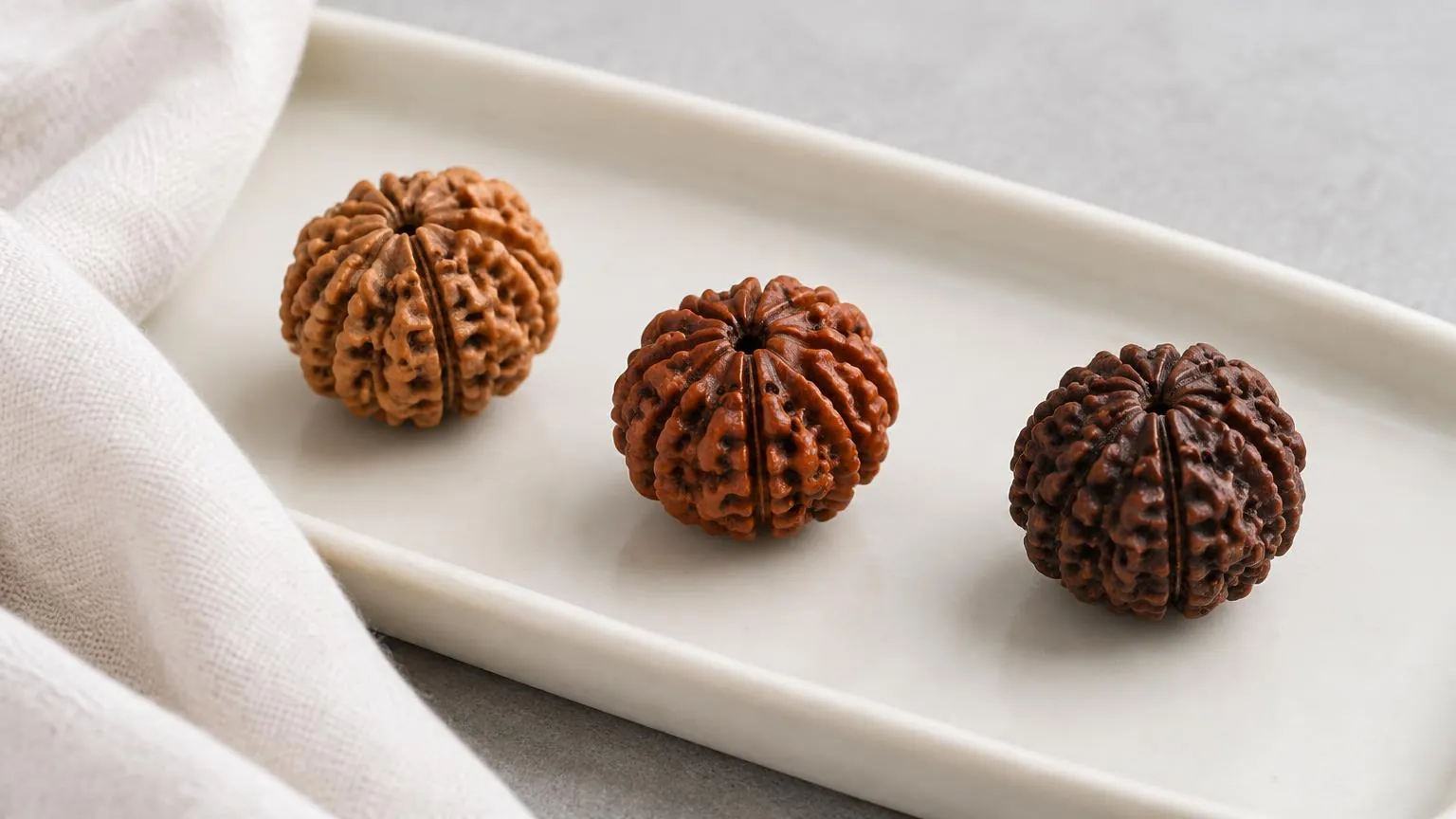
A five-Mukhi bead and a seven-Mukhi bead differ in their stated face counts. Two beads of the same mukhi can still differ in origin claims, dimensions and condition. A mixed-origin strand and a mixed-mukhi strand are therefore different descriptions.
Ask the seller to identify each component. “Combination,” “kawach” or “Siddha” is not a substitute for an itemised bead list. If a product contains a special form, caps, spacers or a guru bead, ask how those parts relate to the stated count.
What tradition can tell you
Follow a practice you actually recognise
Some devotees combine beads chosen for different symbolic associations; others prefer one bead or a uniform counting mala. If you follow a specific lineage, ask your teacher about its customs before changing an initiated practice. This article does not issue a universal mantra prescription.
Classical Rudraksha literature includes varied arrangements and counts. The Shiva Purana, chapter 25 describes several wearing arrangements. It should not be reduced to a modern sales rule that any two named mukhis must always be worn together or must never touch.
Avoid fear-based incompatibility claims
A seller should not present an unsupported “energy clash” as a proven danger requiring another purchase. Astrological interpretations are beliefs, not laboratory findings. A bead certificate cannot verify planetary compatibility or predict what a combination will do to your career, health or relationships.
You may choose a simple single-bead practice. Complexity is not proof of greater devotion.
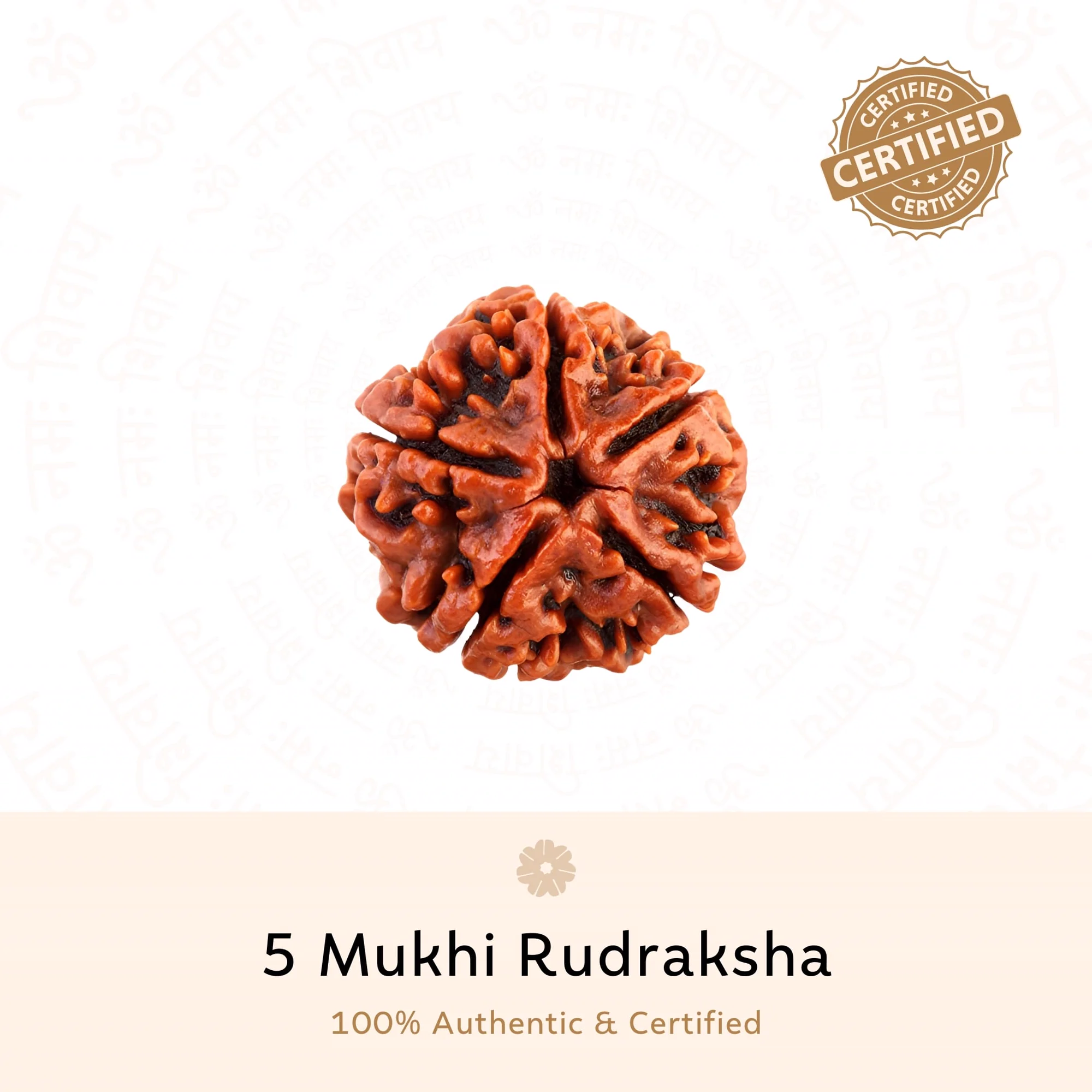
Can five and seven Mukhi be worn together?
People ask about this pairing because five Mukhi is widely used for general devotional practice and seven Mukhi is commonly associated with prosperity in contemporary guidance. Those meanings do not establish a guaranteed interaction between the beads.
If the pairing matters to your tradition, ask for guidance within that practice. Separately check that the mounting accommodates both beads and that you understand their individual specifications. Do not assume that a seller's ready-made strand contains the exact two specimens you have in mind.
Compare the live 5 Mukhi bead and 7 Mukhi bead as individual products first. They should not be added to a combined mount without confirming suitable construction and the effect of any alteration on existing documentation.

One thread or separate pendants?
A shared mounting
Ask about the finished length, total weight, bead spacing and fastening. Two beads of different sizes can move or press against one another. A cap should not damage the bead or cover an area you need documented before assembly.
A quoted assembly should state whether drilling, caps or other changes are required. Do not drill or glue a bead yourself because an online article treats that as a harmless adjustment.
Separate pendants
Separate chains can still tangle or create pressure and snagging risks. Consider how the complete arrangement behaves under clothing and during your daily activities. More jewellery is not automatically more comfortable or safer.
If you already own a chain, share its thickness and loop dimensions before fitting another bead. The visible style in a photograph does not prove your existing chain will fit.
A counting mala is a separate use case
Two pendants do not replace a counting mala when your practice uses a particular repetition count. A mixed-mukhi strand can be a wearing object without being intended as a uniform japa tool. Choose the format according to the actual practice rather than using every product name interchangeably.
Read the existing Siddha Mala guide for full combinations and the japa mala guide for counting context. This two-bead guide does not repeat a complete catalogue of Siddha strands.
Keep evidence matched to each component
For separately purchased beads, retain the individual records and photographs. If they are assembled later, ask whether the old reports still identify the specimens adequately and whether a new combination document is available or appropriate.
A report for one bead should not be presented as proof for the other. A strand photograph should not imply individual X-ray testing of every component unless the report actually says so. Ask about the specimen and method scope, using the certificate page as an explanation of examples rather than evidence for your order.
Wear and care without invented compulsory rules
Check comfort before deciding on continuous wear. Remove jewellery for activities involving snagging risks, contact or equipment. Care instructions should cover all beads, thread and metal fittings; a cleaning method suitable for one part may not suit the complete assembly.
Do not interpret discomfort, tarnishing or a broken thread as automatic proof of an “incompatible energy.” Document the physical issue and ask about repair or appropriate care. For a disputed product, follow the actual return policy, not a promise made by a generic combination guide.
Frequently asked questions
For assembly advice, share clear photographs of your existing beads and the intended format through consultation. Do not send sensitive report numbers publicly.
Frequently Asked Questions
Q.Can different mukhis be worn together?
Contemporary combinations include different mukhis. Whether a combination fits an initiated practice is a question for that tradition; this article does not promise a combined effect.
Q.Is there a proven maximum of three beads?
No universal numerical limit is established here. Consider actual fit, weight, construction and any guidance specific to your practice.
Q.Can five and seven Mukhi be combined?
People use this pairing, but no guaranteed interaction is established. Confirm individual specifications and an appropriate mounting, and follow your teacher if relevant.
Q.Does a combination report mean every bead was individually tested?
Not automatically. Ask which pieces and methods were examined and what the document actually states.
Q.Do different mukhis clash physically or spiritually?
An unsupported energy-clash claim is not established fact. Physical problems such as tangling or pressure should be assessed as construction and comfort issues.