Rudraksha Colour Changes: Darkening, Surface Residue and Dyed Beads
A practical guide to documenting Rudraksha colour changes, asking about treatment and avoiding destructive tests or fear-based replacement buying.
A Rudraksha that looks darker than its purchase photograph can raise an immediate question: is this normal, has it been treated, or is something wrong? Colour alone cannot answer that question. A photograph, the bead's handling history and its present surface condition all need to be considered together.
This guide focuses on colour-related decisions rather than repeating a general identification test list. It explains how to document a change, distinguish a dark appearance from a surface deposit, ask about treatment and avoid damaging a bead in an attempt to prove that it is genuine. No colour is presented as a guaranteed sign of authenticity or spiritual power.
Why a photograph is an imperfect colour reference
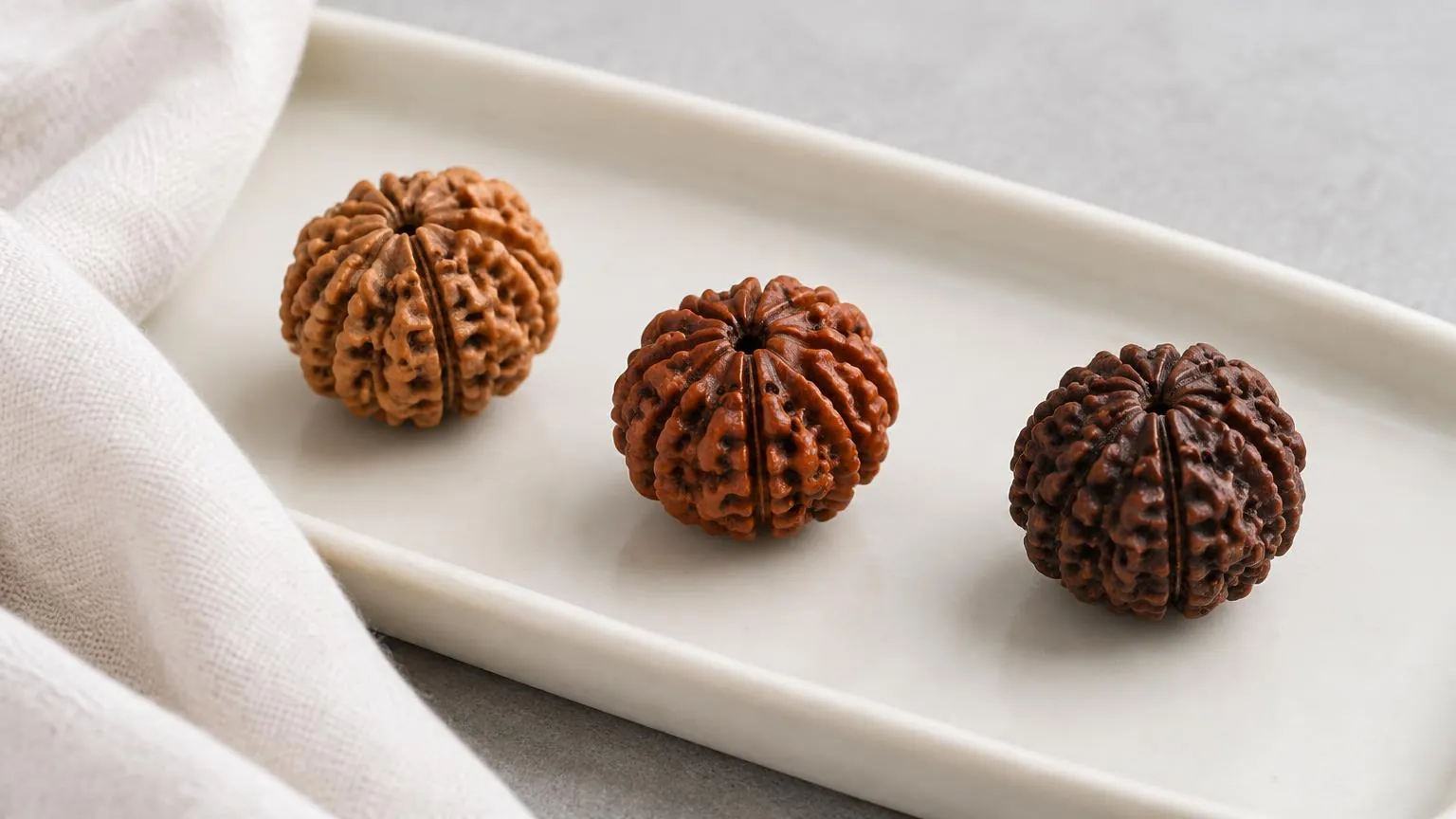
The same bead can appear lighter under a bright window and darker under indoor lighting. Camera exposure, white balance, editing and the screen used to view a photograph can also affect its apparent shade. A wet or oily surface may reflect light differently from a dry one.
Before concluding that the bead changed, compare it in similar conditions. Use indirect daylight, a plain background and no colour filter. Photograph several sides and retain the original files. If the seller's image was representative rather than exact-item photography, it cannot establish your bead's original appearance with precision.
Natural-looking brown does not prove authenticity
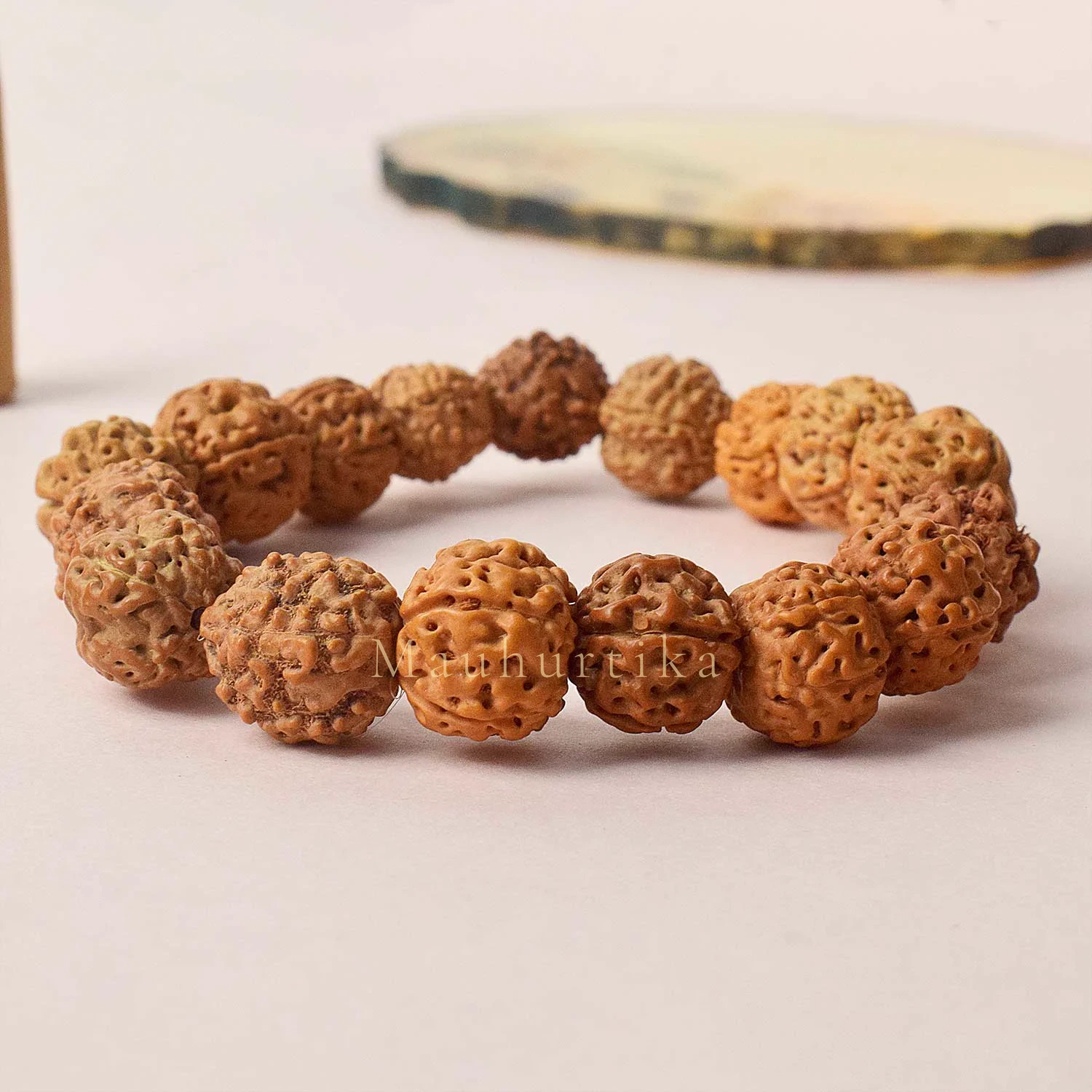
Rudraksha beads are commonly encountered in brown shades, but a plausible brown appearance is not a verification method. A surface may be coloured, coated or polished; conversely, a darker bead is not automatically an imitation. Appearance must be assessed alongside physical identity and the seller's disclosure.
Do not infer Nepali or Indonesian origin from shade alone. Nor does colour identify the mukhi count. If a seller describes a bead as “natural colour,” ask whether that means no added dye, no coating or something narrower. Clear treatment information is more useful than an attractive colour adjective.
If the bead is gradually turning darker
Consider its history before taking action. Has it been worn against the skin, exposed to cosmetics, handled with oily fingers or stored somewhere damp? Has any oil or cleaning product been applied? These are questions to investigate, not proof of the cause of the change.
A gradual, even change in appearance without an obvious deposit is different from a newly sticky surface or visible patches in the grooves. Note when you first noticed the change and whether it follows a particular exposure. Avoid adding more oil to a darkened bead simply because an online comment calls it “dry.” Follow the instructions for the actual bead and mounting.
Dark surface, dirt or suspected mould?
Look under good light without scraping the grooves. Record whether you see loose dust, sticky residue, a fuzzy deposit, new odour, cracking or changes around a cap or thread. Photographs can help a seller understand your concern, but neither a customer nor an article can reliably diagnose mould from colour alone.
If there is a suspected growth, unusual deposit or irritation while wearing, stop wearing the item until the issue has been assessed. Keep it separate from other jewellery in a dry, ventilated place. Do not apply household disinfectant, perfume or a solvent. For irritation that persists, seek appropriate medical advice rather than treating the bead as a health remedy.
What dye or coating disclosure should include
Ask whether the item has received colour treatment, polishing, oiling, protective coating or other surface processing. These are different processes; a vague “treated” label does not tell you which one was used. Ask what was applied, why it was used and what care restrictions follow.
A disclosed colour treatment and an undisclosed imitation are not the same issue. Treatment may affect appearance and care, while authenticity concerns the identity and construction of the object. If your preference is an untreated bead, get that requirement confirmed before payment and keep the seller's response with your purchase record.
What if colour transfers to a cloth?
If you notice transfer during normal, gentle handling, stop and document it. Photograph the bead and the cloth, record whether either was wet, and note any product recently applied. Transfer can raise a question about surface material, but it does not establish the complete explanation on its own.
Do not keep rubbing harder to produce a dramatic result. Ask the seller to explain the treatment history and appropriate next step. If you believe the item differs from its description, consult the actual return and refund policy and contact support. This article does not create an automatic refund or replacement entitlement.
Avoid destructive colour tests
- Do not boil a bead in water or milk to check for dye.
- Do not soak it in alcohol, bleach or household solvent.
- Do not burn, cut or chip it to inspect its interior.
- Do not scrape a groove with a pin to create a new line.
- Do not apply heat to speed up drying or restore its colour.
Such actions can damage beads, threads or metal fittings and may make an assessment more difficult. A lack of colour transfer in a home experiment also does not prove authenticity. For buying questions, read the original and certified Rudraksha guide and ask what evidence applies to the actual item.
Does blackening mean spiritual energy has changed?
Colour is not a dependable measurement of spiritual energy, protection or the success of a prayer. Religious interpretations differ, and this article does not present a physical colour change as a bad omen or a reason to buy a more expensive bead.
If the item has devotional significance, you can ask a trusted teacher about your own practice while separately addressing its physical condition. A bead that needs cleaning or assessment should not become an opportunity for fear-based selling. Neither darkening nor a lighter shade establishes that a bead is more powerful.
A useful message to send the seller
Include a clear photograph, approximate purchase date, whether the change was sudden or gradual, and known exposure to water, oil or cosmetics. Ask: “Was this item dyed, coated or polished? What care method is appropriate for its bead, thread and mounting? Should I stop wearing it while you assess these photographs?”
Use the Mauhurtika WhatsApp enquiry without sending payment details or identity documents. A photo enquiry is not a laboratory diagnosis. If you are comparing a replacement, consult the live bead catalogue or mala collection only after establishing what you actually need.
Frequently Asked Questions
Q.Is a black Rudraksha always fake?
No. A dark appearance alone cannot establish whether a bead is genuine, treated, dirty or photographed under different lighting. Ask for item-specific evidence and treatment disclosure.
Q.Why does my Rudraksha look darker than before?
First compare lighting and surface condition, then review handling, storage and exposure history. This article cannot diagnose the cause from colour alone.
Q.Does colour rubbing onto a cloth prove the bead is fake?
No. It raises a surface-treatment or residue question that should be documented and discussed with the seller. Avoid further aggressive rubbing or chemical testing.
Q.Should I boil Rudraksha to check for dye?
No. Boiling or chemical soaking can damage the bead and its fittings and is not a reliable authenticity test.
Q.Does darkening mean the bead has lost its spiritual power?
Colour does not measure spiritual energy. Consult your tradition for devotional questions and assess the bead's physical condition separately.
Q.Should I replace a bead just because it changed colour?
Not automatically. First document the change, check for physical issues and obtain item-specific advice. Do not rush into a replacement based only on shade.