Jaap Mala Guide: How to Choose the Right Japa Mala for Your Mantra and Deity
A practical buying guide to jaap malas: which mala traditionally suits which deity and mantra, 108 vs 54 vs 27 beads, bead size, thread and knots, how to spot a good mala and how to begin.
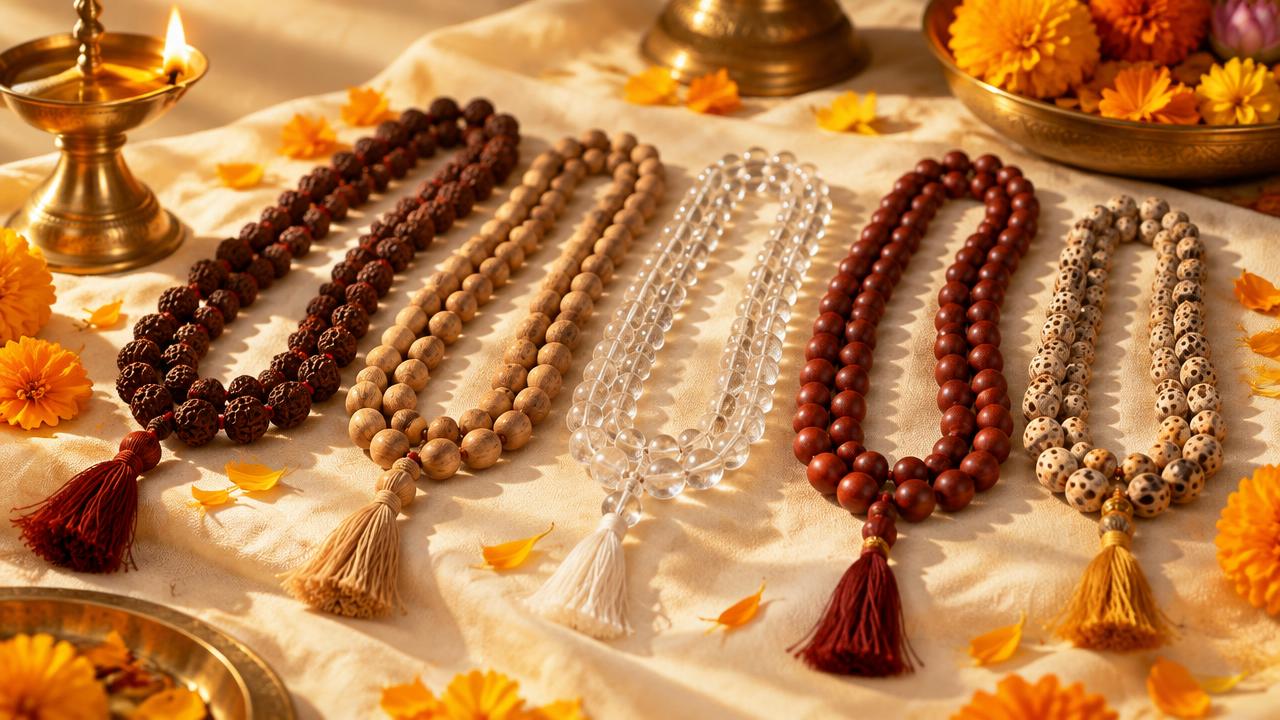
A jaap mala (japa mala) is a string of beads — usually 108 plus one Meru bead — used to count mantra repetitions. Tradition pairs certain materials with certain deities: Rudraksha for Shiva, Tulsi for Vishnu and Krishna, Kamal Gatta for Lakshmi, Haldi for Baglamukhi and Guru, Red Chandan for Devi and Hanuman, and Sphatik for Saraswati and general meditation. If you have no specific deity, a 5 Mukhi Rudraksha mala is the most widely recommended all-purpose choice.
Walk into any temple shop and you will see dozens of malas — brown, white, red, clear, yellow. They can look interchangeable, but in the Hindu tradition the material of a mala is chosen deliberately, to match the mantra and the deity you worship. This guide is about choosing and buying. If you already have a mala and want to know how to chant with it — finger position, Meru etiquette, counting rounds — read our separate guide on how to use a Rudraksha japa mala.
What Is a Jaap Mala?
*Jaap* (or *japa*) means repeating a mantra or divine name. A mala gives that repetition a structure: you move one bead per repetition, and one full round equals one count of 108. The larger bead at the end, called the Meru or Sumeru, marks the start and end of the round and is not crossed over.
Some people wear their jaap mala; others keep it only for chanting and store it in a cloth bag (gomukhi). Both are traditional — what matters is consistency and respect.
Which Jaap Mala for Which Deity? A Quick Guide
- Lord Shiva — Rudraksha mala: the classic choice for *Om Namah Shivaya* and the Mahamrityunjaya mantra. A 5 Mukhi Rudraksha mala is the usual pick.
- Vishnu, Krishna, Rama — Tulsi mala: used for Hare Krishna and Vishnu mantras. Tulsi is generally not used for Shiva mantras in Vaishnava tradition.
- Maa Lakshmi — Kamal Gatta (lotus seed) mala: traditionally chosen for Lakshmi mantras, especially during Diwali and Dhanteras.
- Maa Baglamukhi and Brihaspati — Haldi (turmeric) mala: associated with yellow, Jupiter and Baglamukhi sadhana.
- Durga, Kali, Hanuman, Mangal — Red Chandan (red sandalwood) or Moonga mala.
- Saraswati, Moon and general meditation — Sphatik (clear quartz) mala: valued for its cool, clear appearance.
- Ganesha — Red Chandan or Rudraksha (Ganesh/8 Mukhi associations in some traditions).
- Shani — Karungali (ebony) or Rudraksha: Karungali is popular in South Indian practice for Saturn-related prayers.
- Vaijanti mala: associated with Krishna and Vishnu devotion.
Rudraksha Jaap Malas: The All-Purpose Choice
Rudraksha is the most widely used jaap mala in India, for two practical reasons: the beads are durable for decades of daily use, and the textured surface gives good grip and a clear tactile signal for each count. Traditionally, Rudraksha is considered acceptable for almost every mantra, which is why it suits someone without a specific deity or guru instruction.
Within Rudraksha malas, the mukhi of the beads also carries traditional associations. Most people choose 5 Mukhi; some choose a mala matched to a planet or deity on an astrologer's advice:
- 5 Mukhi: general sadhana, Shiva mantras, beginners.
- 2 Mukhi: traditionally linked with harmony and the Moon.
- 3 Mukhi: associated with Agni and confidence.
- 6 Mukhi: associated with Kartikeya and Venus.
- 7 Mukhi: associated with Mahalakshmi and Saturn.
- 1 Mukhi (Indonesian half-moon) mala: chosen by some for intensive Shiva sadhana.
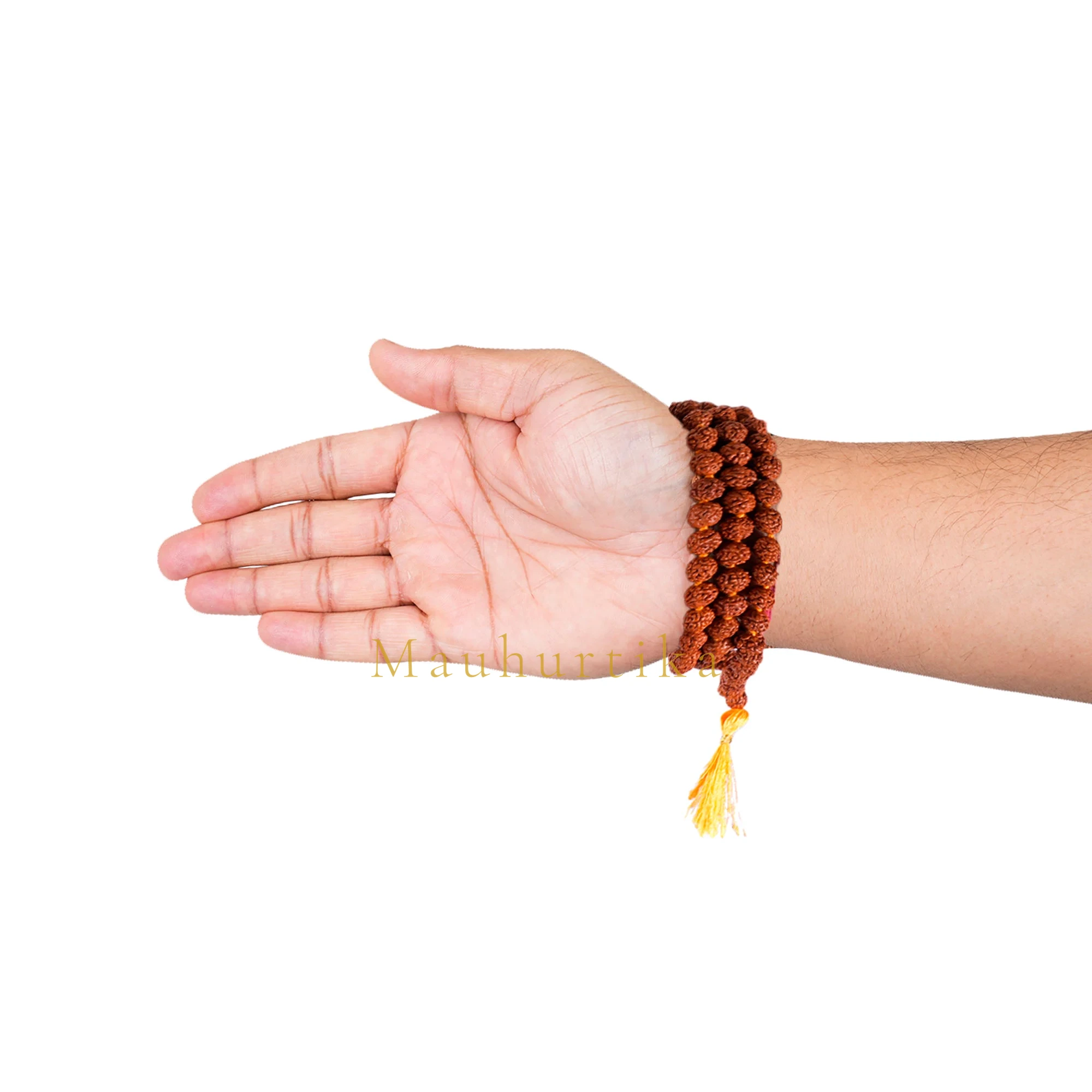
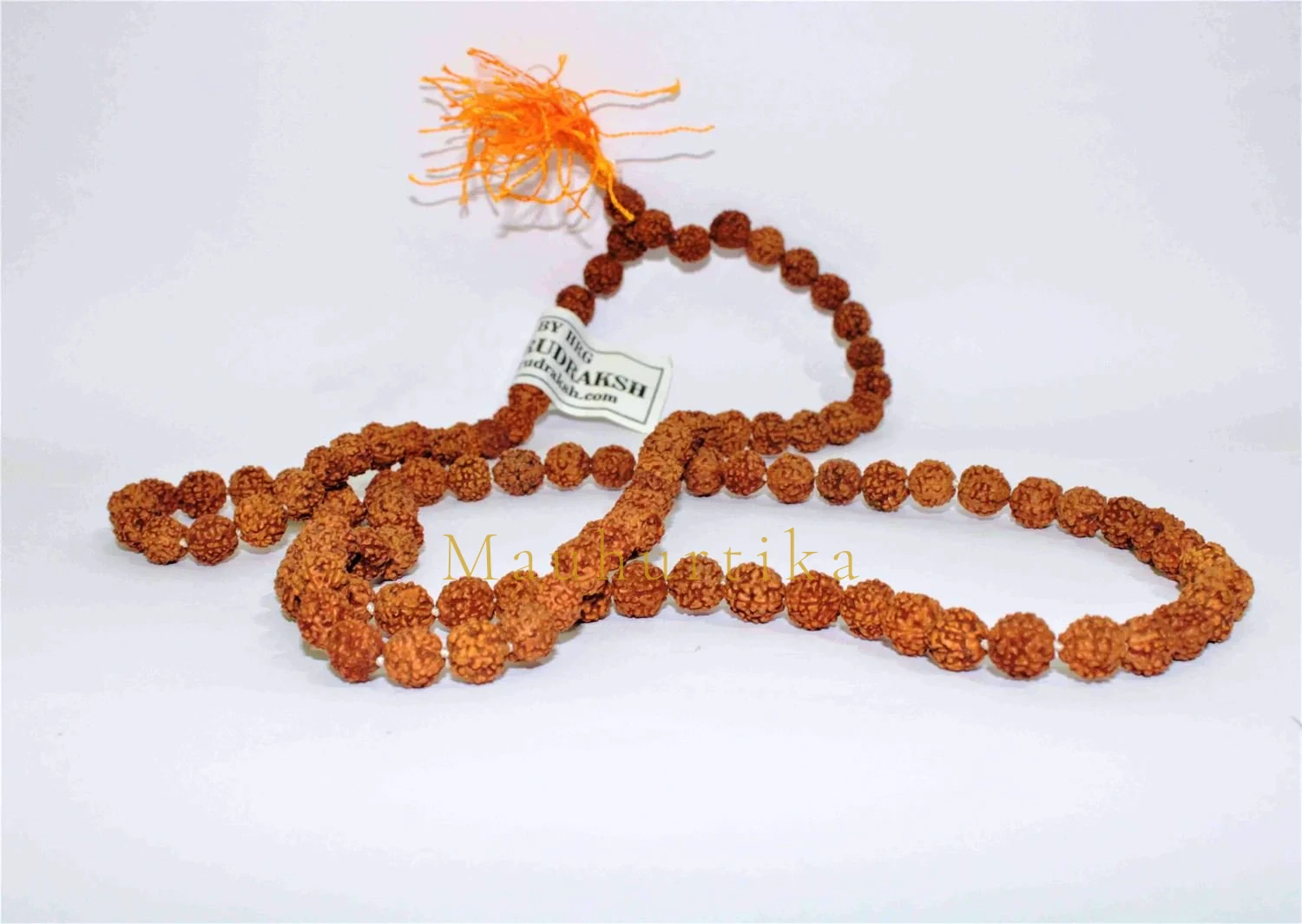
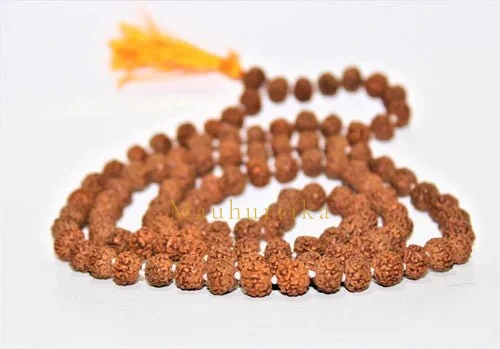
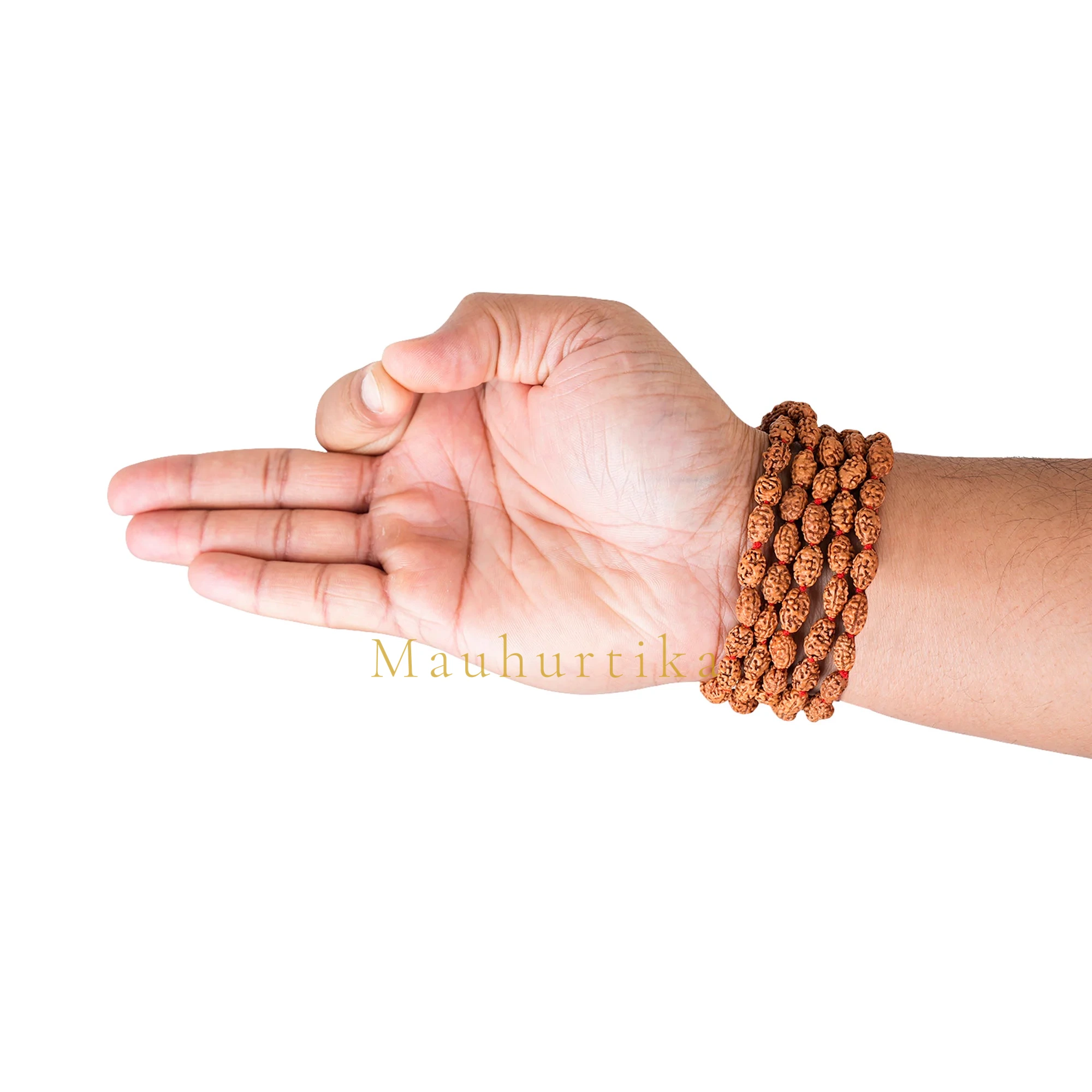
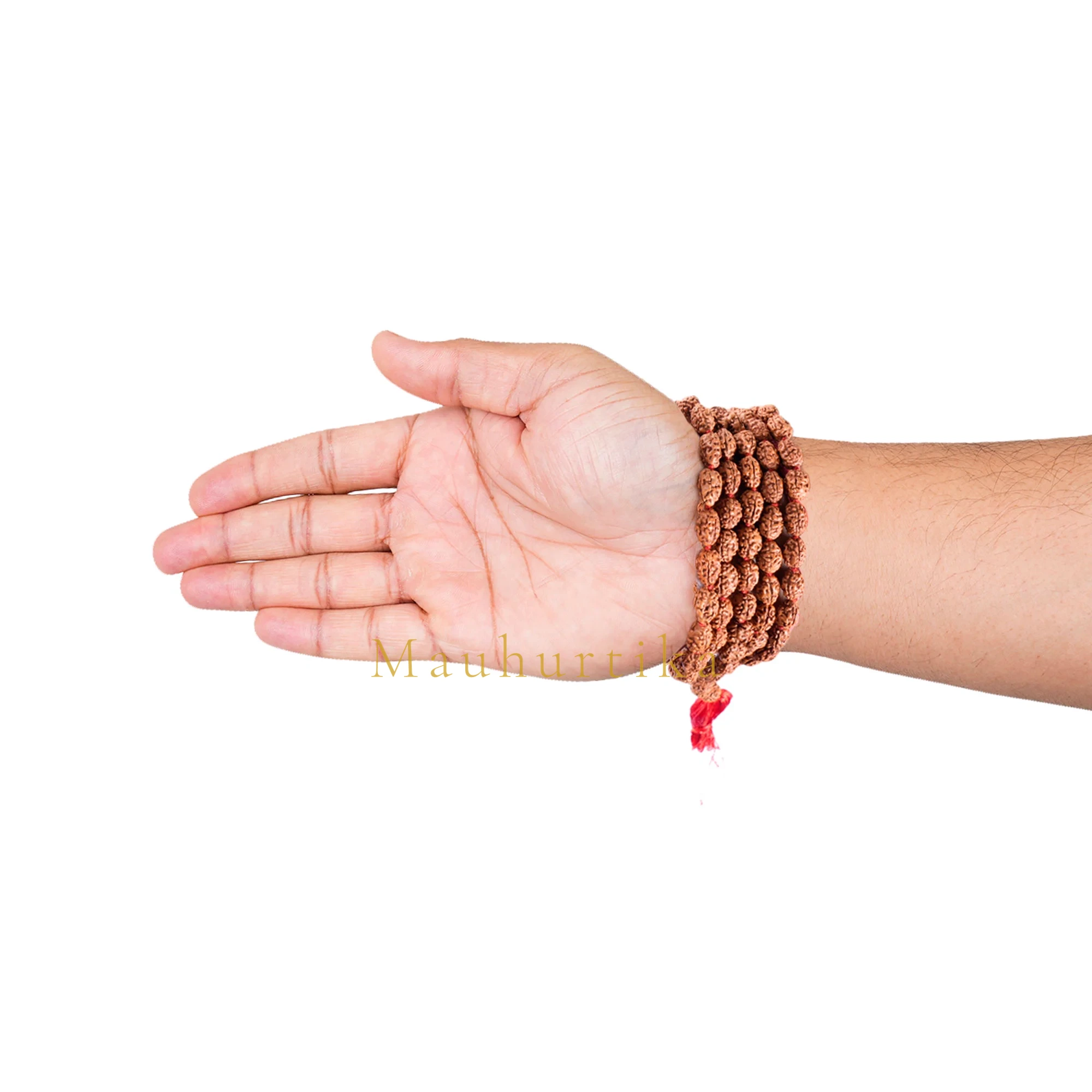
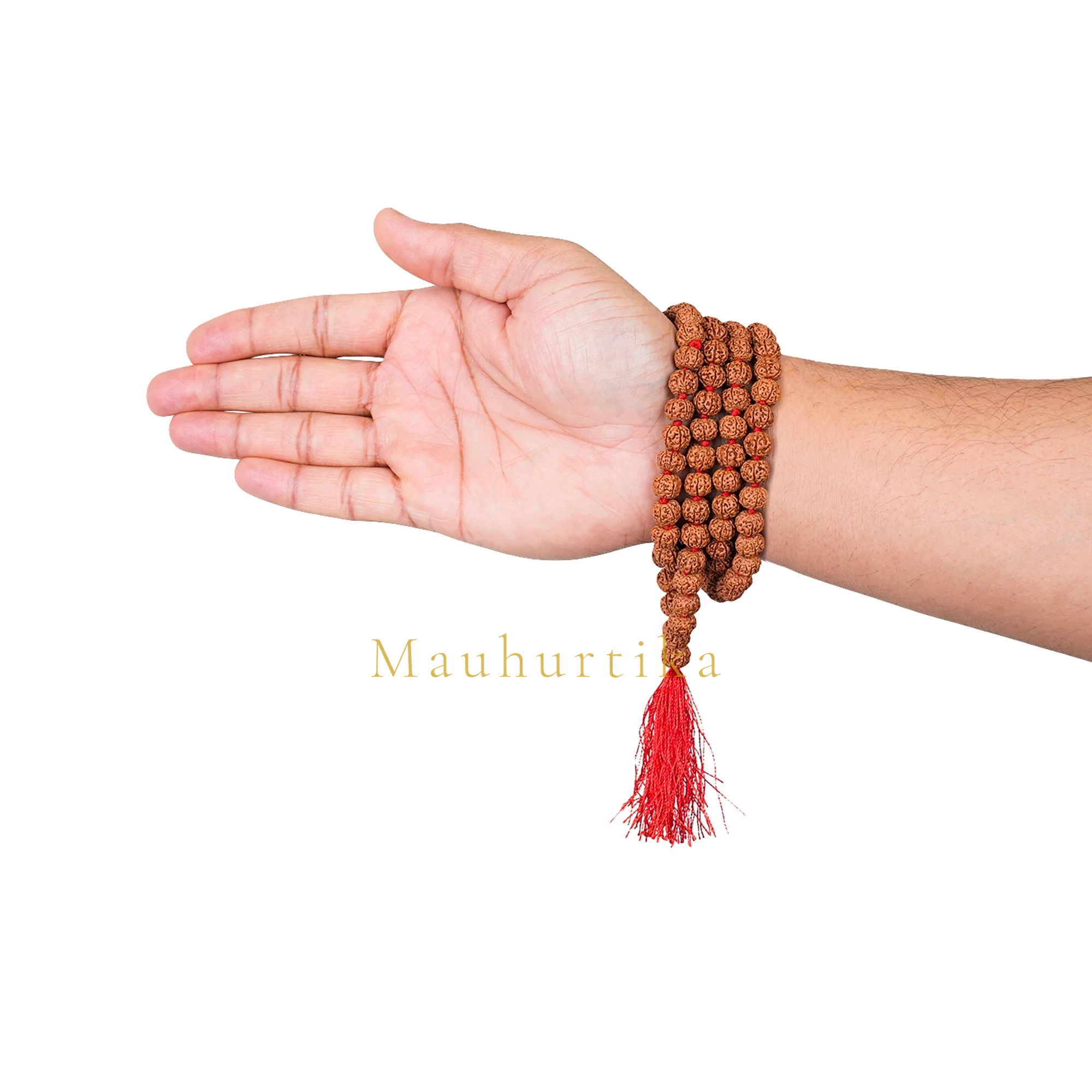
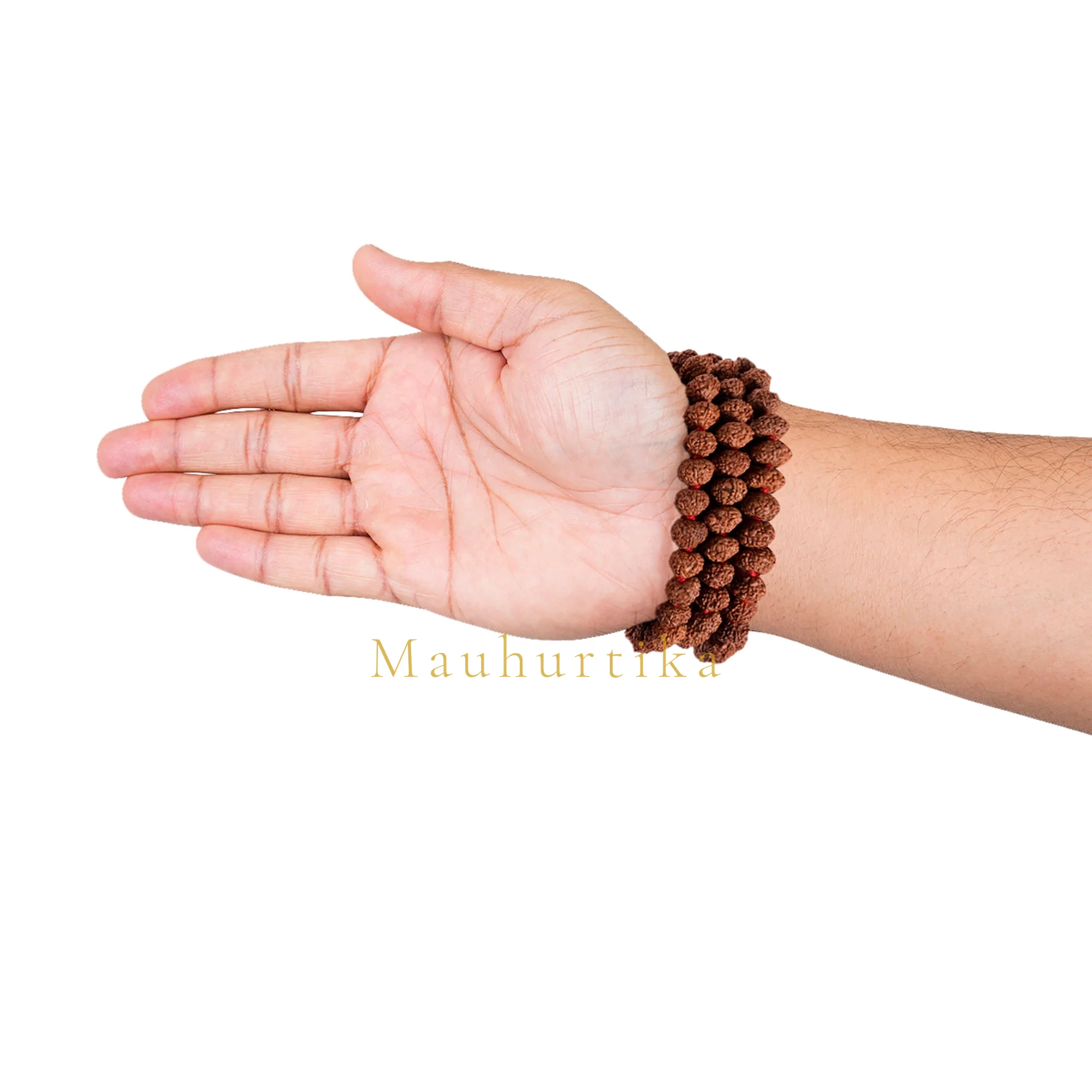
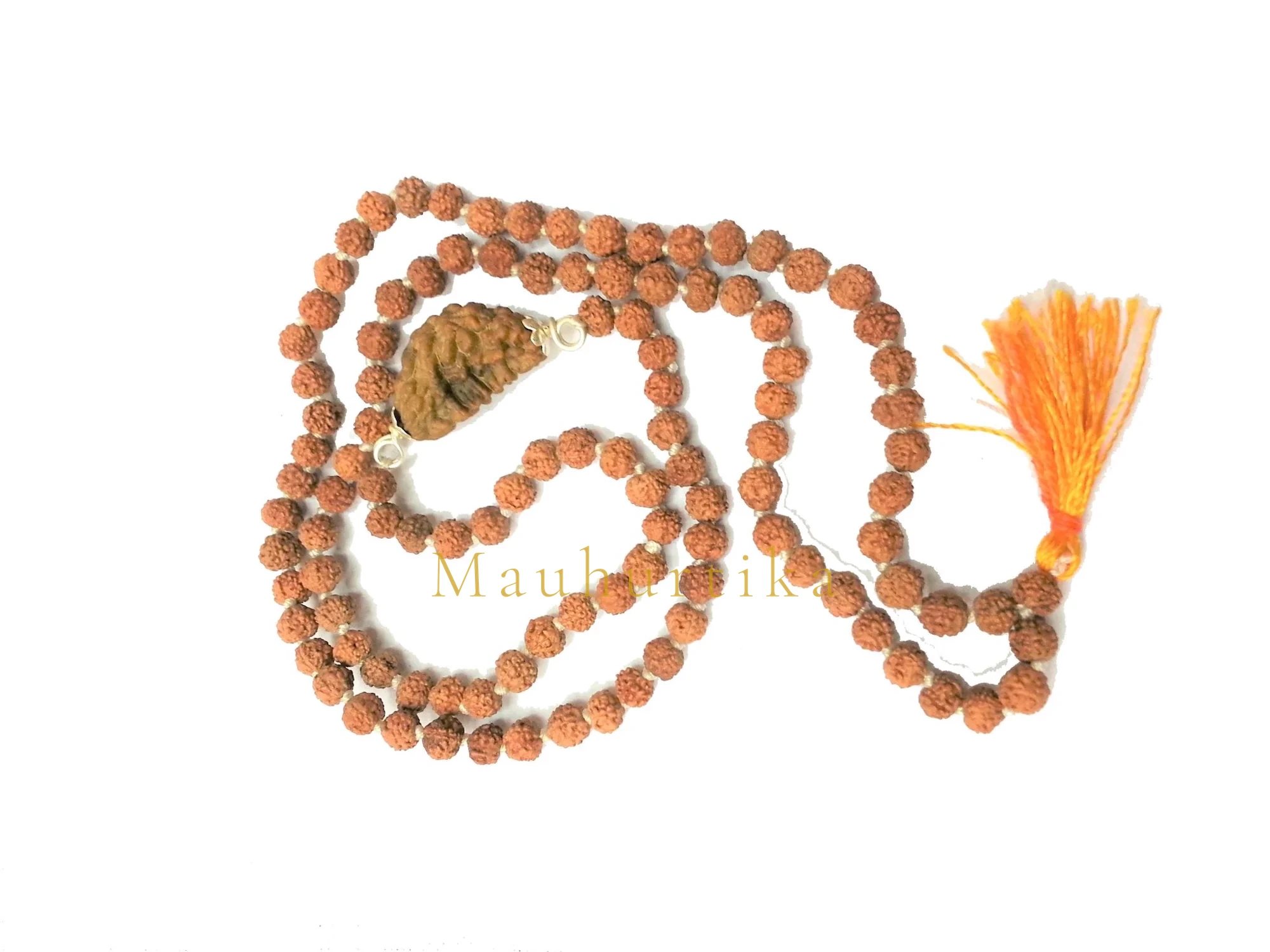
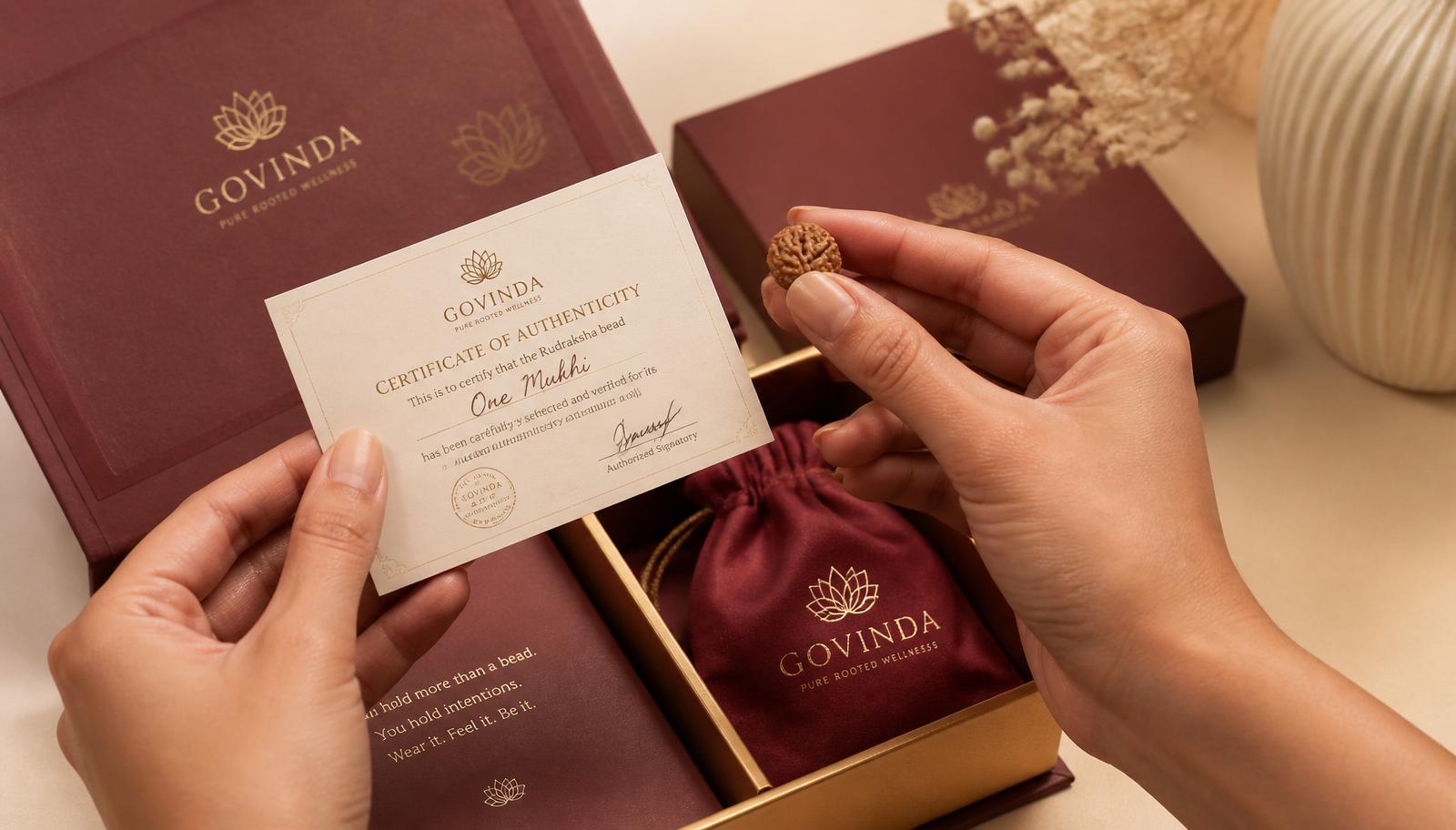
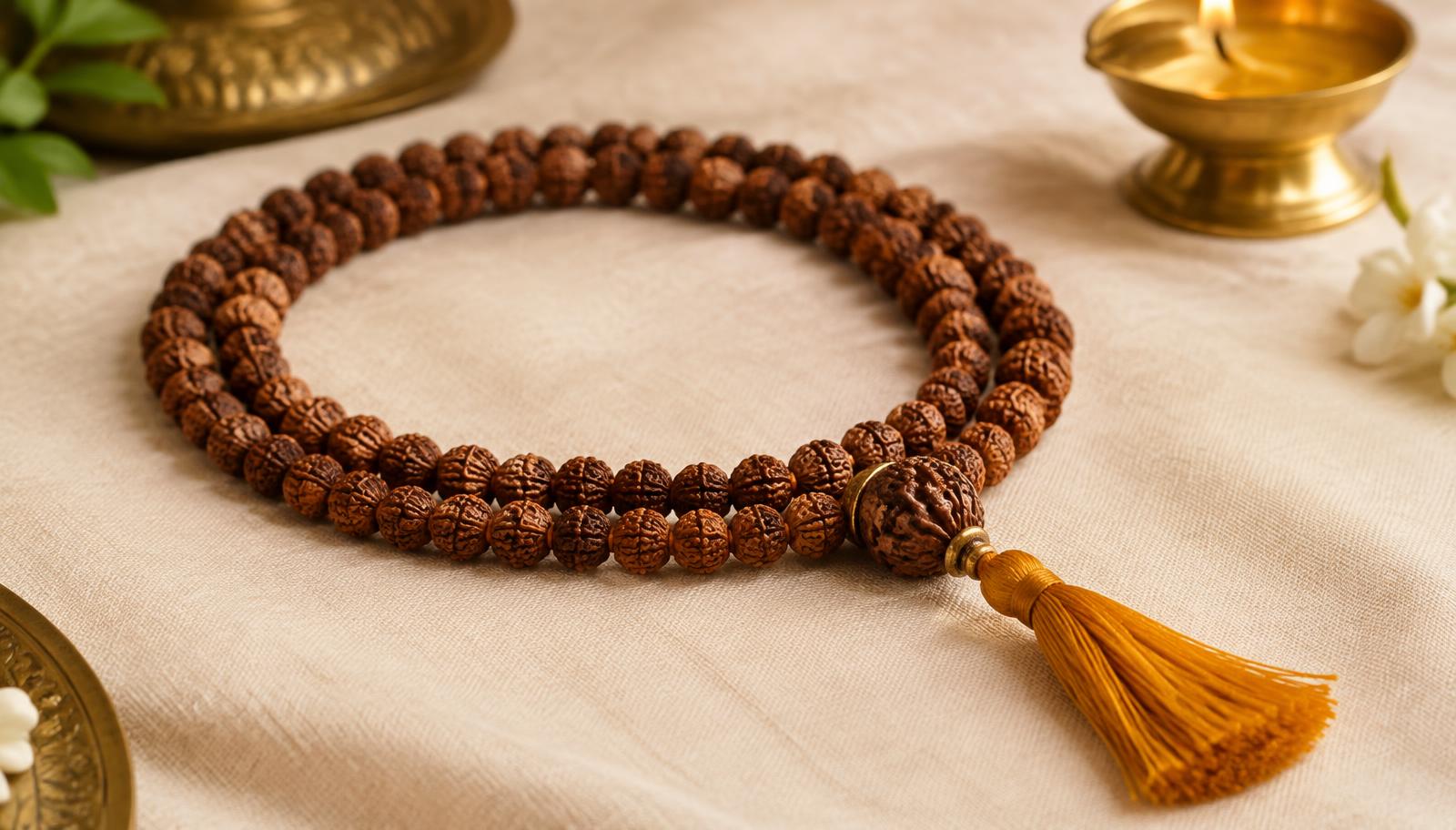
1 Mukhi Rudraksha Mala Pendant | Certified One Face Rudraksha in 5 Mukhi Mala 108+1 Beads
Other Traditional Jaap Malas
If your mantra belongs to a particular deity, a non-Rudraksha mala may be the more traditional choice. These are some of the jaap malas we stock in our Spiritual Store:

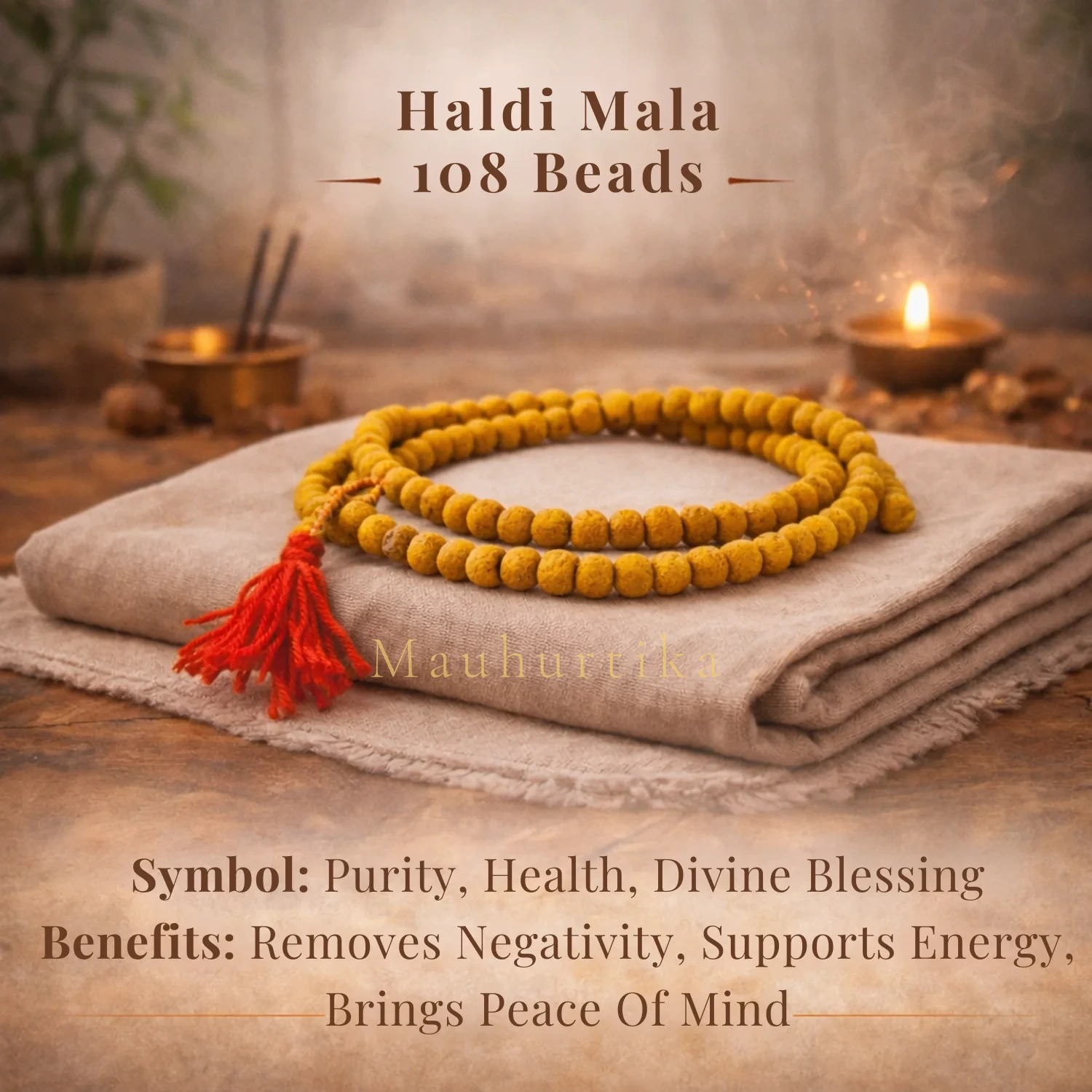
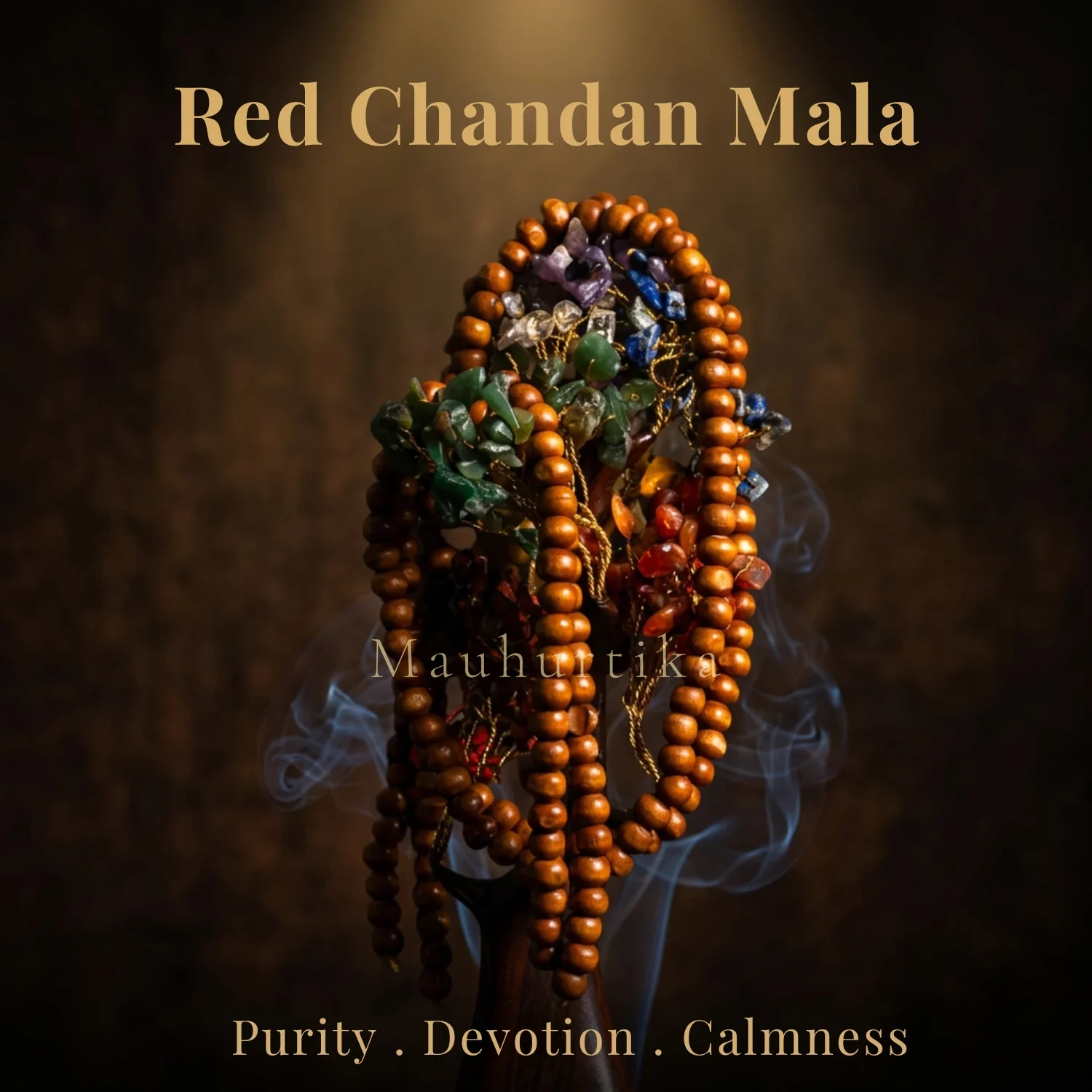
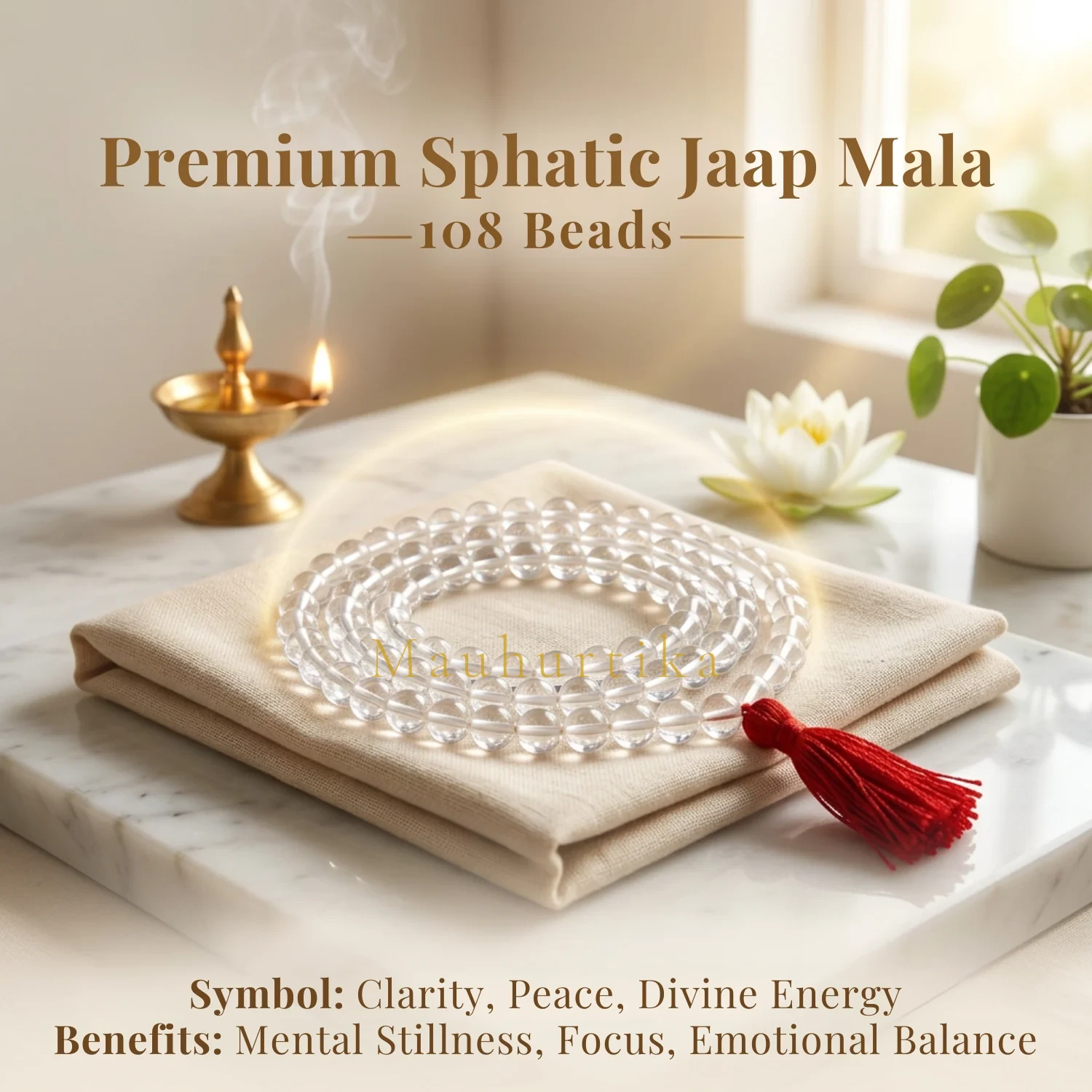
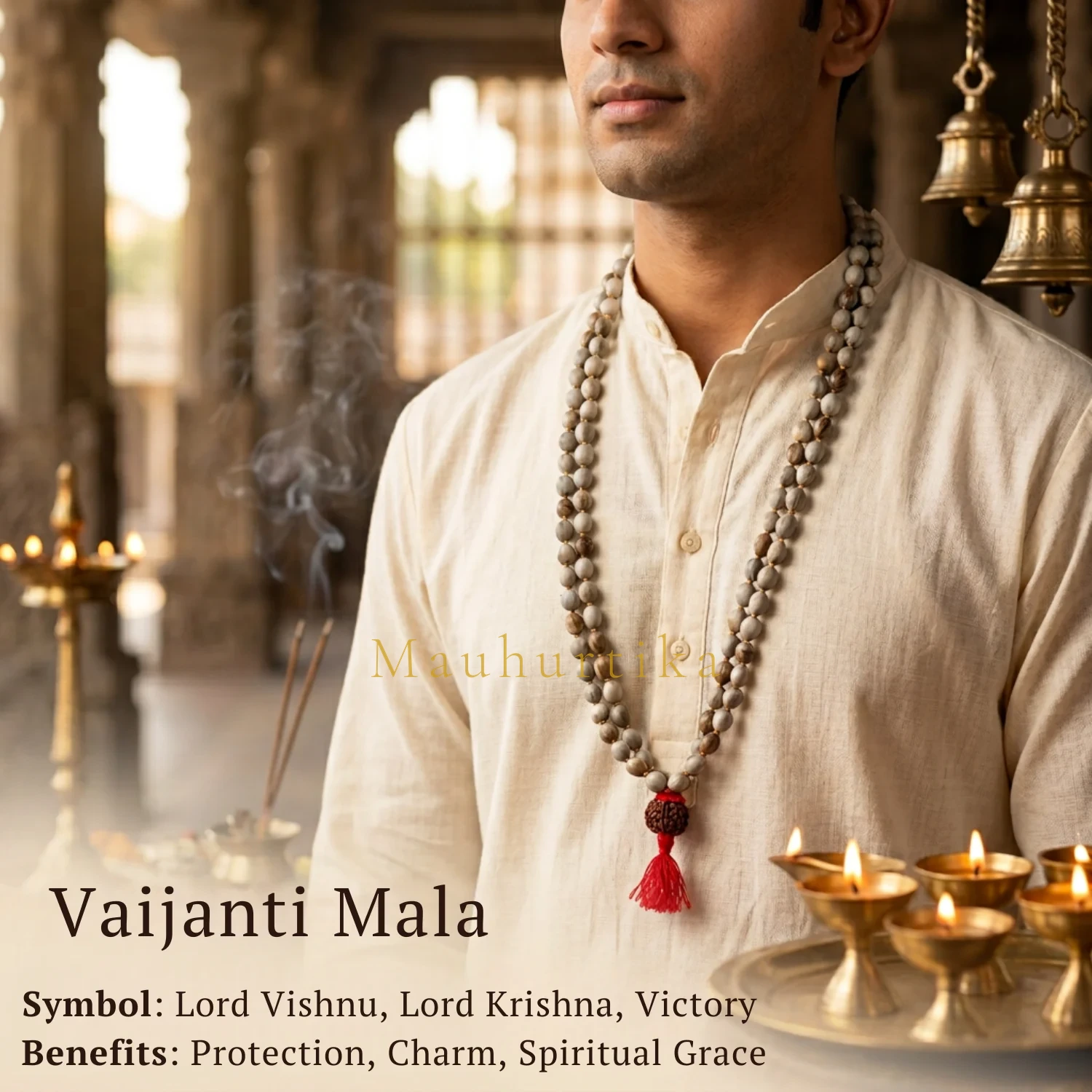
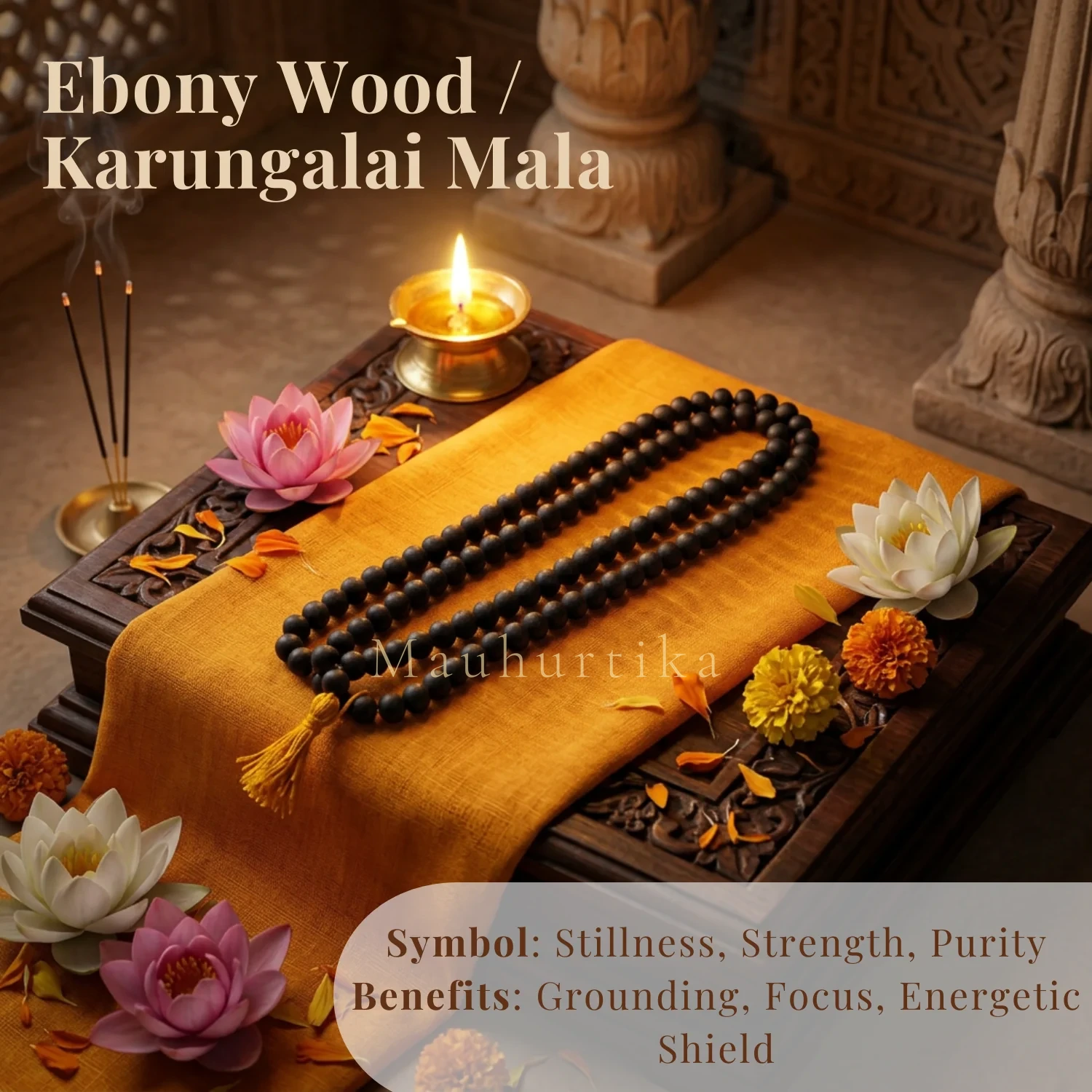
Browse all of them in the Spiritual Store malas section, or see only genuine Rudraksha malas on the Rudraksha Mala collection.
108, 54 or 27 Beads — Which Count Should You Buy?
- 108+1: the standard. One round equals one count of 108, which most mantra instructions assume. Choose this unless you have a reason not to. Why 108? See why a Rudraksha mala has 108 beads.
- 54+1: half rounds — two rounds equal 108. Shorter and lighter, convenient for travel.
- 27+1: wrist-length; four rounds equal 108. Easy to carry, but counting large numbers takes more attention.
A practical tip: if you will chant at home, buy 108+1. If you also want something to wear daily, a 27 or 54 bead wrist mala is a good second mala, not a replacement.
Bead Size: Comfort Matters More Than You Think
For counting, smaller beads slide faster through the fingers; for wearing, larger beads look and feel more substantial.
- 5–7 mm: light, fast for long jaap sessions, ideal for Indonesian Rudraksha malas.
- 8–10 mm: balanced — comfortable to count and to wear.
- 11 mm and above: heavier; better as a kantha (wearable) mala than for long chanting.
If you plan to chant many rounds daily, choose comfort over appearance.
Thread, Knots and Finish: How to Spot a Well-Made Mala
A good jaap mala is built to be handled thousands of times. Check these details on any mala before you buy:
- Knots between beads: each bead separated by a knot so beads do not rub, and so a broken thread does not scatter the whole mala.
- Thread: strong cotton or silk; red, yellow or white according to tradition. Expect to re-string every year or two with daily use.
- Uniform beads: similar size and shape across the mala, with the Meru clearly larger.
- Natural material: Rudraksha should show natural lines and texture; Sphatik should be cool to the touch and not feel like light glass; Chandan should not be painted wood.
- Clean drilling: holes centred, without cracks around them.
Price Guide: What a Fair Jaap Mala Costs
As a broad guide from our own catalogue: traditional seed and wood malas such as Kamal Gatta, Haldi or Vaijanti start around ₹500–₹600; Red Chandan and Sphatik malas are typically ₹1,500–₹3,500; a 108+1 5 Mukhi Rudraksha mala starts around ₹1,200 for small Indonesian beads and rises with Nepali origin and larger beads; malas of rarer mukhis cost more. Prices on product pages are always the current ones.
Be careful with extremely cheap "Rudraksha" malas — many are made from Bhadraksha or other seeds. See how to identify an original Rudraksha.
How to Begin With a New Jaap Mala
1. Wash it gently in clean water or Gangajal and let it dry.
2. On an auspicious day — commonly a Monday for Shiva, Thursday for Vishnu/Guru, Friday for Lakshmi — offer it before your deity with a lamp and incense.
3. Chant your chosen mantra for one full round (108) as the first use.
4. Keep it in a clean cloth bag when not in use, and avoid letting others use your personal mala.
For detailed technique, read the Rudraksha japa mala practice guide.
Still Unsure? Let Us Help You Choose
If you have a specific mantra from your guru or astrologer, choose the mala that matches its deity. If you simply want to begin a daily practice, a 5 Mukhi Rudraksha jaap mala is the safest, most widely recommended start. Not sure? Our free Rudraksha consultation can suggest a mala based on your birth details, or message us on WhatsApp from any product page.
Frequently Asked Questions
Q.Which jaap mala is best for beginners?
A 108+1 5 Mukhi Rudraksha mala is the most widely recommended beginner jaap mala. It is traditionally considered suitable for almost every mantra and is durable for daily use.
Q.Which mala should I use for Om Namah Shivaya?
Rudraksha is the traditional mala for Shiva mantras, including Om Namah Shivaya and the Mahamrityunjaya mantra. A 5 Mukhi Rudraksha mala is the usual choice.
Q.Which mala is used for Lakshmi mantras?
Kamal Gatta (lotus seed) mala is traditionally used for Lakshmi mantras. Some devotees also use Sphatik or a 7 Mukhi Rudraksha mala.
Q.Can I use a Tulsi mala for Shiva mantras?
In Vaishnava tradition, Tulsi is reserved for Vishnu, Krishna and Rama. For Shiva mantras, a Rudraksha mala is the traditional choice.
Q.Should a jaap mala have 108 beads?
108+1 is the standard because one round equals one count of 108. 54+1 and 27+1 malas are also traditional; you simply complete two or four rounds.
Q.Can I wear my jaap mala?
Many people wear a Rudraksha jaap mala, while others keep it only for chanting. Follow your guru's or family's tradition; if you chant intensively, some prefer a separate mala for wearing.
Q.How often should a jaap mala be re-strung?
With daily use, re-string every 12–24 months, or sooner if the thread looks thin or frayed.