Why 108? The Meaning Behind 108 Beads in a Rudraksha Mala
The spiritual, astronomical and practical reasons behind the number 108 in a Rudraksha mala, the role of the guru (meru) bead, when 54 or 27 beads are used, and how to count japa correctly.
Quick answer: A japa mala traditionally has 108 beads plus one guru (meru) bead. The number 108 is considered sacred across Hindu, Buddhist and Jain traditions and is connected in popular explanation with 27 nakshatras × 4 padas, 12 zodiac signs × 9 planets, and the 108 Upanishads named in the Muktika canon. Practically, one round of 108 is a manageable, complete unit of mantra repetition. Shorter malas of 54 or 27 beads are used for portability or quicker practice.
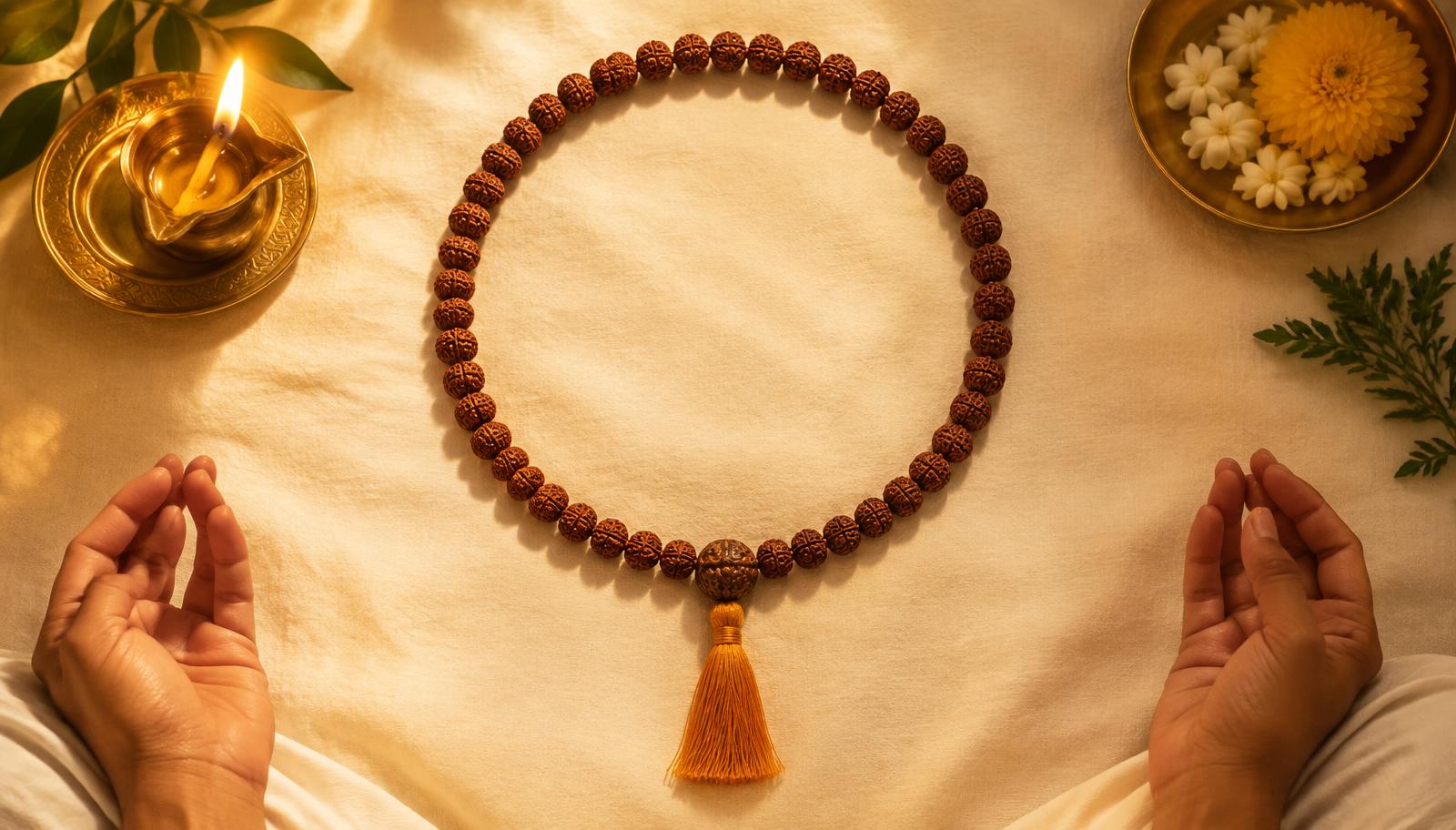
Pick up any Rudraksha japa mala and you will count 108 beads and one larger bead where the string meets. Ask why, and you will hear a dozen answers — some scriptural, some astronomical, some simply practical. This guide brings those explanations together clearly, so you understand the number you are counting every morning.
108 in Hindu Tradition
The number 108 appears again and again in Indian spirituality:
- Many deities have 108 names (Ashtottara Shatanamavali) chanted in worship — see our 108 names of Lord Hanuman.
- The Muktika Upanishad lists 108 Upanishads.
- Many temples and pilgrimages are counted in 108s, such as the 108 Divya Desams of Vaishnava tradition.
- Classical dance traditions describe 108 karanas.
Repeating a mantra 108 times is therefore seen as a complete, auspicious offering.
Astronomical and Mathematical Explanations
| Explanation | Calculation |
|---|---|
| Nakshatras and padas | 27 lunar mansions × 4 quarters = 108 |
| Zodiac and planets | 12 rashis × 9 grahas = 108 |
| Number symbolism | 1 (unity) · 0 (completeness) · 8 (infinity) |
| Sun, Moon and Earth (popular) | Distance ratios are often said to be close to 108; this is approximate |
These explanations are traditional and symbolic. Some are approximations rather than exact science, but they show why 108 has long been seen as a number of cosmic completeness.
Why the Guru (Meru) Bead Matters
The 109th bead, called the guru or meru bead, marks the start and end of a round. Traditionally you do not cross over the meru; at the end of 108 repetitions you turn the mala around and continue in the opposite direction. The meru is also a moment to remember one's teacher and the deity of the mantra.
108, 54 and 27: Which Mala Should You Use?
| Beads | Use |
|---|---|
| 108 + 1 | Standard japa mala; one complete round |
| 54 + 1 | Half mala; two rounds = 108; portable, often worn |
| 27 + 1 | Wrist mala; four rounds = 108; travel and quick practice |
Choose the 108+1 mala for a dedicated home practice; 54+1 or wrist malas are useful when you want to wear the mala through the day.
How to Do 108 Japa Correctly
1. Sit facing east or north on a clean mat.
2. Hold the mala in the right hand, draped over the middle finger.
3. Use the thumb to move one bead at a time toward you, starting next to the meru.
4. Avoid using the index finger, which tradition associates with ego.
5. Chant one mantra per bead — for example Om Namah Shivaya.
6. At the meru, turn the mala and begin again if continuing.
Our detailed Rudraksha japa mala guide covers mantras, timing and care.
Choose Your 108 Bead Rudraksha Mala
Every mala below is a genuine Rudraksha mala from our catalogue, with live prices:
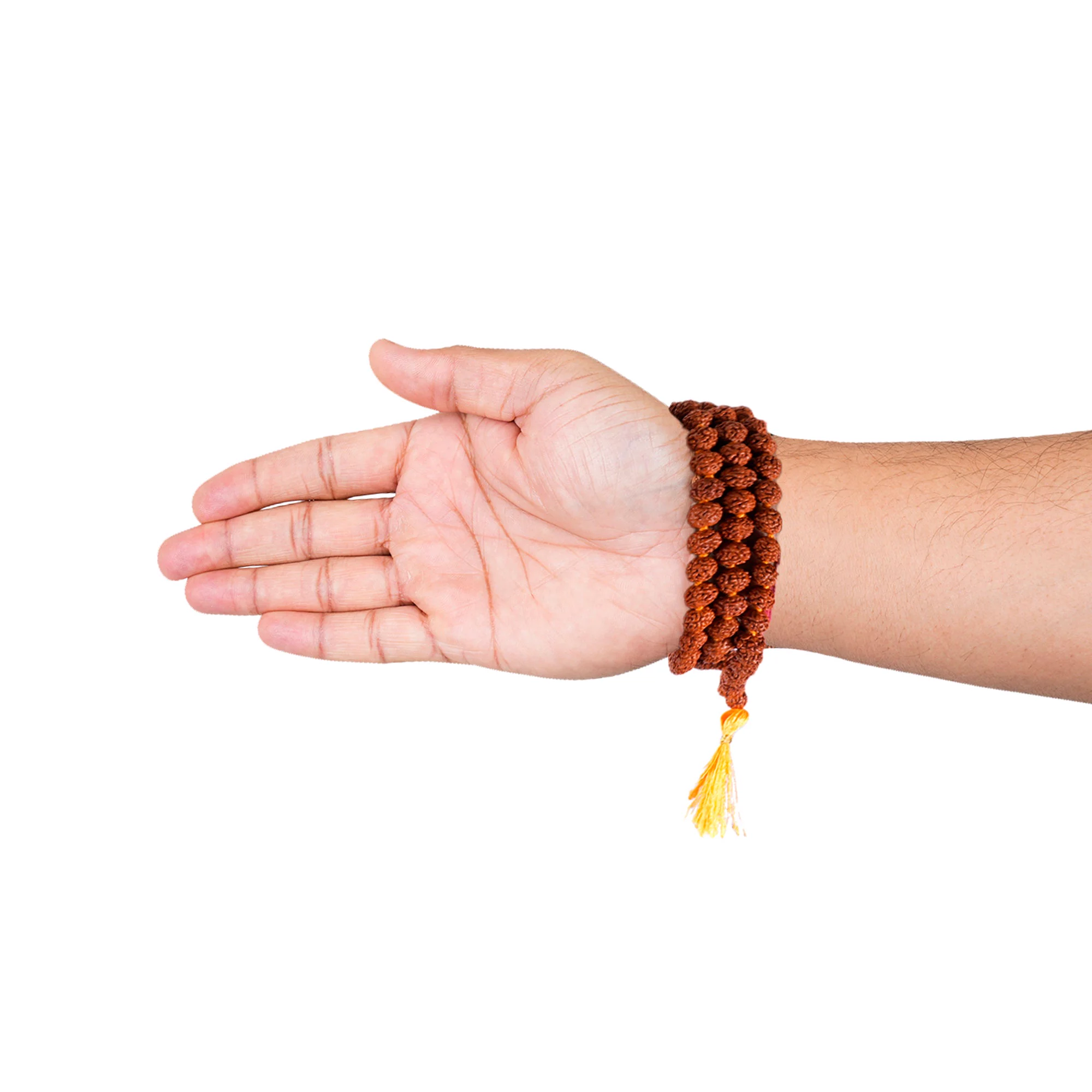
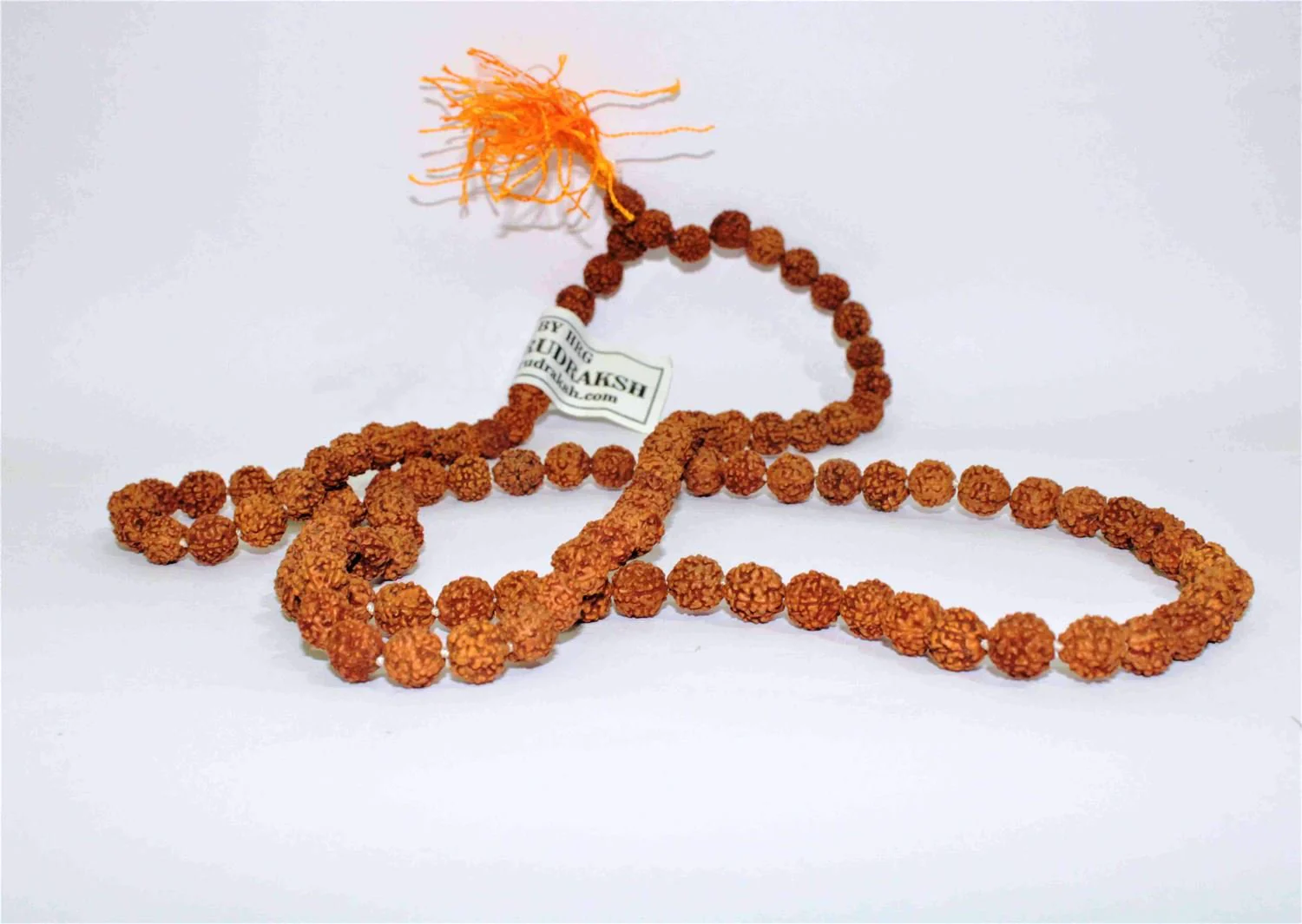
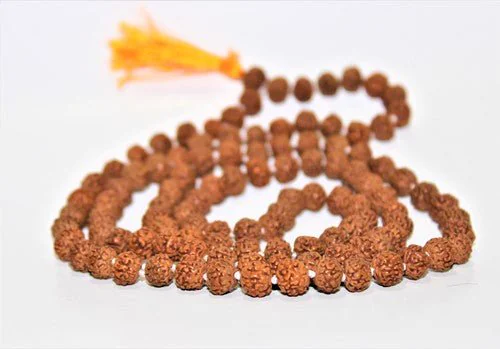
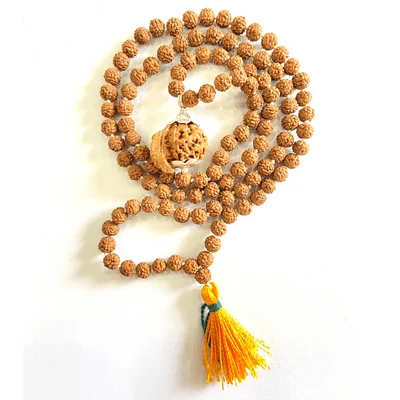
Ganesh Mukhi Rudraksha Mala | Nepali Ganesh Rudraksha Mala 54+1 Beads
Explore the full Rudraksha Mala collection by origin, bead count and mukhi.
108 in Buddhism and Jainism
The number is not unique to Hinduism. Many Buddhist malas also carry 108 beads, often explained as the 108 mental afflictions or defilements to be overcome. Jain tradition similarly uses 108 in prayer counts, linked with the virtues of the five supreme beings. The shared number across traditions shows how deeply 108 is rooted in Indian spiritual culture.
108 in the Body and Yoga
Yoga and Ayurveda texts describe 107 marma points (vital points), with the mind sometimes counted as the 108th. Yoga studios commonly perform 108 Surya Namaskars on special occasions such as the change of seasons. Whether or not you follow these interpretations, they illustrate how 108 became a symbol of wholeness.
Bead Size and Mala Length
| Bead size | Mala feel | Best for |
|---|---|---|
| 5–7 mm | Light, compact | Travel, wearing under clothes |
| 8–10 mm | Balanced | Most japa practitioners |
| 11–14 mm | Substantial | Those who like a firm grip |
| Nepali 15 mm+ | Heavy, traditional | Dedicated home practice |
Choose a size your fingers move through comfortably for a full round. See our bead size guide.
Should You Wear Your Japa Mala?
Traditions differ. Some teachers prefer keeping the japa mala only for chanting and storing it in a cloth bag; others wear it through the day as a reminder. A common compromise is to keep a 108+1 mala for japa and wear a separate 54+1 or wrist mala.
Counting Beyond One Round
For larger mantra commitments — 1,008 or 11,000 repetitions, for example — use small counters, a second string of marker beads or simply note rounds on paper. One round of 108 is often counted as 100 to allow for mistakes, which is why many people say one mala equals 100 chants.
Caring for Your Mala
Wipe it after use, keep it away from water and soap, oil it lightly every month and restring it when the thread weakens. Read our care guide.
Frequently Asked Questions
Frequently Asked Questions
Q.Why does a mala have 108 beads?
108 is considered sacred in Hindu, Buddhist and Jain traditions, with explanations including 27 nakshatras × 4 padas and 12 zodiac signs × 9 planets. A round of 108 is seen as a complete offering of mantra.
Q.What is the 109th bead in a mala called?
It is called the guru or meru bead. It marks the beginning and end of a round and is not crossed during japa.
Q.Can I use a 54 bead mala for japa?
Yes. Two rounds of a 54+1 mala equal 108 repetitions.
Q.Is it wrong to cross the meru bead?
Tradition advises turning the mala around at the meru instead of crossing it, as a mark of respect.
Q.Which Rudraksha mala is best for 108 japa?
A 5 Mukhi 108+1 Rudraksha mala is the most traditional and widely recommended choice for daily japa.