Lalita Sahasranama: Meaning of the 1000 Names of Maa Tripurasundari and How to Chant
The Lalita Sahasranama praises the Divine Mother Lalita Tripurasundari through 1000 names. Learn where it comes from, what the names mean and how to begin chanting.
Quick answer: The Lalita Sahasranama is a hymn of 1,000 names of Goddess Lalita Tripurasundari, found in the Lalitopakhyana section of the Brahmanda Purana. Lord Hayagriva teaches it to Sage Agastya, and tradition says it was composed by the eight Vagdevis (goddesses of speech) at the Goddess's command. It is central to Sri Vidya worship and is chanted daily by millions of devotees.
Unlike many sahasranamas that repeat names, every one of Lalita's thousand names is unique. They describe her form, her victory over the demon Bhandasura, the subtle body, the chakras, and finally her nature as pure consciousness beyond form. Reading it slowly is like walking through a complete map of Shakta philosophy.
Who Is Lalita Tripurasundari?
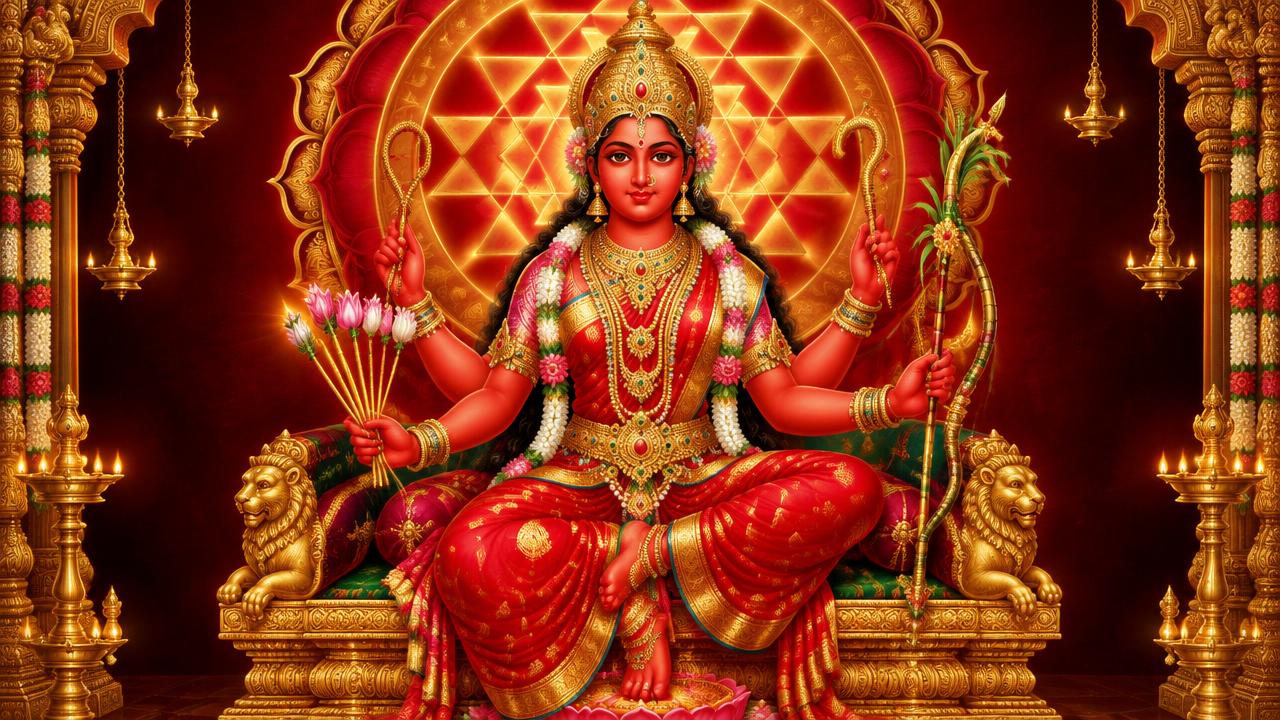
Lalita — “she who plays” — is the supreme Goddess in the Sri Vidya tradition. As Tripurasundari she is “the most beautiful in the three worlds” and as Shodashi she is one of the ten Mahavidyas. She is depicted with a rosy-red complexion, four arms holding a noose (pasha), goad (ankusha), sugarcane bow and five flower arrows, seated on a throne whose legs are Brahma, Vishnu, Rudra and Ishvara, with Sadashiva as its seat. Her geometric form is the Sri Yantra.
Origin and Structure
- Source: Brahmanda Purana, Uttara Khanda, Lalitopakhyana.
- Dialogue: Hayagriva (a form of Vishnu) to Sage Agastya.
- Parts: Purva bhaga (introduction), the Sahasranama itself, and Uttara bhaga (phala shruti — the fruits of recitation).
- Classic commentary: *Saubhagya Bhaskara* by Bhaskararaya (18th century) is the most respected explanation of the names.
The names flow in a meaningful order: first her appearance from the fire of consciousness, then a head-to-toe description of her form, her city Sri Nagara, her war against Bhandasura, the Kundalini journey through the chakras, and finally her formless, non-dual nature.
Meaning of the First Names
| No. | Name | Meaning |
|---|---|---|
| 1 | Shri Mata | The auspicious Mother of all |
| 2 | Shri Maharajni | The great Empress of the universe |
| 3 | Shrimat Simhasaneshwari | Queen of the lion throne |
| 4 | Chidagni Kunda Sambhuta | Born from the fire-altar of pure consciousness |
| 5 | Deva Karya Samudyata | Ready to accomplish the purpose of the gods |
| 6 | Udyad Bhanu Sahasrabha | Radiant like a thousand rising suns |
| 7 | Chatur Bahu Samanvita | Endowed with four arms |
| 8 | Raga Svarupa Pashadhya | Holding the noose, which represents desire |
| 9 | Krodhakaranku Shojjvala | Shining with the goad, which represents anger restrained |
| 10 | Mano Rupekshu Kodanda | Holding the sugarcane bow, which is the mind |
| 11 | Pancha Tanmatra Sayaka | Holding five arrows, the five subtle elements |
Notice how the weapons are interpreted: desire, anger, mind and the senses are not destroyed but held in her hands — mastered and turned toward the divine. This is the essence of Shakta spirituality.
Benefits of Chanting Lalita Sahasranama (Traditional View)
- The phala shruti describes protection, prosperity, health and removal of obstacles for the sincere devotee.
- Devotees value it for deepening devotion to the Divine Mother and calming the mind.
- It is chanted for family harmony, during Navaratri, on Fridays, Purnima and Ashtami.
- Regular recitation trains concentration and Sanskrit pronunciation.
These are spiritual and traditional descriptions, not promises of specific material or medical outcomes.
How to Chant the Lalita Sahasranama
- Time: Morning after bath, or Friday and Purnima evenings. One full recitation takes about 25–40 minutes.
- Preparation: Light a ghee lamp, offer red flowers (especially hibiscus or lotus) and kumkum.
- Order: Many traditions recite the dhyana shloka first, then the thousand names, then the uttara bhaga.
- Namavali form: In *archana*, each name is chanted with “Om … Namah” while offering kumkum or flowers.
- Learning: Start with a recording and follow the text. Even reading 100 names a day is a good beginning.
- Initiation: Daily devotional recitation is widely practised without diksha; formal Sri Vidya mantras such as the Panchadashi traditionally require a guru.
Rudraksha, Sphatik and Devi Worship
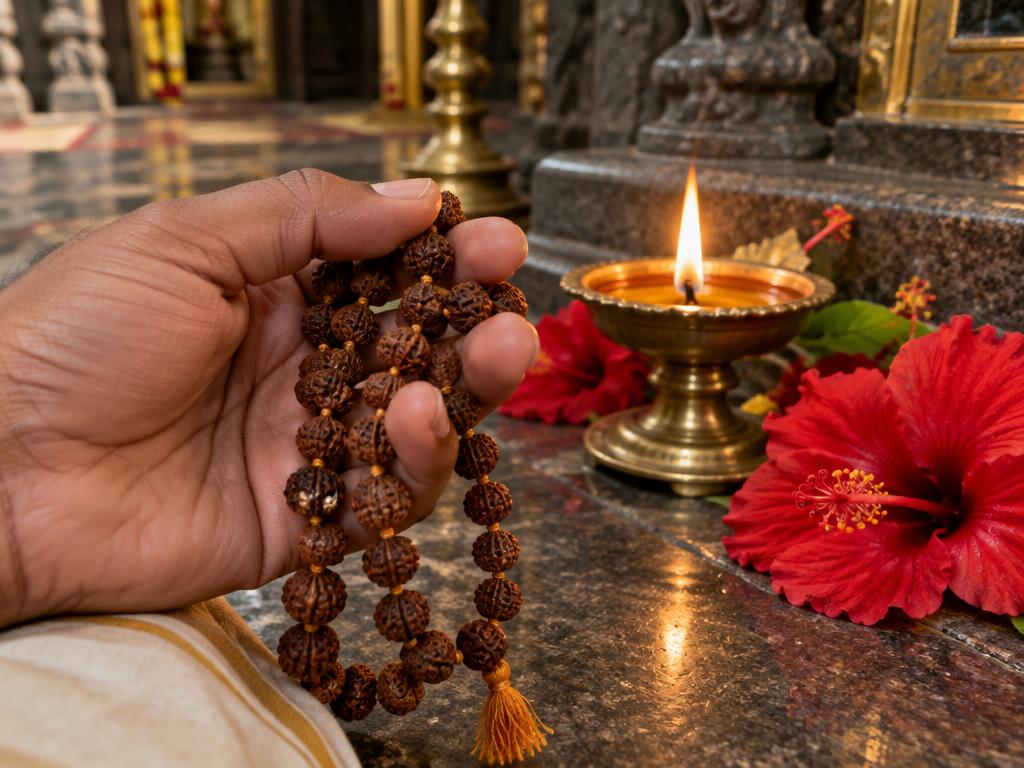
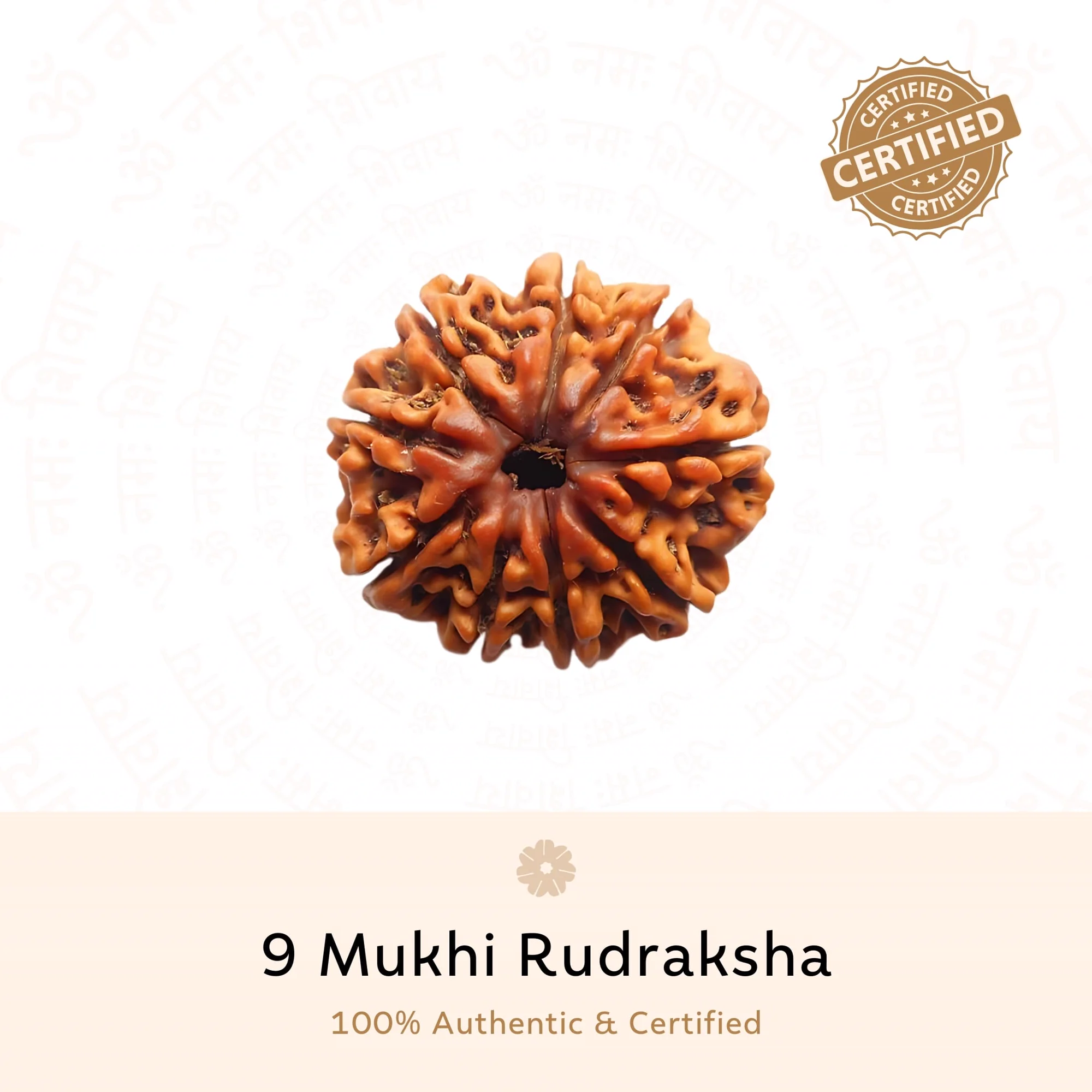
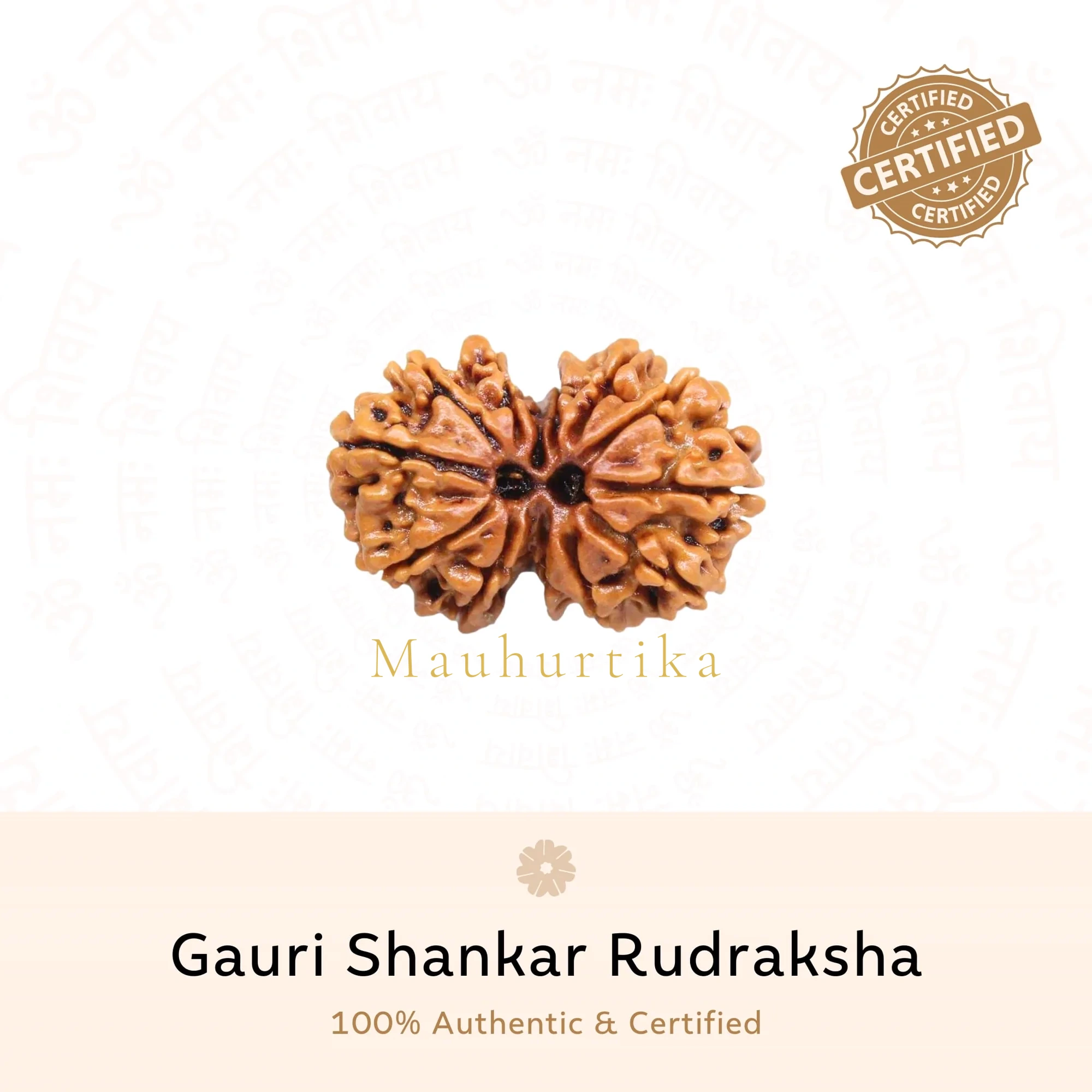
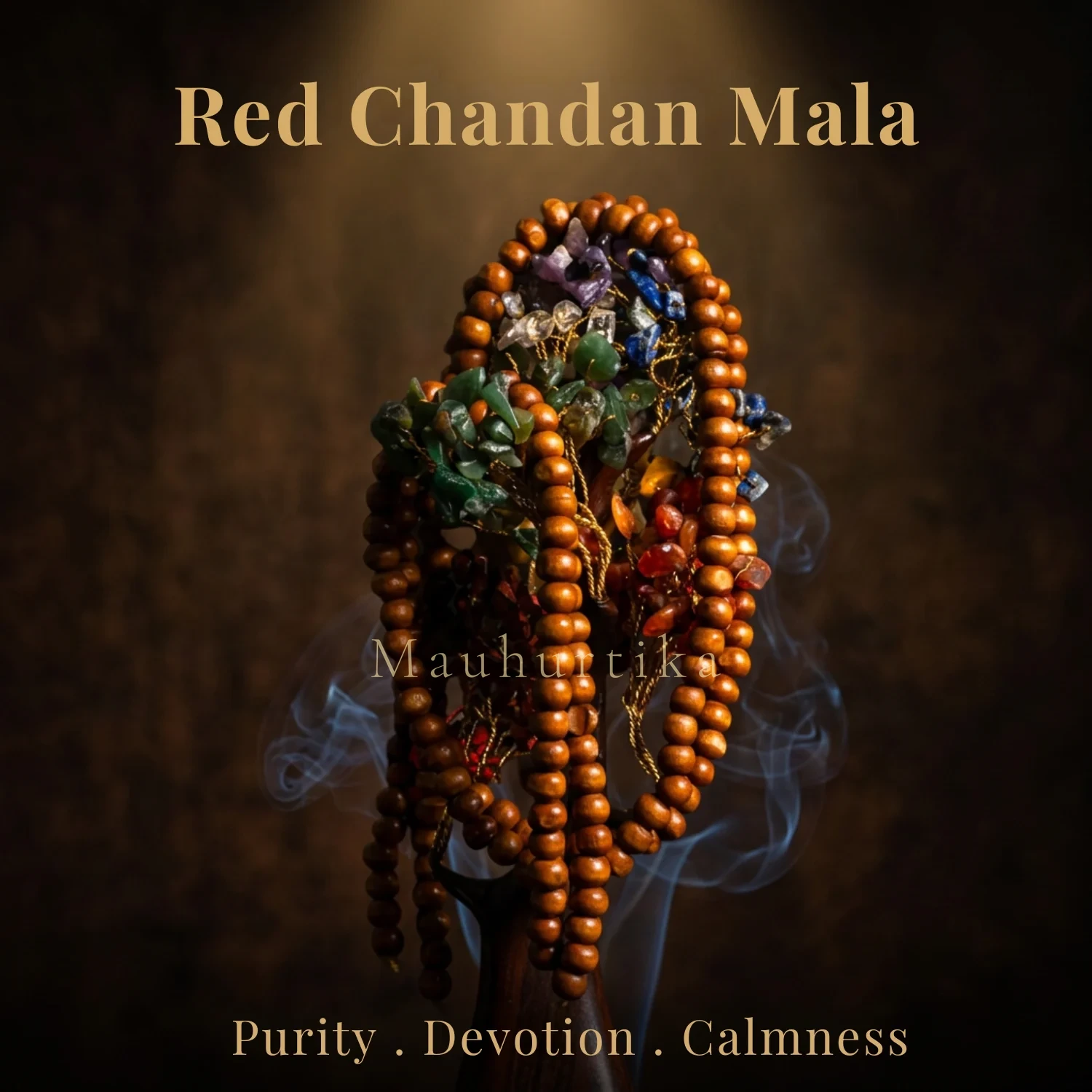
For counting archana or japa, devotees of the Goddess often use a sphatik (crystal), red sandalwood or Rudraksha mala. In Rudraksha traditions the 9 Mukhi is associated with Goddess Durga and Shakti, and the Gauri Shankar Rudraksha symbolises the union of Shiva and Shakti — a theme at the heart of Lalita worship.

Continue reading: Sri Yantra meaning and placement, Gauri Shankar Rudraksha guide and Kanakadhara Stotram.
Frequently Asked Questions
Q.What is Lalita Sahasranama?
It is a hymn of 1,000 unique names of Goddess Lalita Tripurasundari from the Brahmanda Purana, taught by Hayagriva to Sage Agastya.
Q.Can women chant Lalita Sahasranama?
Yes. It is widely chanted by women and men, including during menstruation in many families, though customs vary by tradition.
Q.How long does it take to chant Lalita Sahasranama?
A full recitation usually takes 25 to 40 minutes depending on speed.
Q.Is initiation needed for Lalita Sahasranama?
Devotional recitation is generally practised without initiation; the secret Sri Vidya mantras traditionally require a guru.
Q.What is the best day to chant it?
Fridays, Purnima, Ashtami and the nine days of Navaratri are considered especially auspicious.
Q.Which mala is used for Devi japa?
Sphatik, red sandalwood and Rudraksha malas are all common choices for Goddess worship.