Gauri Shankar Rudraksha: Traditional Significance and Buying Guide
What a Gauri Shankar Rudraksha is, why it symbolises Shiva and Parvati, how naturally joined beads differ from glued ones, what lab reports can and cannot tell you, and how to buy and wear one.
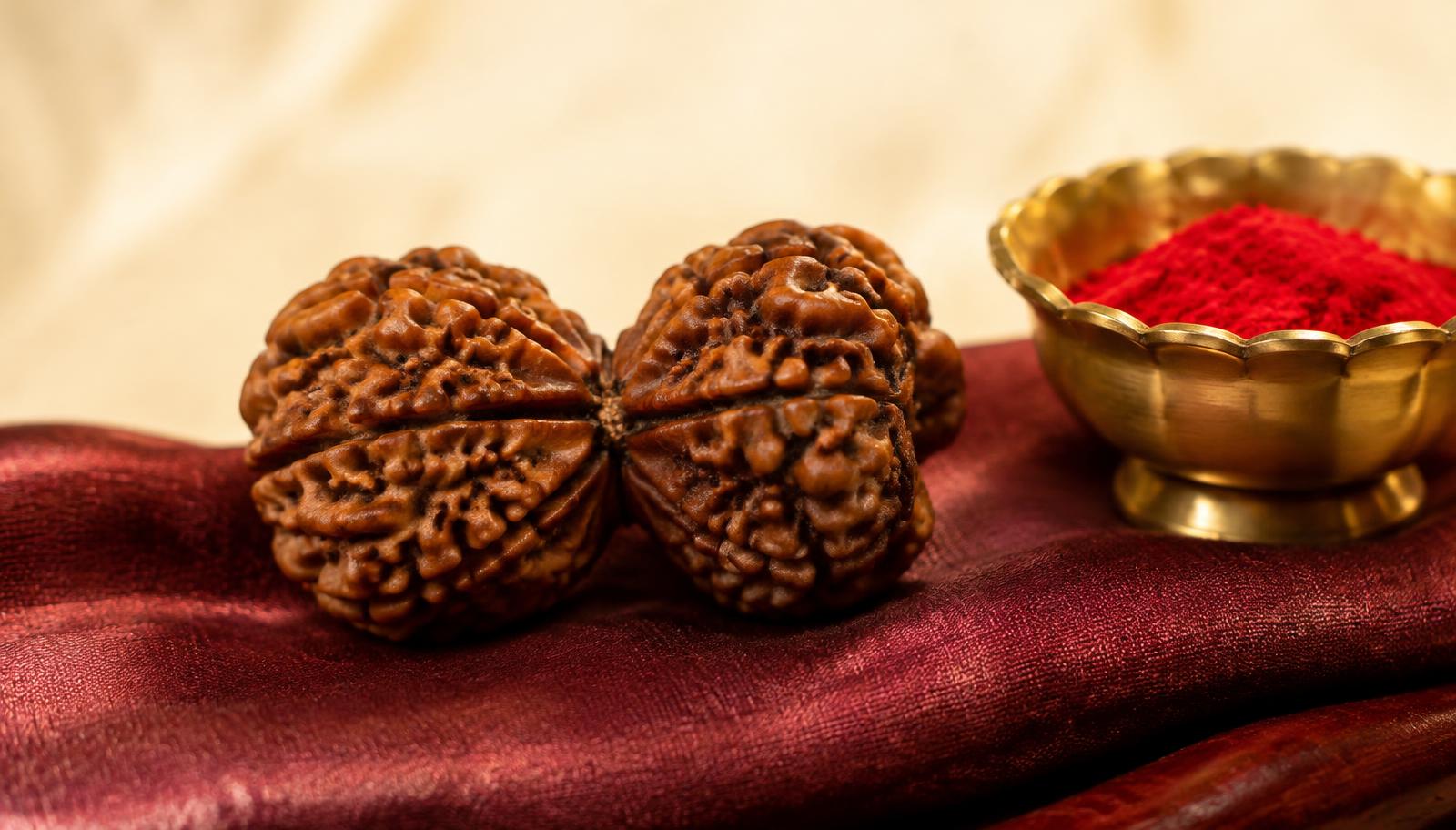
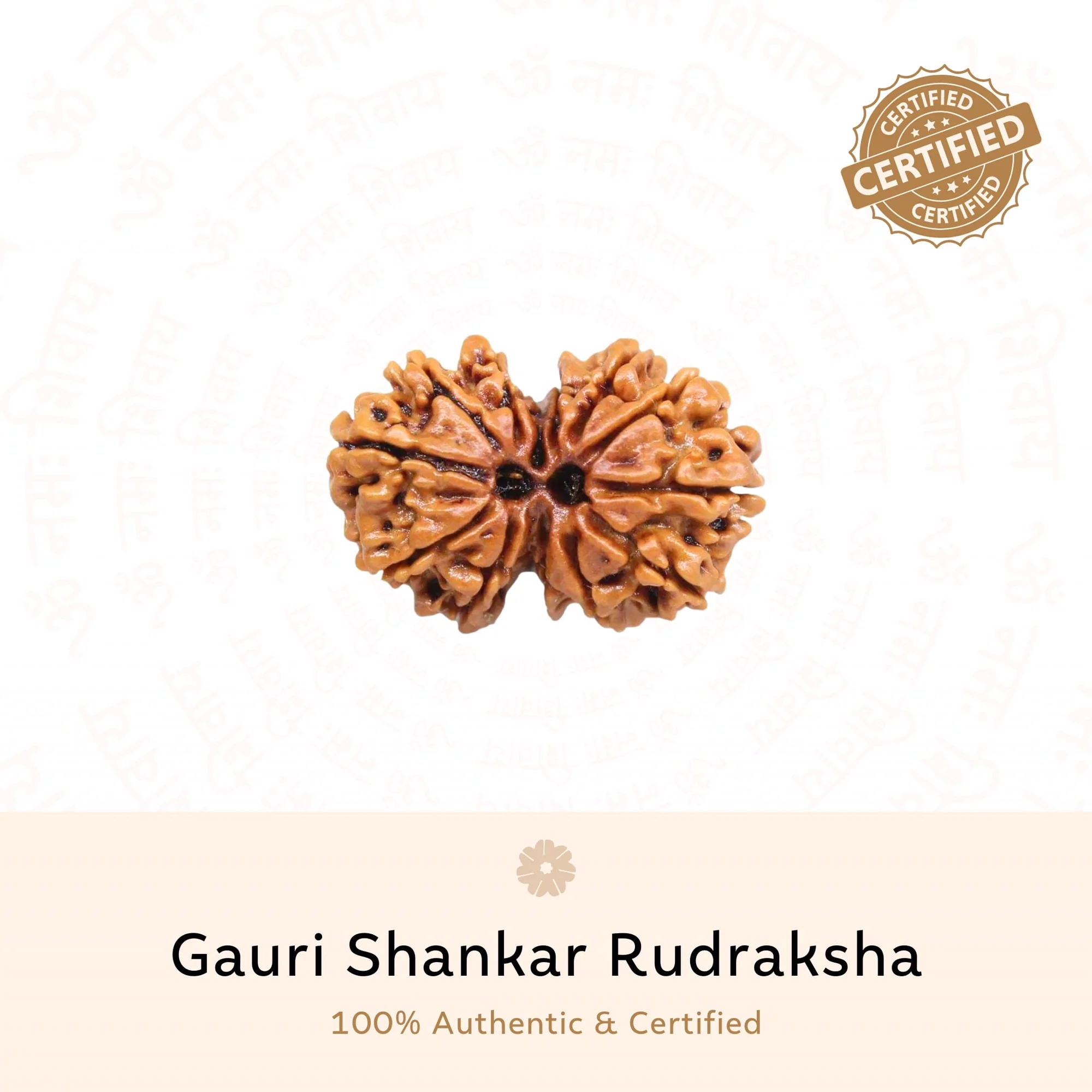
Gauri Shankar Rudraksha is a rare natural formation in which two Rudraksha beads grow joined together. In Hindu tradition it symbolises the union of Lord Shiva (Shankar) and Goddess Parvati (Gauri) — Shiva and Shakti. It is traditionally associated with harmony and unity, but its benefits are matters of faith, not guaranteed or scientifically proven outcomes. Because joined beads can be faked, provenance and testing documentation matter more here than with most Rudraksha.
Most Rudraksha are single seeds. Occasionally, two seeds develop fused together inside the same fruit, producing a twin bead with a natural seam between the halves. Devotees call this Gauri Shankar, after the divine couple who together represent consciousness and energy in Shaiva and Shakta thought. This guide explains what the bead is, what tradition says about it, how to think about authenticity and testing, and how to choose, wear and care for one responsibly.
What Is Gauri Shankar Rudraksha?
A Gauri Shankar is two Rudraksha beads that have grown attached during development, rather than being joined later by hand. The two halves are often of slightly different size — sometimes one is described as the Shiva half and the smaller as the Gauri half — and each half carries its own mukhis (natural vertical lines). The bead is usually worn as a single pendant, placed in a home shrine, or included in combinations and malas.
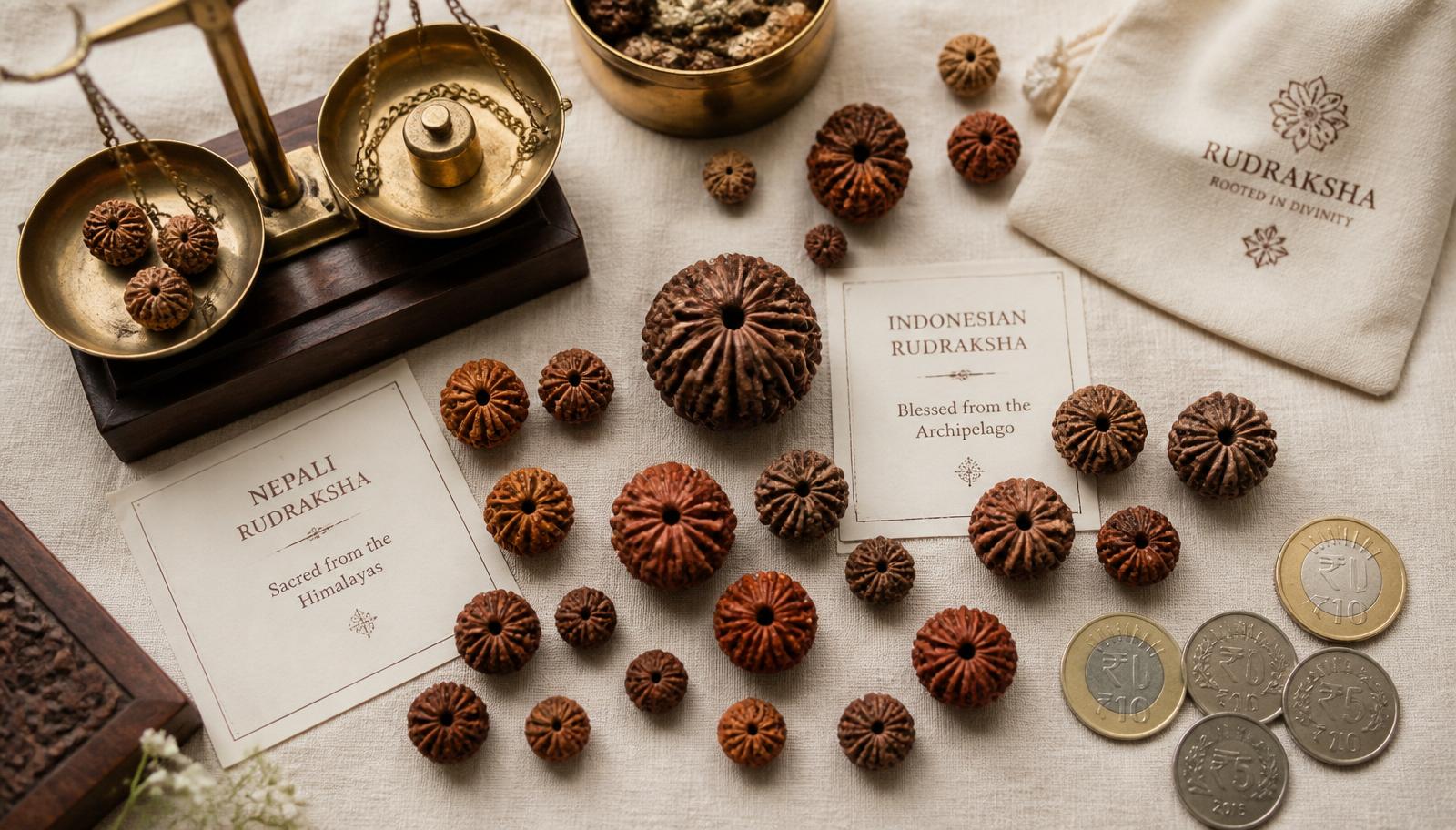
Gauri Shankar beads are found in both Nepali and Indonesian Rudraksha, with Nepali beads typically larger and more deeply textured. Because natural twins form only occasionally, they are less common than single beads of the most frequent mukhis, which affects price.
Related twin forms
You may also see Garbh Gauri (a twin bead where one half is noticeably smaller, traditionally associated with motherhood in devotional belief) and Trijuti (three joined beads, much rarer). These are distinct formations and should be described as such by the seller.
The Shiva–Shakti Association
In Hindu philosophy Shiva represents pure consciousness and Shakti the dynamic energy through which creation unfolds. Neither is complete without the other — an idea expressed in the Ardhanarishvara image of Shiva and Parvati sharing one body. The joined bead is read as a natural expression of this same principle: two that remain distinct yet inseparable.
Shaiva texts that discuss Rudraksha place great emphasis on faith and correct conduct, and later devotional teaching links the Gauri Shankar with the worship of Shiva and Parvati together. Many devotees keep it in their puja space as a symbol of the divine couple, alongside a Shivling or an image of Shiva Parivar.
Traditional Significance
Devotees traditionally associate Gauri Shankar Rudraksha with:
- Harmony in relationships: it is commonly chosen by couples, or by individuals praying for understanding and unity within their family.
- Balance of inner qualities: the pairing of Shiva and Shakti is read as a reminder to balance stillness with action, and reflection with responsibility.
- Devotional focus: many people use it as a focal point for meditation on Shiva and Parvati, or for chanting their names.
- Family worship: it is often placed in home shrines as a symbol of household unity rather than worn.
In Jyotish some practitioners associate it with the Moon, though astrological views differ. If you are choosing a bead for an astrological reason, consider a personal consultation rather than relying on generic rules.
Natural Joining vs Artificially Joined Beads
Because two ordinary beads are cheap and a natural twin is valuable, Gauri Shankar is one of the formations most commonly imitated. Two single beads can be glued, pinned, or joined with resin, and the seam disguised with dust, wax or colouring. Some imitations are made by carving a seam into one larger bead.
Signs that experienced buyers look for — none of which is conclusive on its own:
- Continuous structure at the junction: in a natural twin the halves share tissue where they meet; the seam often looks organic rather than a sharp, straight line.
- No visible adhesive: look for shiny residue, filler or an unnaturally smooth band around the joint.
- Natural mukhi lines on each half: lines should run naturally on each bead, not appear freshly cut.
- Matching texture and colour: two unrelated beads glued together may differ noticeably in surface, colour or ageing.
Home tests such as floating the bead in water, boiling it or rubbing it with a coin are not reliable and can damage a genuine bead. Avoid them.
Identification Limits and Testing Documentation
Visual inspection has limits, even for experts. Laboratory testing can add evidence:
- X-ray or CT imaging: can show the internal seed chambers and whether the internal structure is continuous across the joint, which helps distinguish natural joining from glued beads.
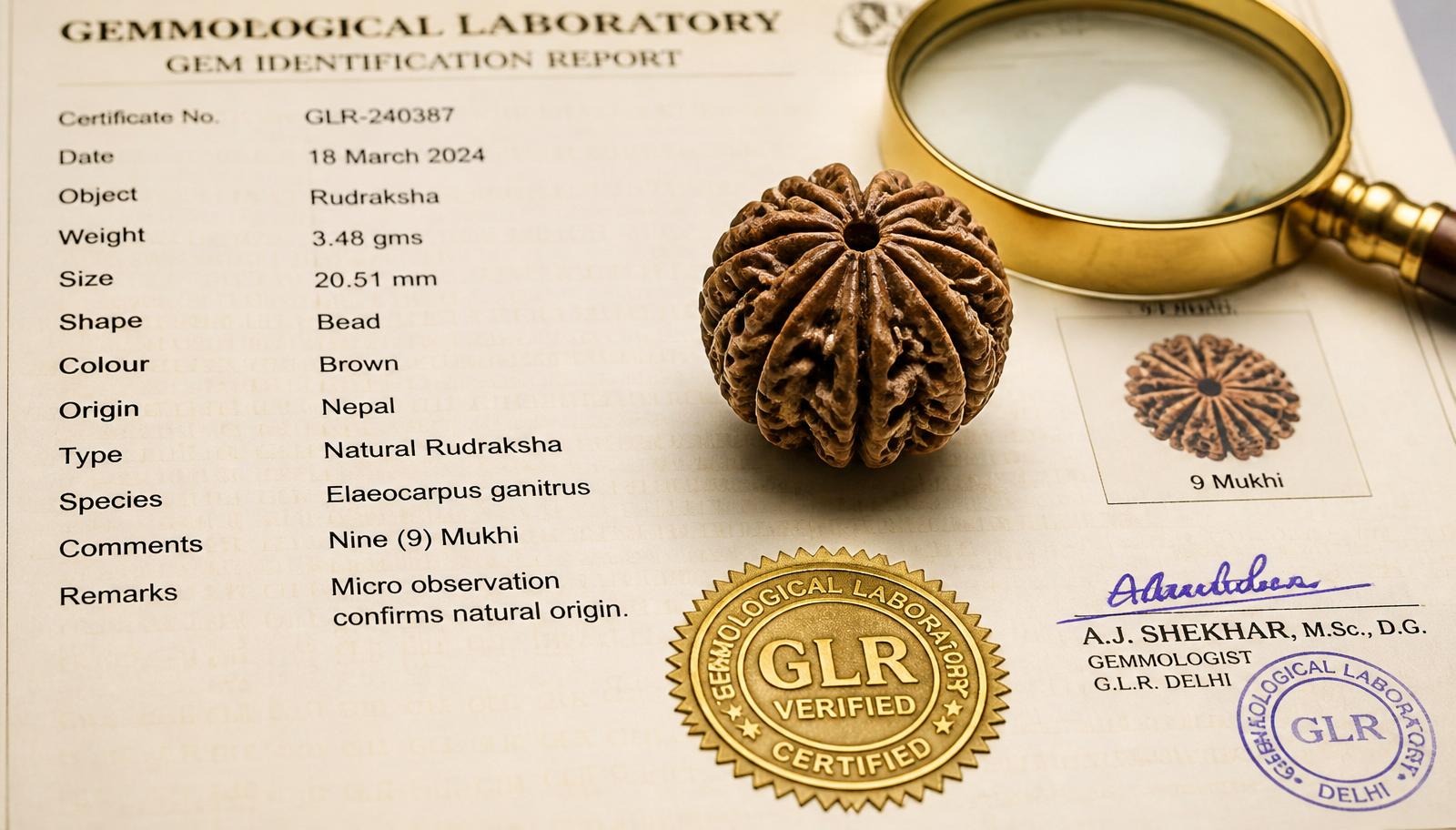
- Gemological lab report: independent labs issue reports describing the bead as natural or not, often with photographs and X-ray images.
Even a report has limits. It describes the specific bead tested on a specific date; it cannot confirm spiritual effects, and a report is only as trustworthy as the lab that issued it. When you receive documentation, check that the photo, weight and dimensions on the report match the bead you are holding. Our Rudraksha certificate and lab testing page explains how Mauhurtika documents its beads, and our authenticity guide covers what a report can and cannot prove.
How to Choose a Gauri Shankar Rudraksha
- Origin: Nepali beads are generally larger with deeper mukhis; Indonesian beads are smaller and lighter. Choose based on preference and budget — neither is 'better' in a spiritual sense.
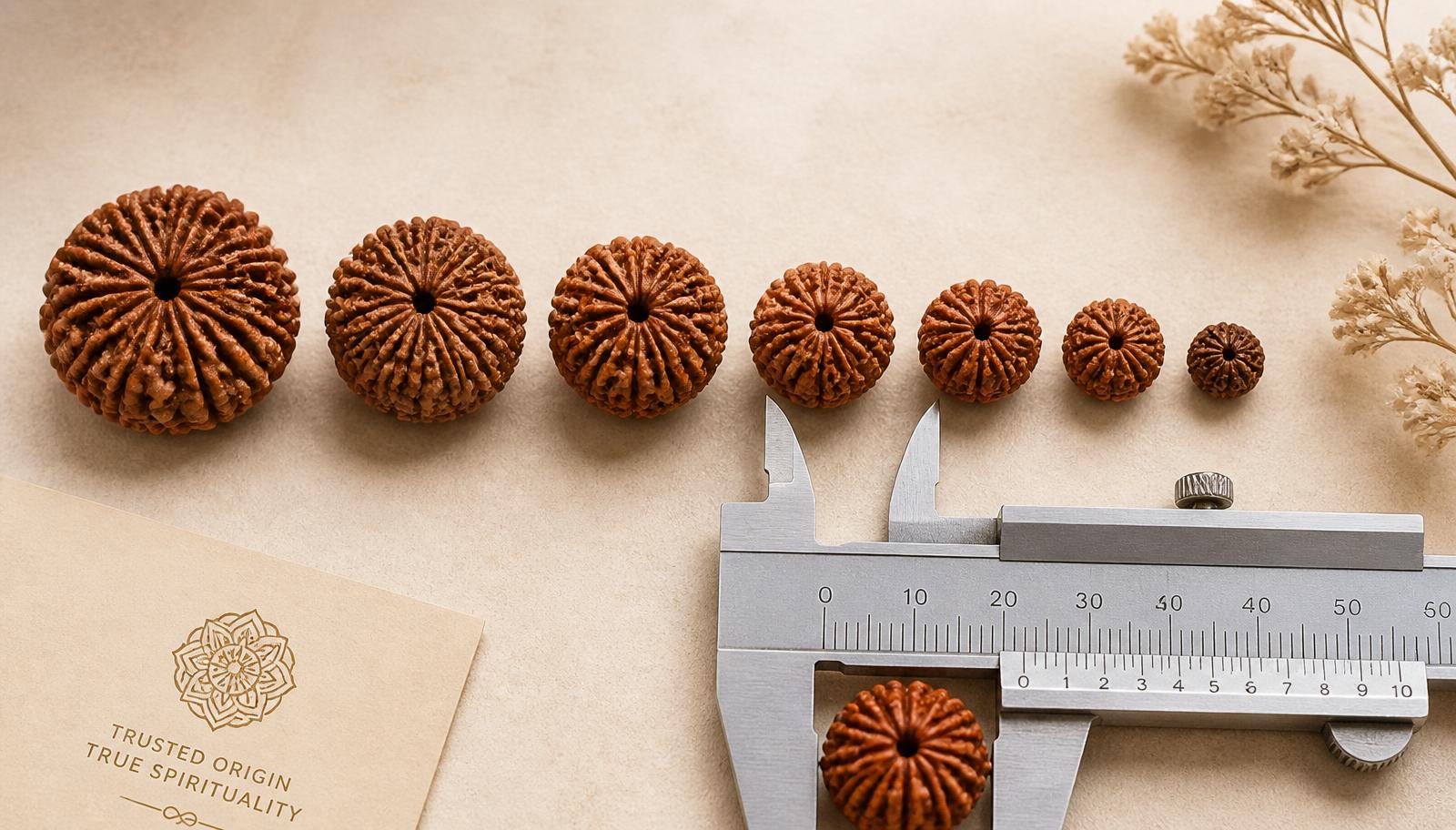
- Size and weight: larger, well-formed twins cost more. Choose a size comfortable for how you intend to use it — pendant or shrine.
- Formation: look for clearly defined halves, an organic joint and intact mukhis.
- Documentation: ask for a lab report or X-ray image of the exact bead.
- Seller transparency: ask for photos and measurements of the specific piece, and understand the return policy.
Higher-mukhi variants are sometimes sold as Gauri Shankar too, where each half has more lines. These are rarer and priced accordingly.
Wearing a Gauri Shankar Rudraksha
Traditional practice varies, but a common approach is:
- Day and timing: many people begin wearing it on a Monday, the day associated with Shiva, often in the morning after bathing.
- Preparation: bathe the bead in clean water (some use raw milk or Gangajal), apply a little sandalwood paste and offer it before an image of Shiva and Parvati.
- Mantra: chant *Om Gauri Shankaraya Namah* or *Om Namah Shivaya* 108 times, or as your tradition teaches.
- Stringing: it can be worn on a red or black silk thread, or capped in silver or gold. Make sure caps do not cover the joint or mukhis.
- Placement: worn as a pendant near the heart, or kept in the shrine if you prefer not to wear it.
For general rules on wearing Rudraksha — such as removing it while sleeping or during certain activities, according to tradition — see our guide on how to wear Rudraksha.
Caring for Your Bead
- Wipe it gently with a soft dry cloth after wearing to remove sweat.
- Occasionally clean it with lukewarm water and a soft brush, then let it dry fully in shade.
- Apply a tiny amount of sandalwood, mustard or olive oil every few months to prevent drying; wipe off excess.
- Avoid soaps, perfumes, chemicals and very hot water, and take extra care at the joint.
- Store it in a clean cloth pouch or box when not worn.
Buying Considerations
- Price: a genuine natural twin costs more than a single bead of common mukhis. Be wary of prices that seem too low for the size claimed.
- Exact-piece photos: natural beads vary; insist on seeing the one you will receive.
- Claims: avoid sellers who promise guaranteed marriage, reconciliation, fertility or wealth. Responsible sellers describe traditional significance without guarantees.
- After-sale support: check returns, certificate verification and how the seller handles disputes.
Gauri Shankar Rudraksha at Mauhurtika
These are live Gauri Shankar listings from the Mauhurtika catalogue. Names, images, prices and availability come directly from our store.
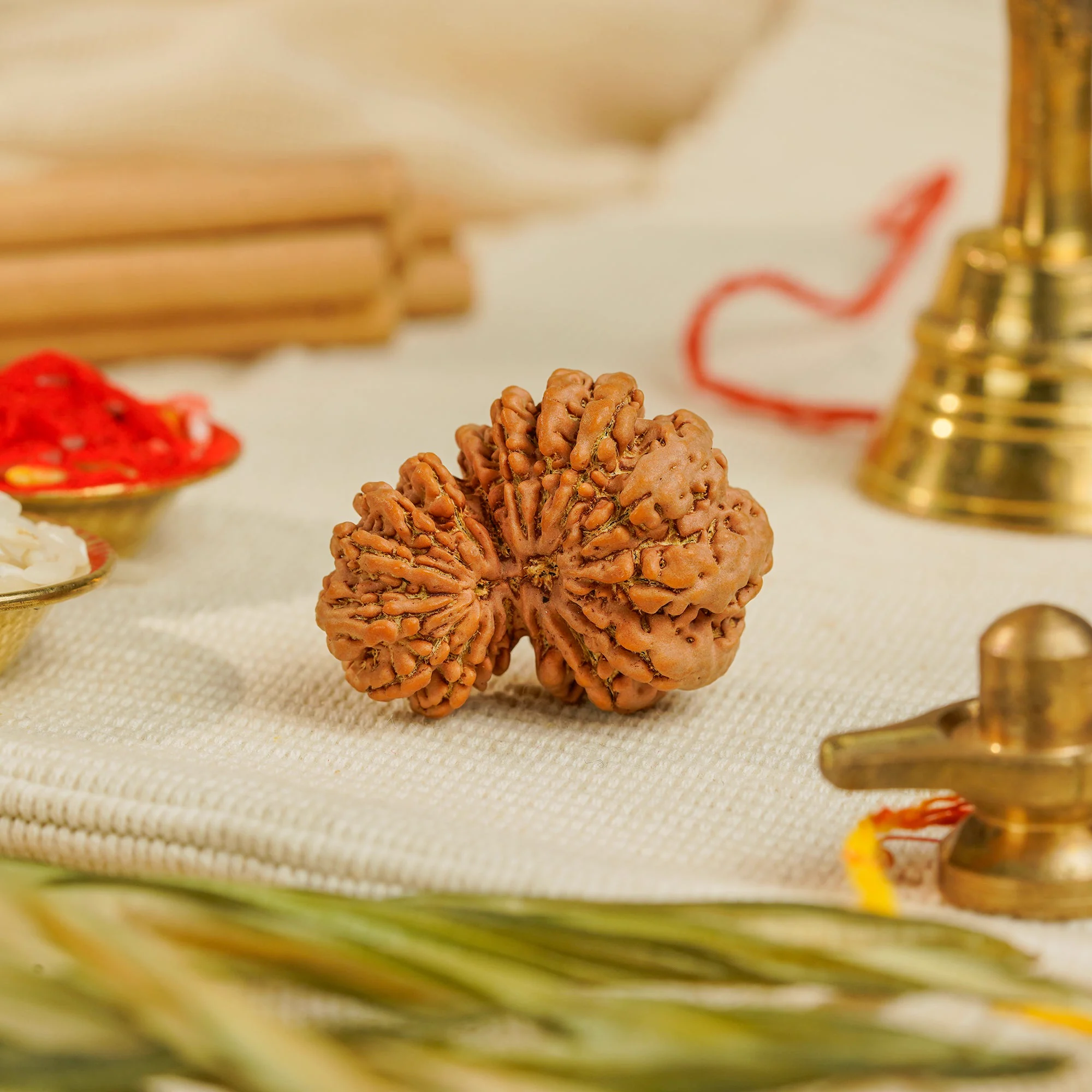
17 Mukhi Gauri Shankar Rudraksha – Original Nepali Collector Bead
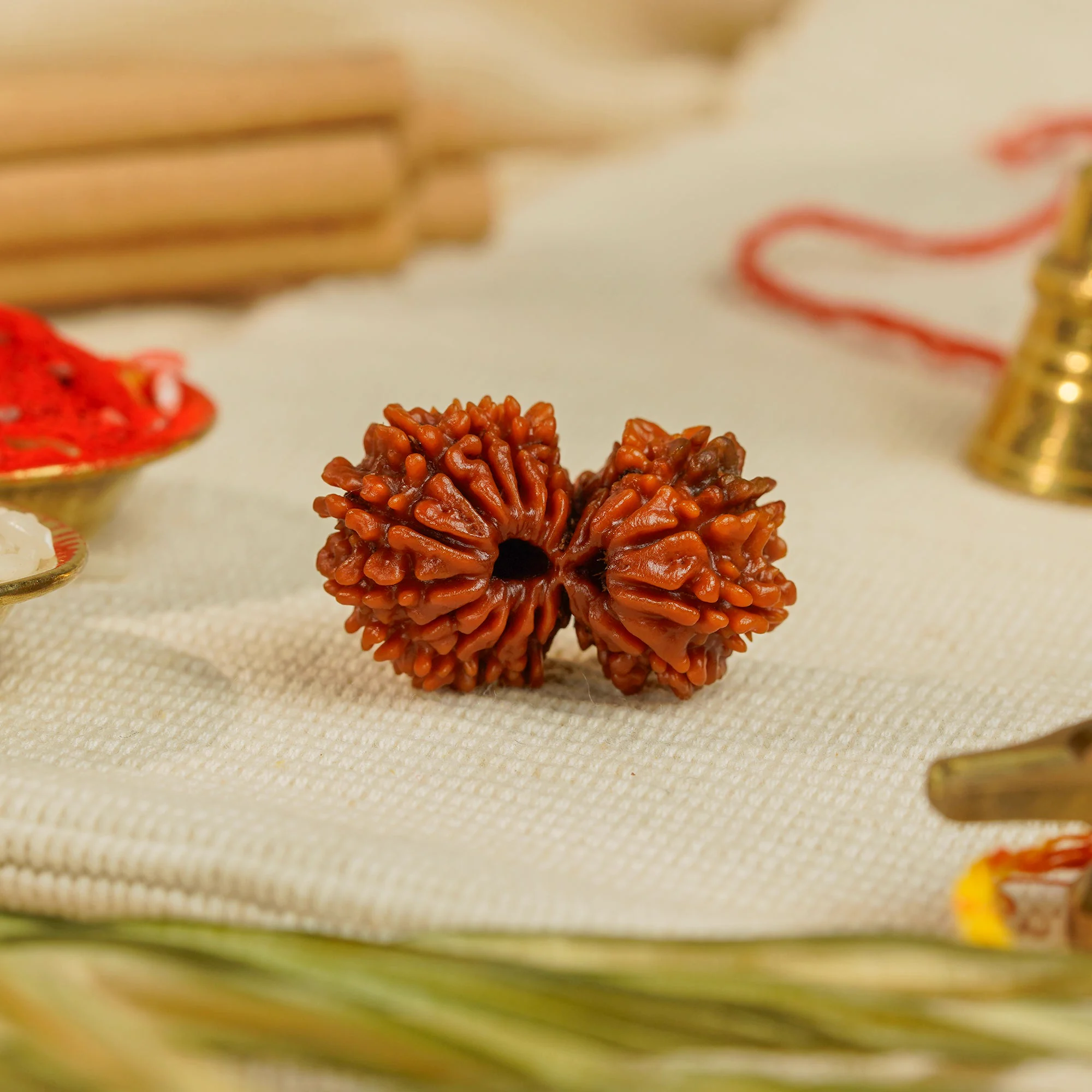
18 Mukhi Gauri Shankar Rudraksha – Original Nepali Collector Bead
See all available beads on our Gauri Shankar Rudraksha page, or shop all Rudraksha.
Frequently Asked Questions
Continue Learning
Read our Shaligram guide, the complete Rudraksha guide, which Rudraksha is best for me and the Rudraksha price guide.
Frequently Asked Questions
Q.What is Gauri Shankar Rudraksha?
It is a natural formation of two Rudraksha beads joined together during growth. Tradition reads it as a symbol of the union of Lord Shiva and Goddess Parvati.
Q.Who can wear Gauri Shankar Rudraksha?
Tradition does not restrict it to any particular group; it is commonly worn by both men and women, and is often chosen by couples or kept in family shrines.
Q.How can I know if a Gauri Shankar is natural or glued?
Look for an organic, continuous joint and no adhesive or filler, and ask for an X-ray or lab report of the exact bead. Visual checks alone are not conclusive.
Q.Does Gauri Shankar Rudraksha guarantee a better relationship or marriage?
No. Its association with harmony is traditional and devotional. No bead can guarantee personal outcomes, and it should never replace honest communication or professional help.
Q.Is Nepali or Indonesian Gauri Shankar better?
Neither is spiritually superior. Nepali beads are generally larger with deeper mukhis, while Indonesian beads are smaller and lighter; the choice depends on preference and budget.
Q.Can I keep Gauri Shankar Rudraksha in my puja room instead of wearing it?
Yes. Many families keep it in the home shrine and worship it alongside Shiva and Parvati.