Pohela Boishakh 2027: Bengali New Year Date, Puja & Complete Guide
Pohela Boishakh 2027 falls on Thursday, 15 April in West Bengal (Bangabda 1434) and on Wednesday, 14 April in Bangladesh. Why the dates differ, plus Haal Khata, Lakshmi-Ganesha puja, food, clothing and greetings.
Pohela Boishakh 2027 — the start of Bengali year 1434 — is observed on Thursday, 15 April 2027 in West Bengal, Tripura and Assam's Barak Valley, following the traditional panjika. The Sun's entry into Mesha (Mesha Sankranti) takes place on the afternoon of 14 April 2027 (about 3:33 PM IST in Kolkata). Bangladesh observes the day on its fixed national date, Wednesday, 14 April 2027.
Pohela Boishakh (also written Poila Baisakh, and greeted as Shubho Noboborsho) is the first day of the Bengali month of Boishakh and of the Bengali year. It is a festival of fresh beginnings for families, traders and communities on both sides of the border, and for Bengalis around the world.
Pohela Boishakh 2027: Date at a Glance
| Detail | West Bengal & Indian Bengali calendar | Bangladesh |
|---|---|---|
| Date | Thursday, 15 April 2027 | Wednesday, 14 April 2027 |
| Bengali year begins | 1 Boishakh 1434 | 1 Boishakh 1434 |
| How the date is fixed | Day after Mesha Sankranti, per panjika | Fixed on the revised national calendar |
| Mesha Sankranti | 14 April 2027, about 3:33 PM IST (Kolkata) | — |
Sources: Drik Panchang (Kolkata) and the Bisuddha Siddhanta Panjika both list 15 April 2027. Local panjikas may give slightly different Sankranti times; follow the one your family uses.
Why Are There Two Dates?
The traditional Bengali calendar is solar: each month begins when the Sun enters a new zodiac sign. In India, the new year begins on the day after (or sometimes the day of) Mesha Sankranti, depending on its exact time. In 2027 the Sankranti falls in the afternoon of 14 April, so 1 Boishakh is the next day, 15 April.
Bangladesh revised its calendar (with further adjustments in 2019) so that Pohela Boishakh always falls on 14 April. As a result, the two observances sometimes coincide and sometimes differ by a day; in 2027 they differ.
The Bengali Calendar Year 1434
The Bengali era (Bangabda) is usually reckoned as about 593 years behind the Gregorian year after Pohela Boishakh, so April 2027 begins 1434. Its origin is debated: one view credits the 7th-century King Shashanka of Gauda, while another credits the Mughal emperor Akbar's revenue reforms, which aligned tax collection with the harvest season. Historians continue to discuss both.
Significance
The new year coincides with the end of the rabi harvest and the start of the hot season. Traditionally it was the day to settle old debts, open new account books and seek blessings for the year ahead. Today it is also a celebration of Bengali language, music and identity shared by Hindus, Muslims, Buddhists and Christians alike.
Traditional Celebrations
Haal Khata
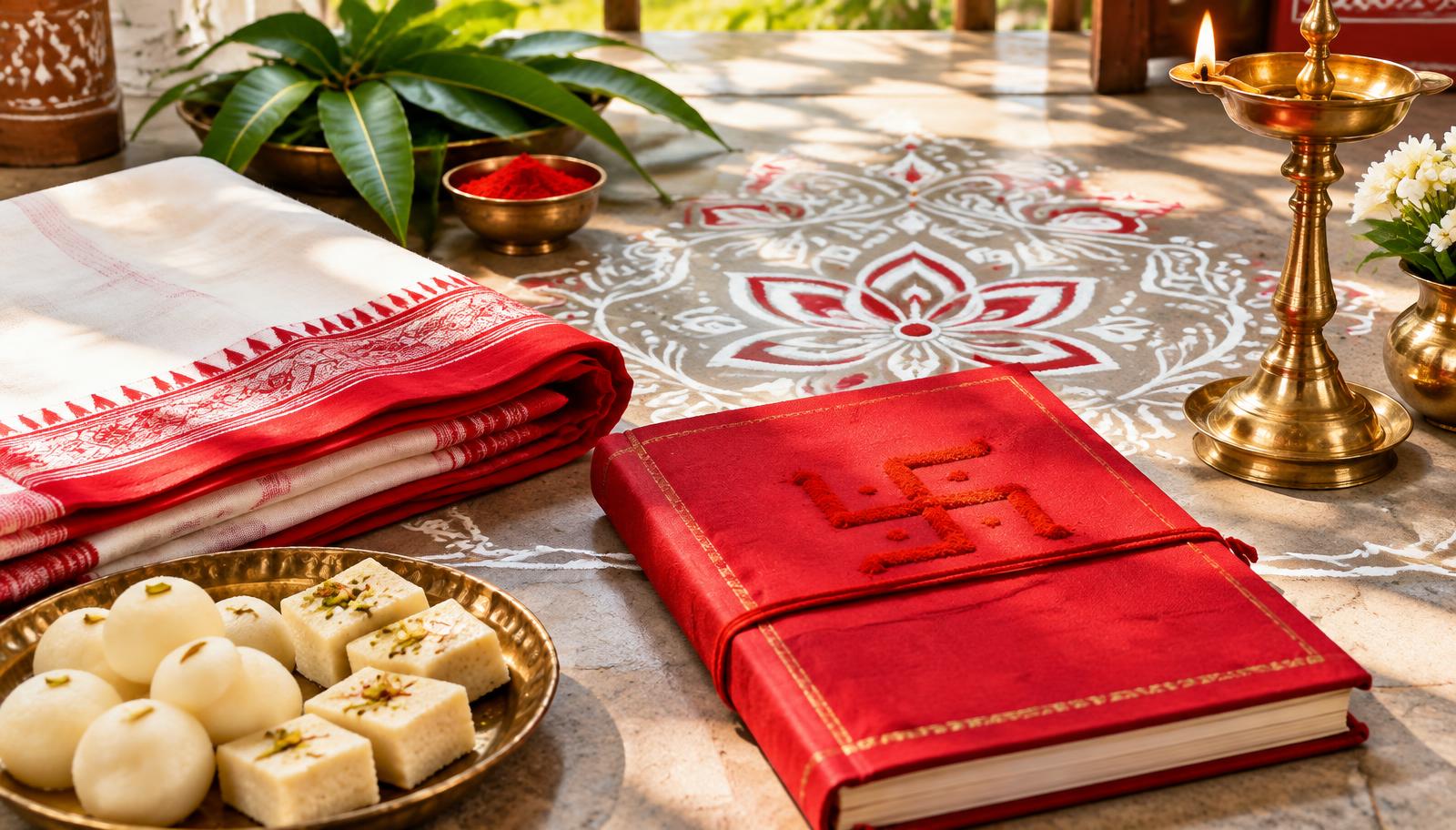
Shopkeepers and traders open a new ledger (haal khata), usually bound in red cloth. Many have the book blessed at a temple — Kalighat and Dakshineswar in Kolkata see long queues on the morning of Pohela Boishakh — and mark it with a vermilion swastik. Regular customers are invited to clear dues and are offered sweets and a new Bengali calendar.
Lakshmi-Ganesha worship
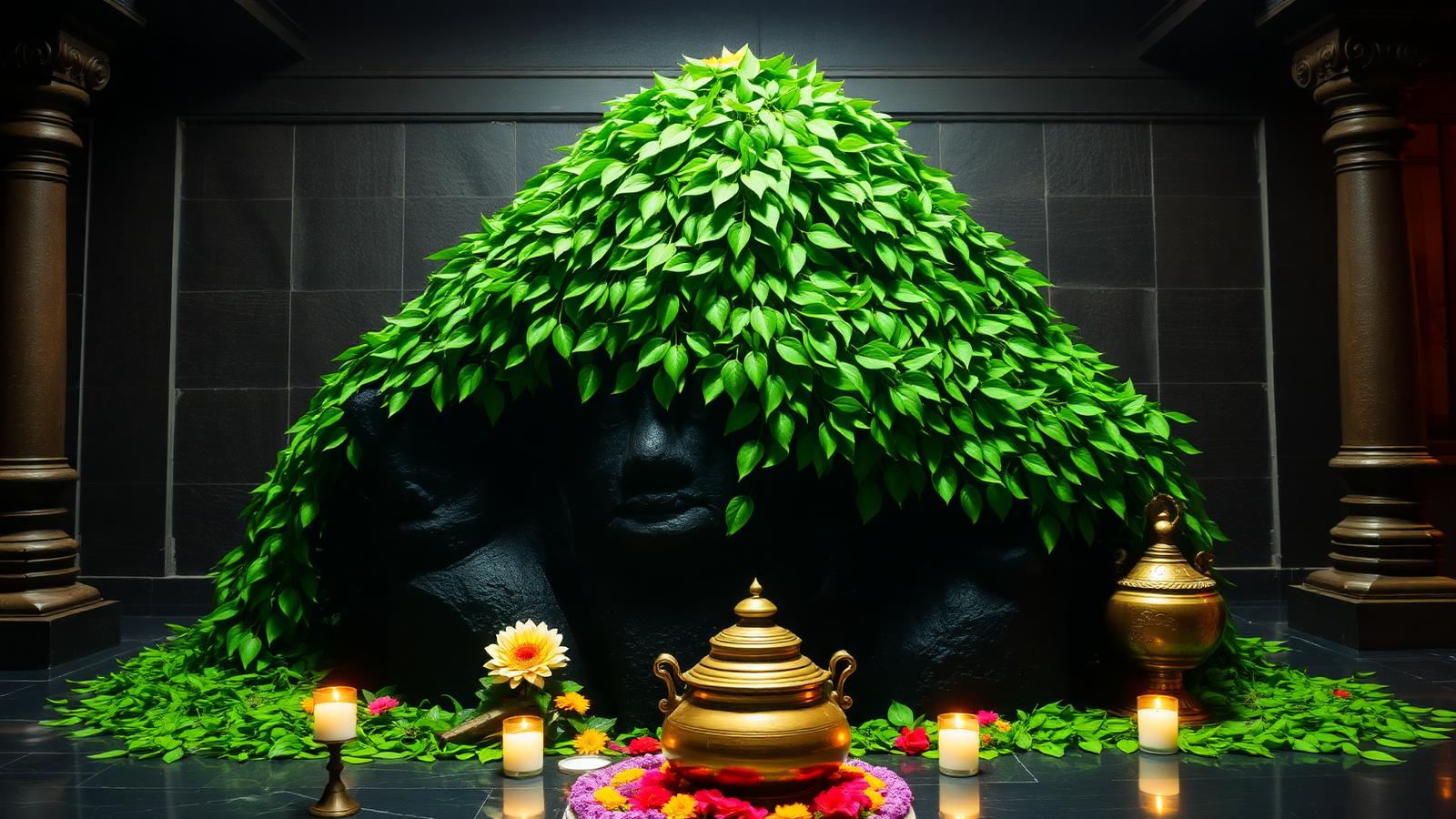
Many Hindu traders and households perform a simple Lakshmi-Ganesha puja before opening the new ledger, praying for an honest and prosperous year. A typical home puja involves cleaning the house, drawing alpona, installing Ganesha and Lakshmi on a red cloth, offering flowers, sweets and a lamp, and placing the new account book, a little money and the keys of the business before the deities.
Mangal Shobhajatra
In Dhaka and other cities in Bangladesh, the Mangal Shobhajatra — a colourful procession of giant masks and figures organised by the Faculty of Fine Arts, University of Dhaka — is a signature event and was inscribed by UNESCO in 2016 on its list of Intangible Cultural Heritage. Morning music at Ramna Batamul by Chhayanaut is another long-standing tradition.
Prabhat pheri and cultural programmes
In West Bengal, cultural groups hold morning processions (prabhat pheri), music and dance programmes, and the songs of Rabindranath Tagore — especially “Esho he Boishakh” — are heard everywhere.
Traditional Clothing
Women commonly wear white or off-white sarees with red borders (such as lal paar sarees), and men wear kurtas with dhoti or pyjama. New clothes are customary. Fresh flowers in the hair and alta on the feet are popular among women.
Food
- Panta bhat with ilish (fermented rice with fried hilsa), especially in Bangladesh
- Luchi, cholar dal, shukto, aloo posto and a variety of fish dishes
- Mishti: rosogolla, sandesh, mishti doi and payesh
- Cooling drinks like aam pora sharbat (roasted raw mango)
Many families plan a festive lunch at home; restaurants across Kolkata offer special Boishakhi thalis.
Bengali New Year Greetings
- Shubho Noboborsho (শুভ নববর্ষ) — Happy New Year
- Noboborsher Shubhechha (নববর্ষের শুভেচ্ছা) — New Year greetings
- Elders are greeted with pranam, touching their feet, and they bless younger members of the family.
Traditional Beginning-of-Year Practices
1. Clean the home on the last day of Chaitra (Chaitra Sankranti), also the day of the Charak and Gajan festivals in rural Bengal.
2. Bathe early, wear new clothes and draw alpona at the entrance.
3. Offer prayers at the family altar or a local temple; traders bless the new haal khata.
4. Seek blessings from elders, share sweets and visit friends.
5. Begin the year with a resolution — many families use the day to start a new practice such as daily japa.
Rudraksha and New Beginnings
Some devotees choose the start of the year to begin wearing a Rudraksha. The 5 Mukhi is the most widely worn everyday bead, and the Ganesh Mukhi is traditionally associated with Lord Ganesha and auspicious beginnings. See the 5 Mukhi Rudraksha guide or read about Rudraksha for Lakshmi Puja. These are traditional practices, not guarantees of prosperity.
Related Reading
Frequently Asked Questions
Q.When is Pohela Boishakh in 2027?
Thursday, 15 April 2027 in West Bengal and the Indian Bengali calendar; Wednesday, 14 April 2027 in Bangladesh.
Q.Which Bengali year starts on Pohela Boishakh 2027?
Bangabda 1434.
Q.Why does Bangladesh celebrate on a different day?
Bangladesh uses a revised calendar that fixes Pohela Boishakh on 14 April each year, while India follows the solar Mesha Sankranti calculation.
Q.What is Haal Khata?
The tradition of opening a new account ledger on Pohela Boishakh, often blessed at a temple, when customers are invited to settle dues and enjoy sweets.
Q.How do you wish someone a happy Bengali New Year?
Say “Shubho Noboborsho”.
Q.Is Pohela Boishakh a public holiday?
It is a state holiday in West Bengal and Tripura and a national holiday in Bangladesh. Check the official list for the year.