
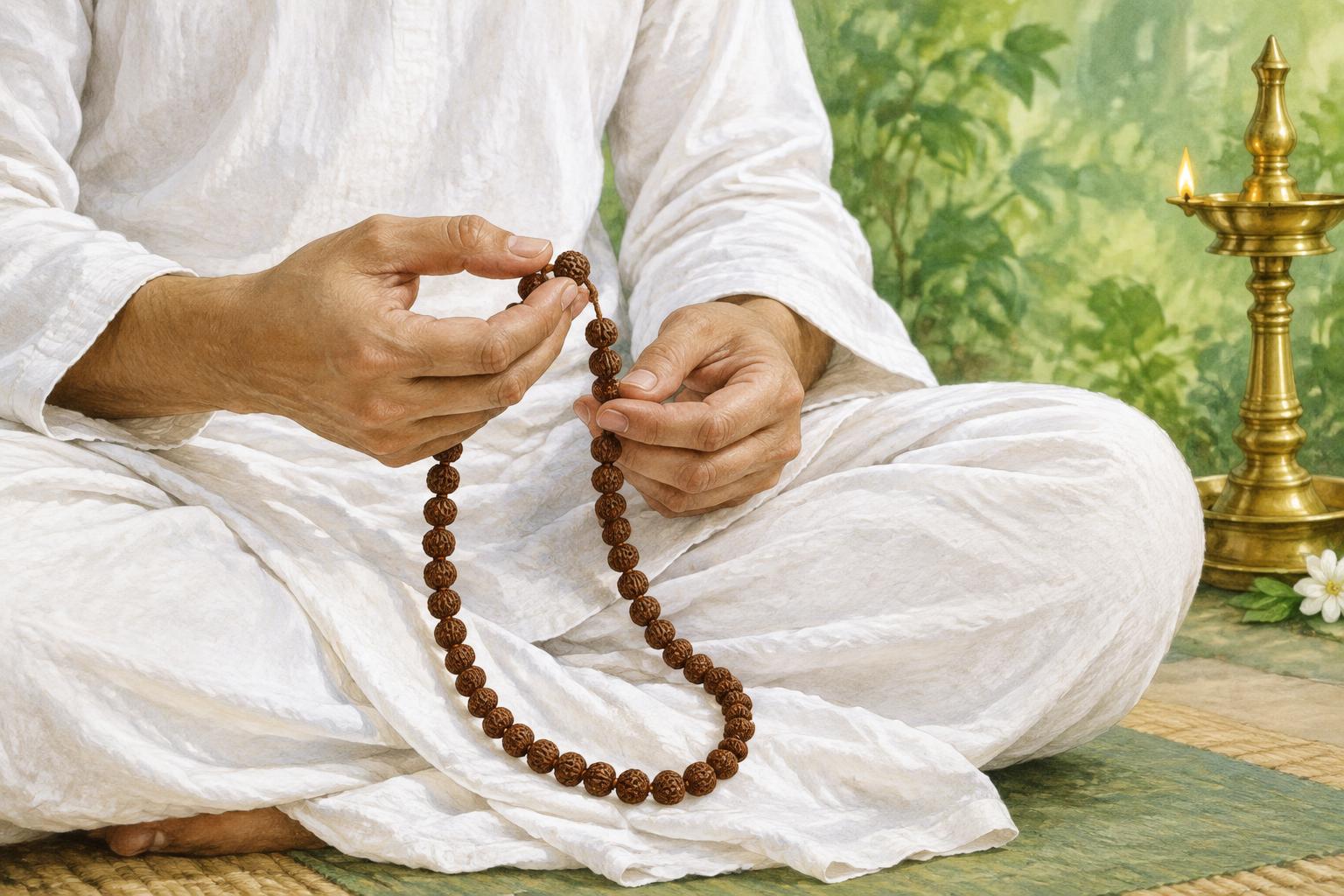
Rudraksha Mala Rules: Wearing, Japa and Everyday Care
Understand Rudraksha mala rules for wearing, mantra japa, bathing, sleep and care, with practical advice and real malas from Mauhurtika.
Quick answer: Treat a Rudraksha mala respectfully, keep its beads and cord clean, and follow your own teacher for formal ritual rules. In a common japa method, move one bead per mantra and turn at the guru bead rather than crossing it. Remove the mala whenever water, chemicals, pressure or snagging could damage it or hurt you.
Questions about Rudraksha rules often become questions about fear: can one accidental mistake spoil the bead, cancel a prayer or bring bad luck? A more useful starting point is to distinguish three things—devotional customs, the mechanics of japa, and ordinary material care. They overlap, but they are not identical. A rule protecting a necklace from chlorine is practical advice; a lineage-specific fasting observance belongs to religious practice.
Wearing mala and japa mala are not always the same
A necklace is built to sit comfortably on the body. A japa strand is handled repeatedly to count a mantra. Some people use one mala for both purposes; others keep a separate strand for chanting. Neither choice proves that a person is more sincere. What matters is an arrangement that is comfortable, clean and consistent with the practice you have received.
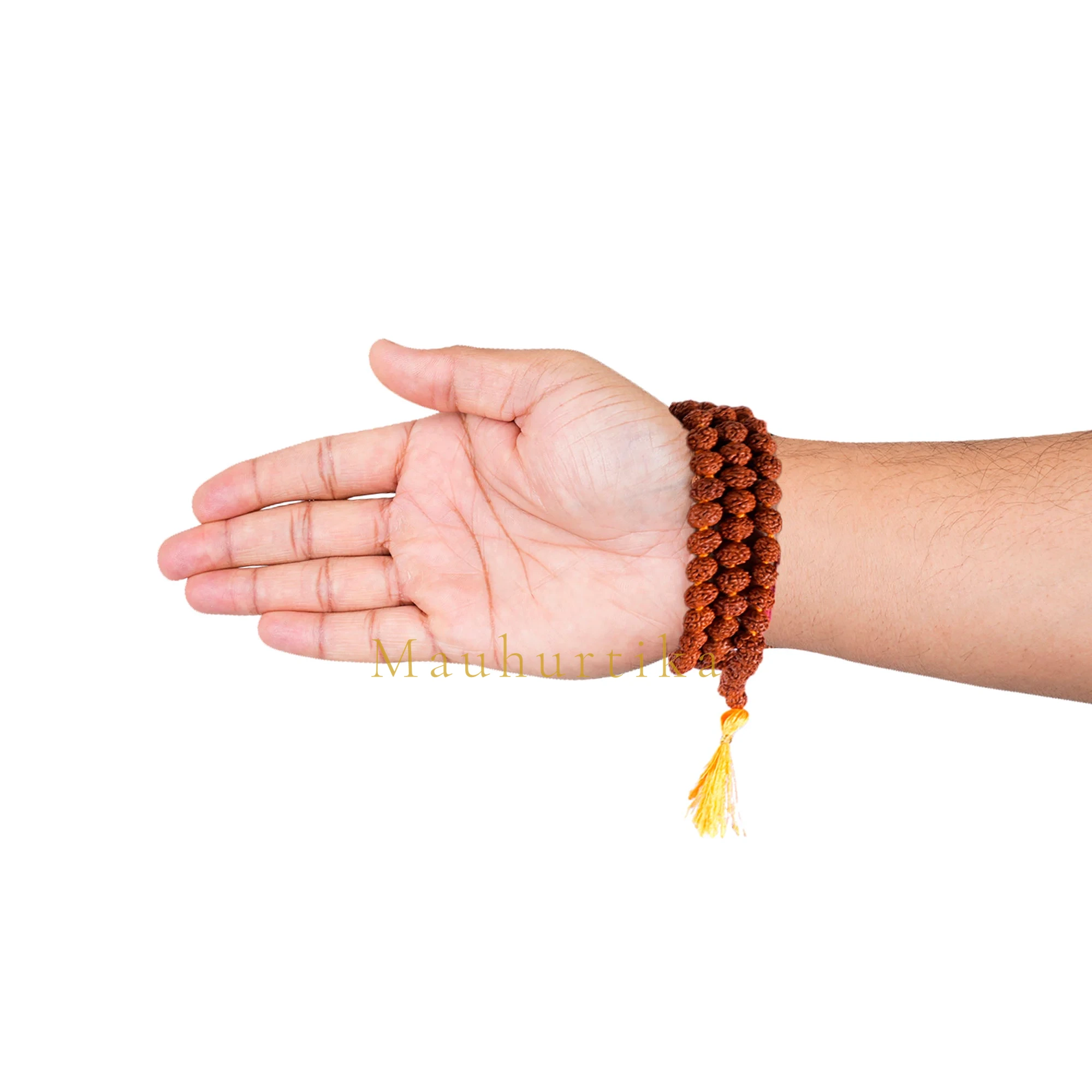
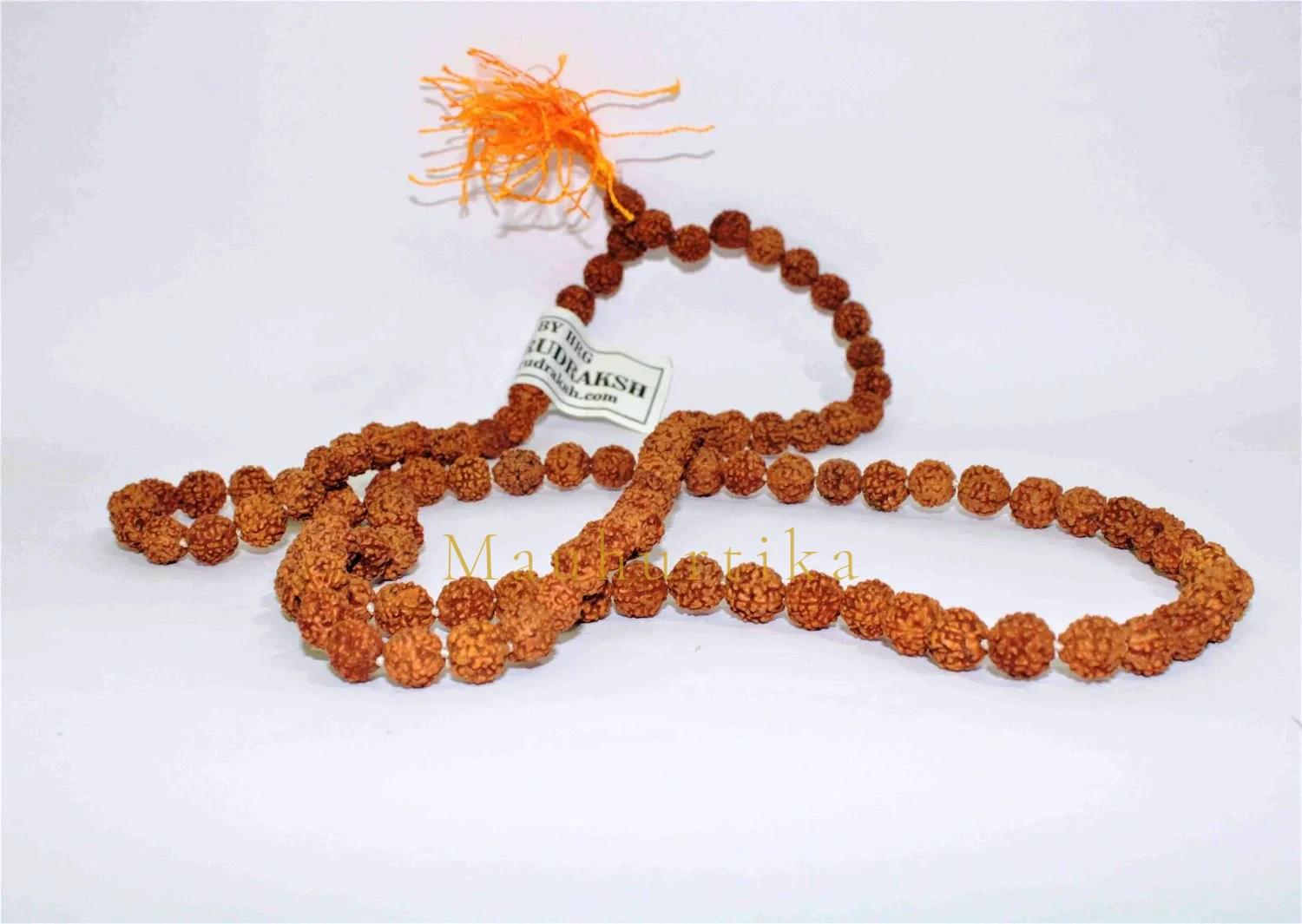
Check the stated bead count, cord, fittings and overall length. A strand advertised as 108+1 generally has 108 counting beads plus one guru bead, while other malas have different counts. Do not infer a count or Mukhi composition from a photograph. Our Rudraksha japa mala guide explains practice in greater detail, and the 5 Mukhi mala guide focuses on buying.
How to begin wearing your mala
Choose a clean, quiet moment. Check that the cord is secure and the strand sits without tightening around the neck. You may offer a simple prayer or recite Om Namah Shivaya if Shiva devotion is part of your practice. Monday is customary in many Shiva traditions, but this does not mean every other day is spiritually dangerous.
If a teacher has given you a formal initiation, follow that teacher's method rather than mixing unrelated instructions found online. Do not assume a purchased bead has undergone a particular ritual unless the seller confirms that service for your actual item. Consecration, certificates and care instructions are different things, and none should be inferred from a generic blog paragraph.
The guru bead rule during japa
In a common method, begin beside the guru or meru bead. Hold the strand gently and draw one counting bead at a time using the thumb and middle finger. Recite your chosen mantra once for each movement. When you return to the guru bead, turn the strand and continue in the opposite direction instead of counting across it.
Hand positions and counting customs vary across lineages. If reduced mobility makes the usual grip uncomfortable, ask your teacher for an adaptation. Attention and steadiness are more valuable than hurting your fingers to imitate a picture. Start with a manageable count and let familiarity build gradually.
Bathing, swimming and moisture
Remove the mala before swimming, showering with soap or applying perfume and cosmetics. Chlorine, prolonged soaking and repeated wetting can affect the cord, surface and fittings. If the beads become damp accidentally, wipe them gently and allow them to dry fully in a ventilated place before storing them.
Do not use boiling water, bleach or harsh detergent. The appropriate treatment may differ for bare beads, knotted strands, elastic bracelets and metal-mounted pieces. Ask for the care instructions for your particular construction. Applying a traditional substance indiscriminately is not automatically safe for a finished item.
Sleeping, exercise and work
Remove a necklace if it presses into the skin, tightens around the neck or catches during sleep. Take it off for contact sport, machine work or any activity with a snagging risk. A spiritual object does not override workplace safety requirements. Store it in a clean place instead of leaving it loose where the cord may tangle.
Young children should not be given small beads or long cords without appropriate safety precautions. A statement that a tradition permits children to wear Rudraksha is not a statement that every necklace is physically safe for them. Check the clasp, thread and loose parts for all wearers.
Food, menstruation and other personal observances
Dietary restrictions are not identical across all Hindu traditions. Some practitioners follow vegetarian food and abstinence as part of a vow; others wear Rudraksha in an ordinary household routine. Keep any vow you have consciously undertaken, but do not treat one teacher's instruction as a universal rule for everyone.
Practices around menstruation, intimacy and visits to mourning spaces also vary. Discuss formal observances with a trusted teacher, without shaming or frightening another person. Practical removal for hygiene or comfort is always reasonable. This guide does not declare a universal scriptural ban or a universal exemption where traditions differ.
A practical care checklist
- Inspect the cord and knots before wearing, especially after regular japa handling.
- Keep soap, perfume and household chemicals away from the beads and fittings.
- Dry the strand fully before placing it inside a pouch or closed box.
- Avoid forceful scrubbing, cutting grooves or attempting to open a bead.
- Ask how to maintain any silver fittings separately from the natural bead.
- Replace worn string before it breaks; do not wait for a bead to fall.
Gentle care protects a meaningful object. There is no need to transform maintenance into a complicated ritual schedule with promises of automatic spiritual power. If you notice a crack or suspect mould, stop wearing the strand until you have obtained appropriate advice.
Choose a mala for your actual practice
A lighter strand may be easier for daily japa, while larger beads may suit a person who prefers a more tactile feel. Confirm weight and dimensions rather than assuming Nepal or Java automatically determines comfort. The right choice depends on the individual item and the way you plan to use it.
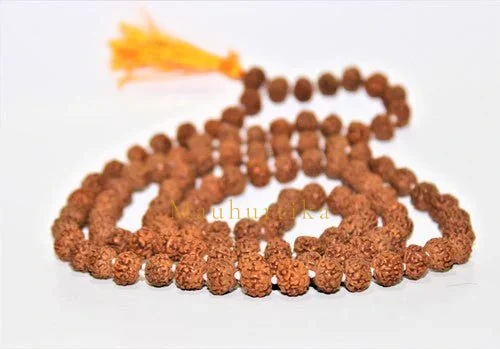
Below are real catalogue malas with their current product photographs and prices. Check each listing for bead count, origin and construction. The illustration in this article does not represent an item offered for sale.
What to do if you miss a day or make a mistake
Return calmly to the routine. If a formal vow has specific corrective instructions, ask the teacher who guided it. Otherwise, do not let an accidental touch, interrupted count or forgotten session become a reason to buy another bead in fear. Respect is expressed through sincere attention, ordinary cleanliness and responsible handling.
For buying help, explore the Rudraksha Mala collection or request a free consultation. Continue with why 108 beads are used if you want to understand the counting tradition rather than memorise a list of prohibitions.
Frequently Asked Questions
Q.What is the most important Rudraksha mala rule?
Handle it respectfully, protect its cord and beads, and follow your own teacher for formal practice. During common japa methods, turn at the guru bead rather than crossing it.
Q.Can I wear a mala while bathing?
It is better to remove it before soap, shampoo, swimming and prolonged soaking, which can damage beads, thread and fittings.
Q.Should I remove a mala before sleeping?
Remove it when there is pressure, discomfort or an entanglement risk. Safe handling matters more than keeping a necklace on continuously.
Q.Can women use a Rudraksha japa mala?
Many traditions permit it. Formal observances vary by lineage; seek guidance without treating women as inherently unsuitable for devotional practice.
Q.Does missing a day make the mala harmful?
There is no reason to assume an ordinary missed session makes the bead harmful. Resume your practice calmly; ask your teacher about the terms of any formal vow.


