Vasant Panchami 2027: Date, Saraswati Puja Muhurat, Rituals & Rudraksha for Students
Vasant Panchami 2027 falls on Thursday, 11 February. Saraswati Puja muhurat, step-by-step home puja, the meaning of yellow, foods to offer and which Rudraksha students traditionally wear for focus.
Quick answer: Vasant Panchami 2027 is on Thursday, 11 February 2027. Panchami tithi runs from about 3:04 AM on 11 February to 3:18 AM on 12 February, and the Saraswati Puja muhurat in New Delhi is roughly 7:03 AM to 12:36 PM.
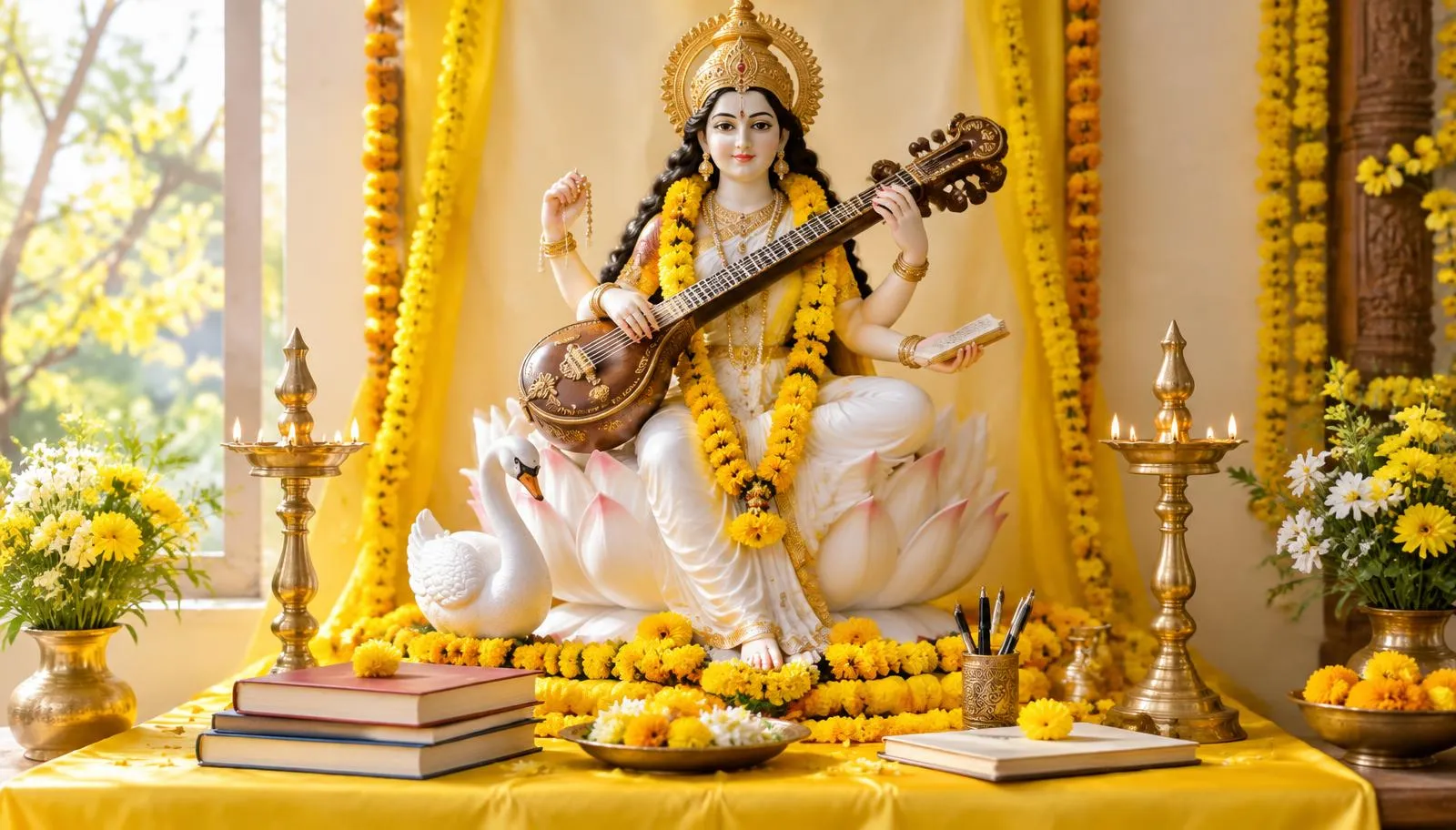
Vasant Panchami marks the first breath of spring on the fifth day of the bright half of Magha. It is the day devoted to Goddess Saraswati — the deity of knowledge, music, speech and the arts — and one of the most auspicious days in the year to begin learning. Children write their first letters, musicians worship their instruments, and homes turn yellow with marigolds and saffron rice.
Dates and timings below are for New Delhi from published panchang calculations. Local sunrise changes muhurat times by city, so confirm with your family priest or a local panchang before puja.
Vasant Panchami 2027 Date and Muhurat
| Detail | 2027 (New Delhi) |
|---|---|
| Date | Thursday, 11 February 2027 |
| Tithi | Magha Shukla Panchami |
| Panchami begins | about 3:04 AM, 11 February |
| Panchami ends | about 3:18 AM, 12 February |
| Saraswati Puja muhurat | about 7:03 AM – 12:36 PM |
| Madhyahna moment | about 12:36 PM |
Because the tithi covers the full day of 11 February from sunrise, there is no confusion between two dates in 2027 — the festival, school pujas and Bengal's Saraswati Puja all fall on the same Thursday in most of India.
Why Vasant Panchami Is Celebrated
Several traditions meet on this day. In the most popular account, Brahma created the world but found it silent; Saraswati appeared with her veena and gave creation sound, speech and meaning. Vasant Panchami is therefore treated as her appearance day, and anything connected with learning is placed before her for blessing.
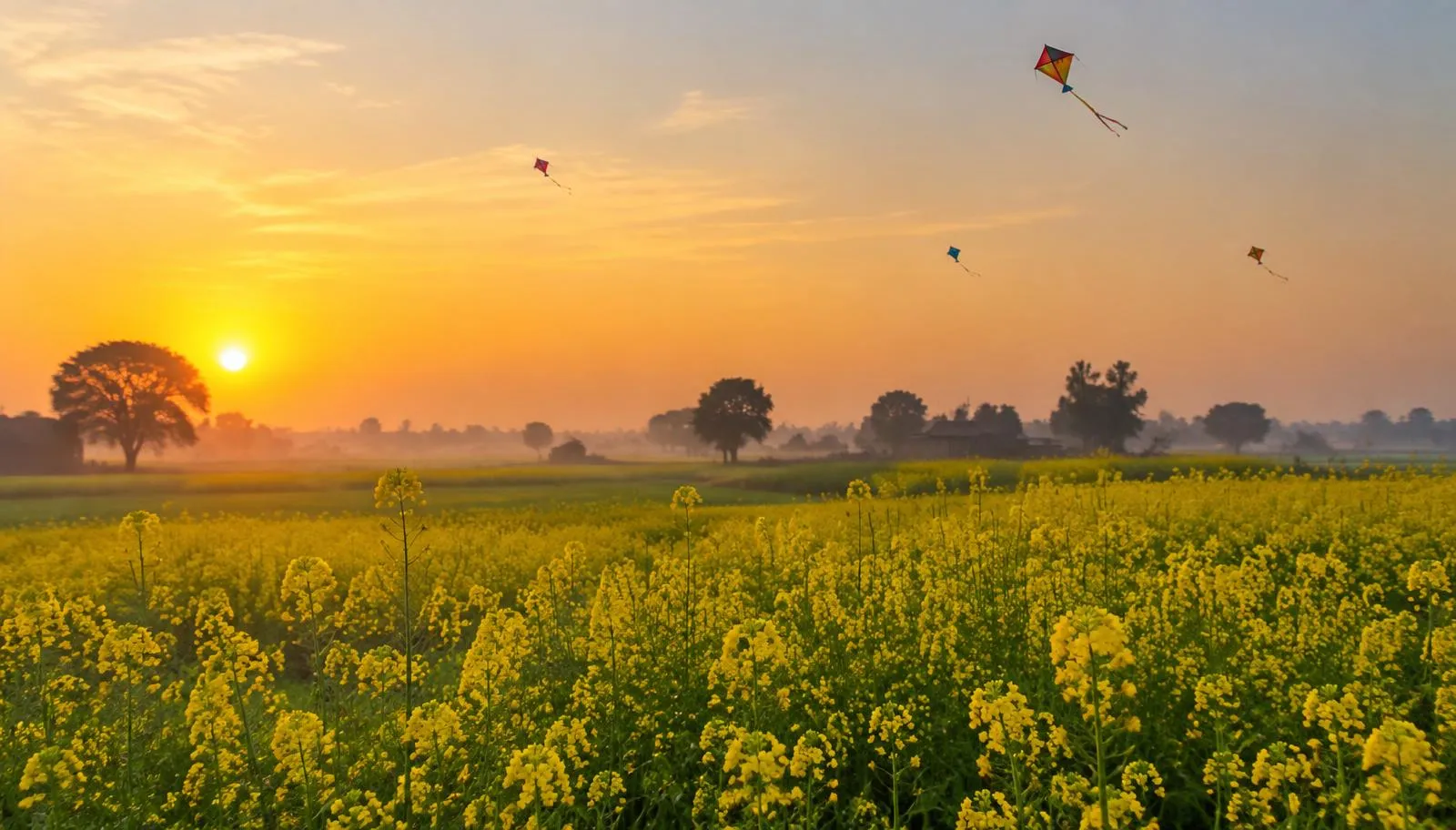
The day is also the formal welcome of Vasant Ritu, the spring season. Mustard fields bloom yellow across North India, which is one reason yellow became the festival's colour. In parts of Punjab and Rajasthan kites fill the sky, and in Braj the forty-day Holi season traditionally begins at Vasant Panchami. Some communities also remember Kamadeva, the god of love, making it a popular day for weddings and engagements — it is regarded as an *abujh muhurat*, auspicious without needing a separate muhurat.
The Meaning of Yellow
Yellow represents ripening crops, the warmth of the returning sun and the clarity associated with Saraswati. Devotees wear yellow or white, offer yellow flowers, and cook yellow dishes such as kesar rice, boondi, besan ladoo and khichdi. Bengal's tradition offers kul (Indian jujube) to the Goddess, and many families avoid eating it until Saraswati Puja is done.
Saraswati Puja Vidhi at Home
1. Clean the puja space and spread a yellow or white cloth. Place an image or idol of Maa Saraswati facing east or north.
2. Arrange books, notebooks, pens, musical instruments or tools of your craft in front of her. Students usually keep their textbooks here for the day.
3. Take a sankalp, then invoke Ganesha first with a short prayer.
4. Offer white and yellow flowers, sandalwood, akshat, a ghee diya, incense and yellow sweets or fruit.
5. Chant Om Aim Saraswatyai Namah 108 times on a mala, or recite the Saraswati Vandana *Ya Kundendu Tushara Hara Dhavala*.
6. Perform aarti, distribute prasad, and spend a few minutes reading or practising — the first act of study after puja is considered auspicious.
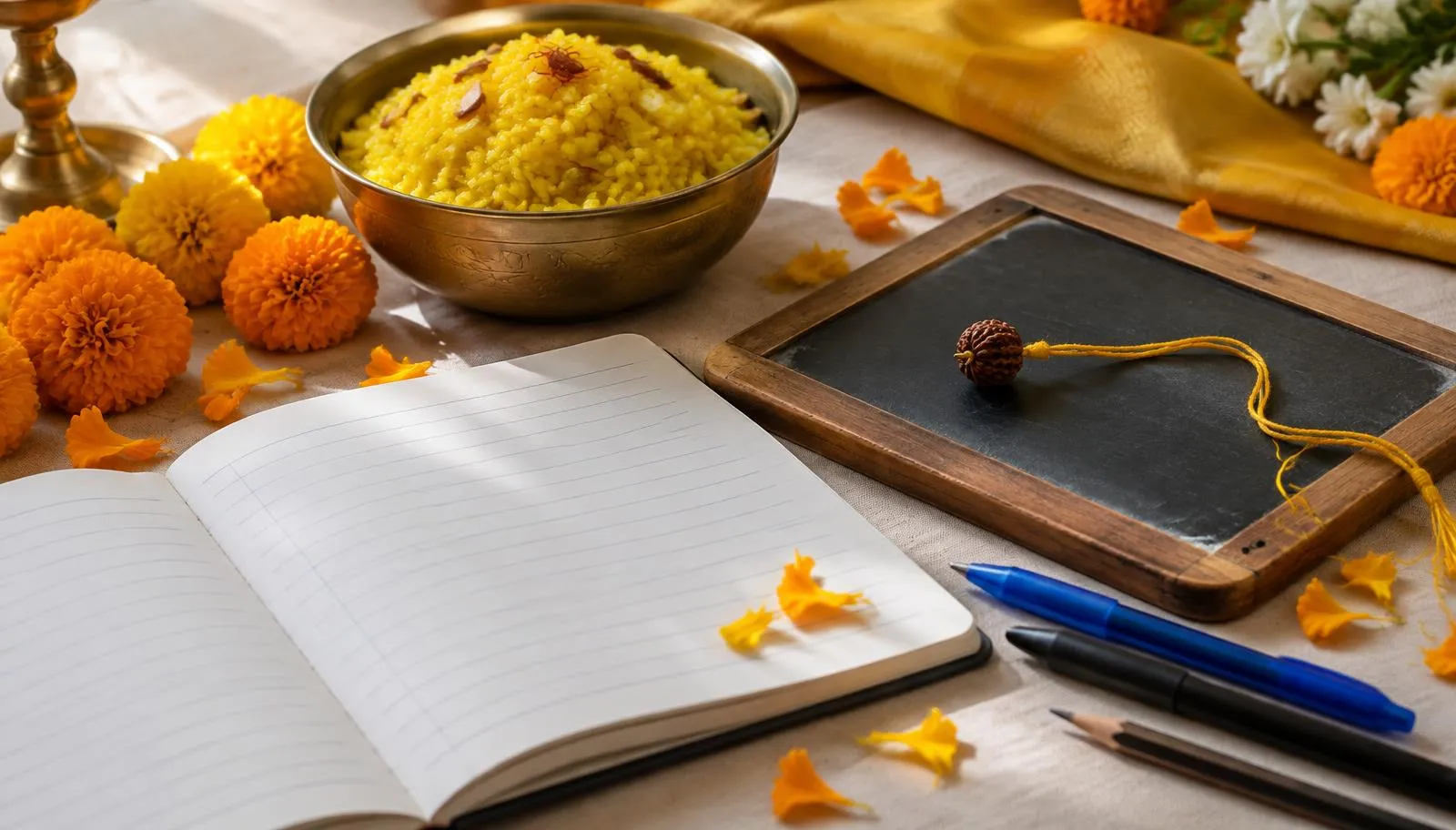
For very young children, *Vidyarambh* or *Akshar Abhyas* — writing the first letters or *Om* on a slate or rice — is traditionally done on this morning.
Simple Ways to Mark the Day
- Start a new course, instrument, language or creative project.
- Donate books, stationery or school fees to a child who needs them.
- Spend time in silence before study; Saraswati is associated with clear speech and an attentive mind.
- Avoid harsh words and arguments — a gentle tradition that suits the meaning of the day.
Rudraksha Traditionally Associated with Learning
Rudraksha is often worn by students and teachers as a reminder of discipline and focus. These associations come from tradition rather than science, and no bead replaces study — but many families like to give a bead on Vasant Panchami as a meaningful start to the academic year.
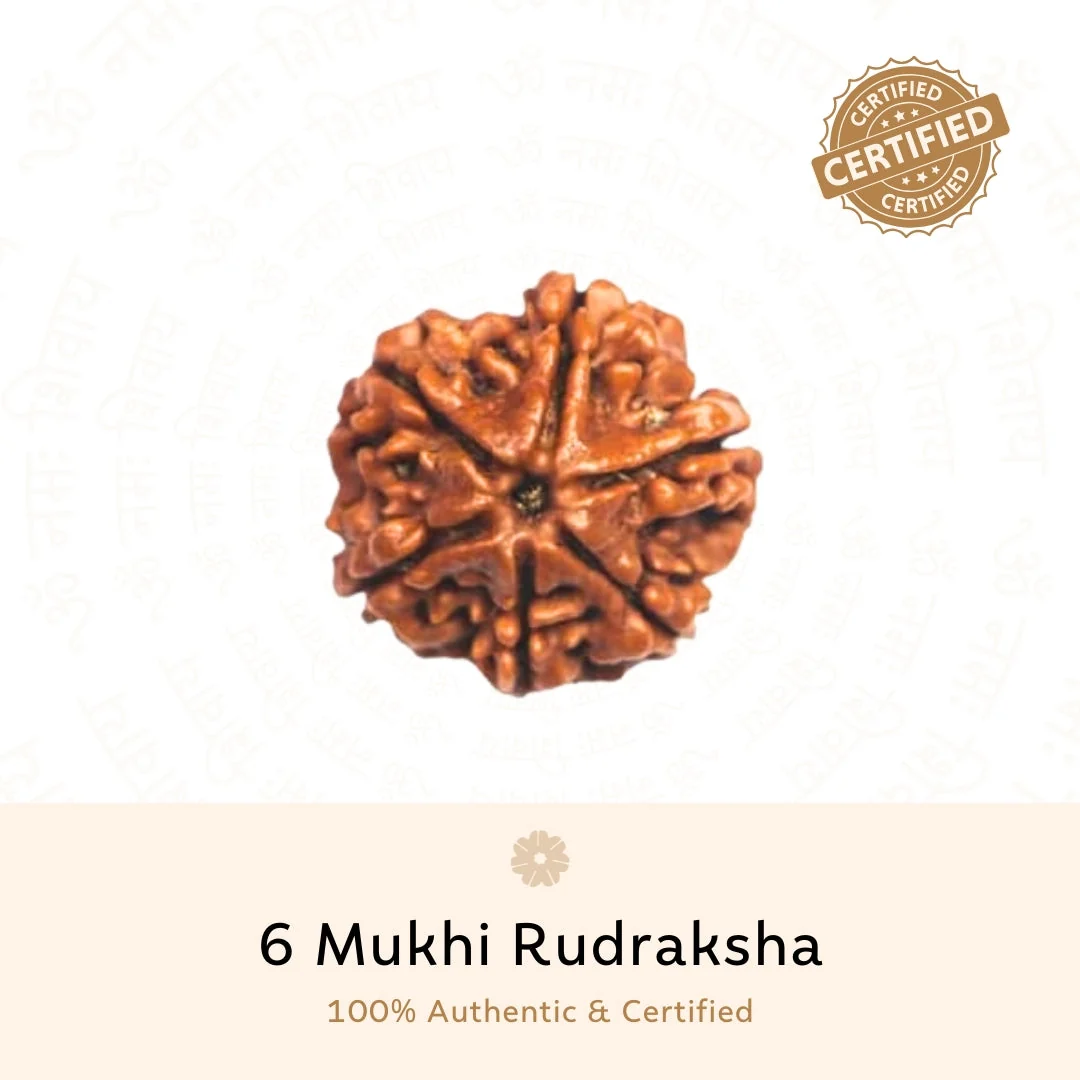
- 6 Mukhi Rudraksha: associated with Kartikeya; traditionally chosen by students for willpower and steady concentration.
- 4 Mukhi Rudraksha: associated with Brahma and Saraswati's creative speech; preferred by writers, speakers and those preparing for exams.
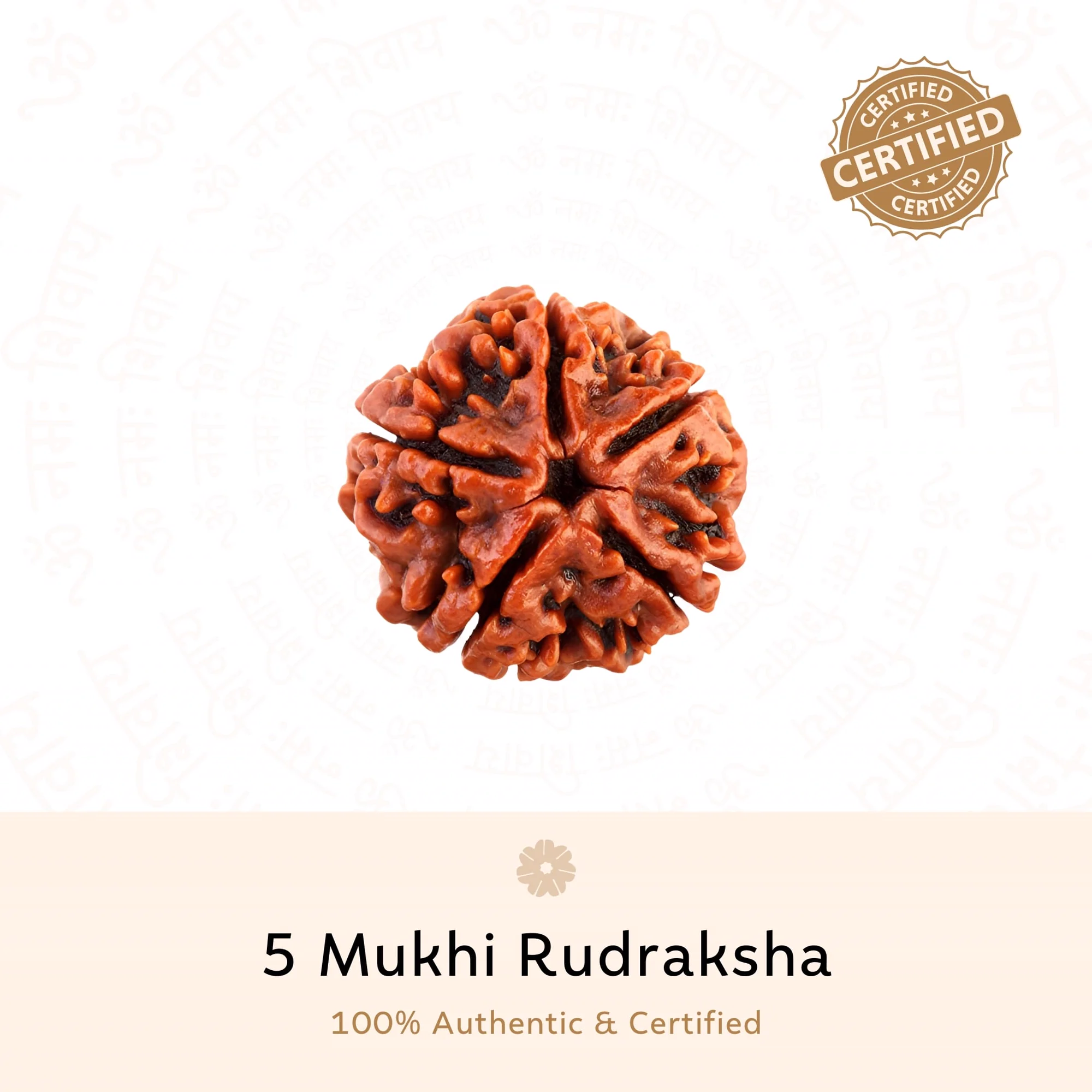
- 5 Mukhi Rudraksha: a general daily-wear bead, and the usual choice for a japa mala if you plan to chant Saraswati mantras daily.
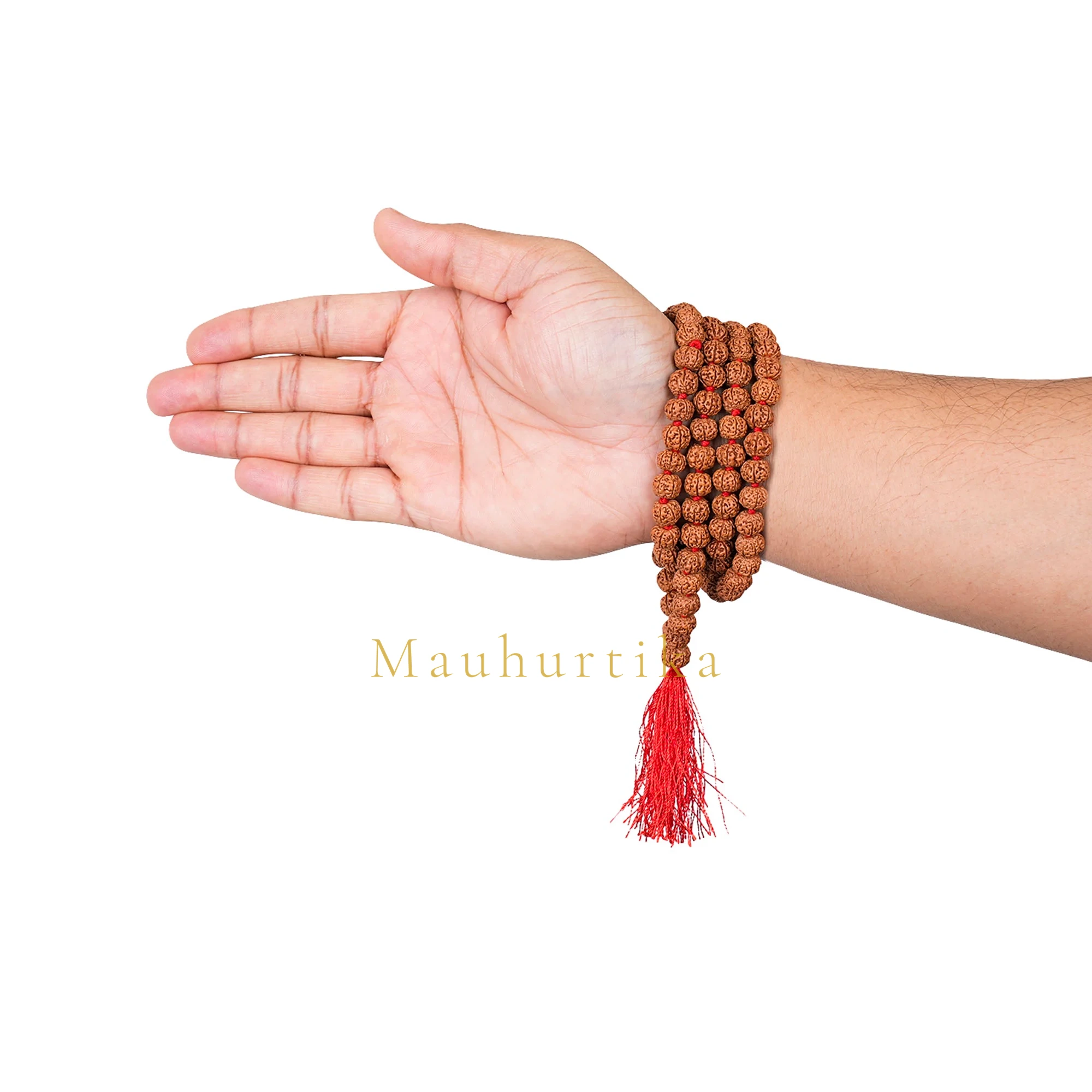
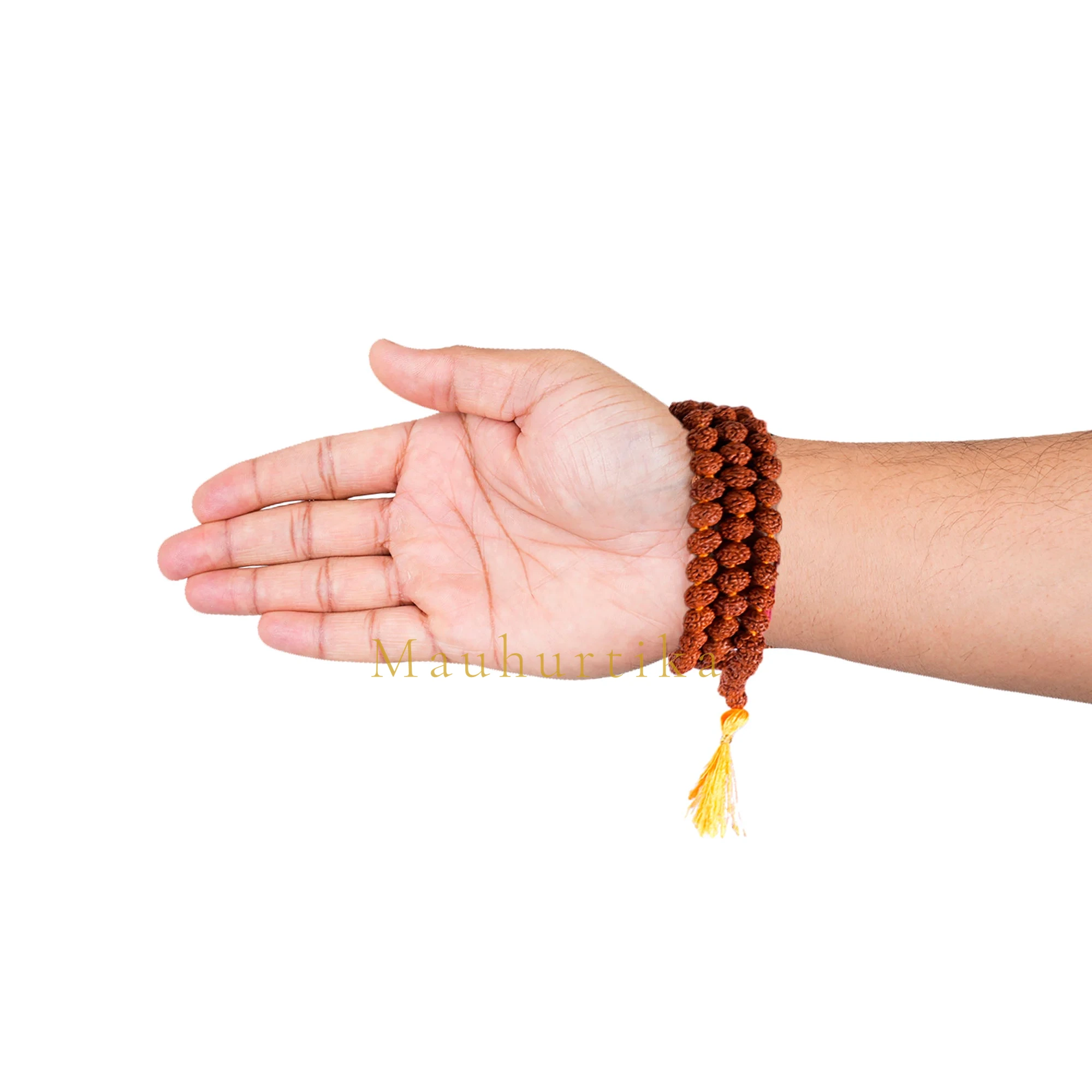
- 6 Mukhi japa mala: a 108-bead mala for students who wish to keep a daily japa practice through the exam season.
Wearing a new bead on Vasant Panchami
After the Saraswati puja, wash the bead, place it before the Goddess, chant Om Aim Saraswatyai Namah 108 times and wear it on a red or yellow thread or in silver. Children should wear only well-strung beads under supervision. If you are unsure which Mukhi suits the student, our consultation or the Rudraksha calculator can help. Read our Saraswati mantras and puja guide for more mantras.
Frequently Asked Questions
Frequently Asked Questions
Q.When is Vasant Panchami in 2027?
Vasant Panchami 2027 is on Thursday, 11 February 2027 (Magha Shukla Panchami).
Q.What is the Saraswati Puja muhurat on Vasant Panchami 2027?
In New Delhi the puja muhurat is about 7:03 AM to 12:36 PM. Times vary slightly by city, so check a local panchang.
Q.Is Saraswati Puja on the same day as Vasant Panchami in 2027?
Yes. In 2027 Panchami covers the whole day of 11 February, so Saraswati Puja is observed on the same day in most regions, including Bengal.
Q.Why do people wear yellow on Vasant Panchami?
Yellow represents spring, ripening mustard fields and the brightness associated with Goddess Saraswati.
Q.Is Vasant Panchami good for starting education?
Yes. It is traditionally considered one of the most auspicious days to begin learning, including a child's first letters.
Q.Which Rudraksha is traditionally worn by students?
The 6 Mukhi and 4 Mukhi Rudraksha are traditionally associated with focus and learning. These are spiritual associations, not guaranteed results.