18 Mukhi Gauri Shankar: Meaning & Verification
18 Mukhi Gauri Shankar buying guide: separate-half counts, combined labels, single 18 Mukhi differences and documentation to request.
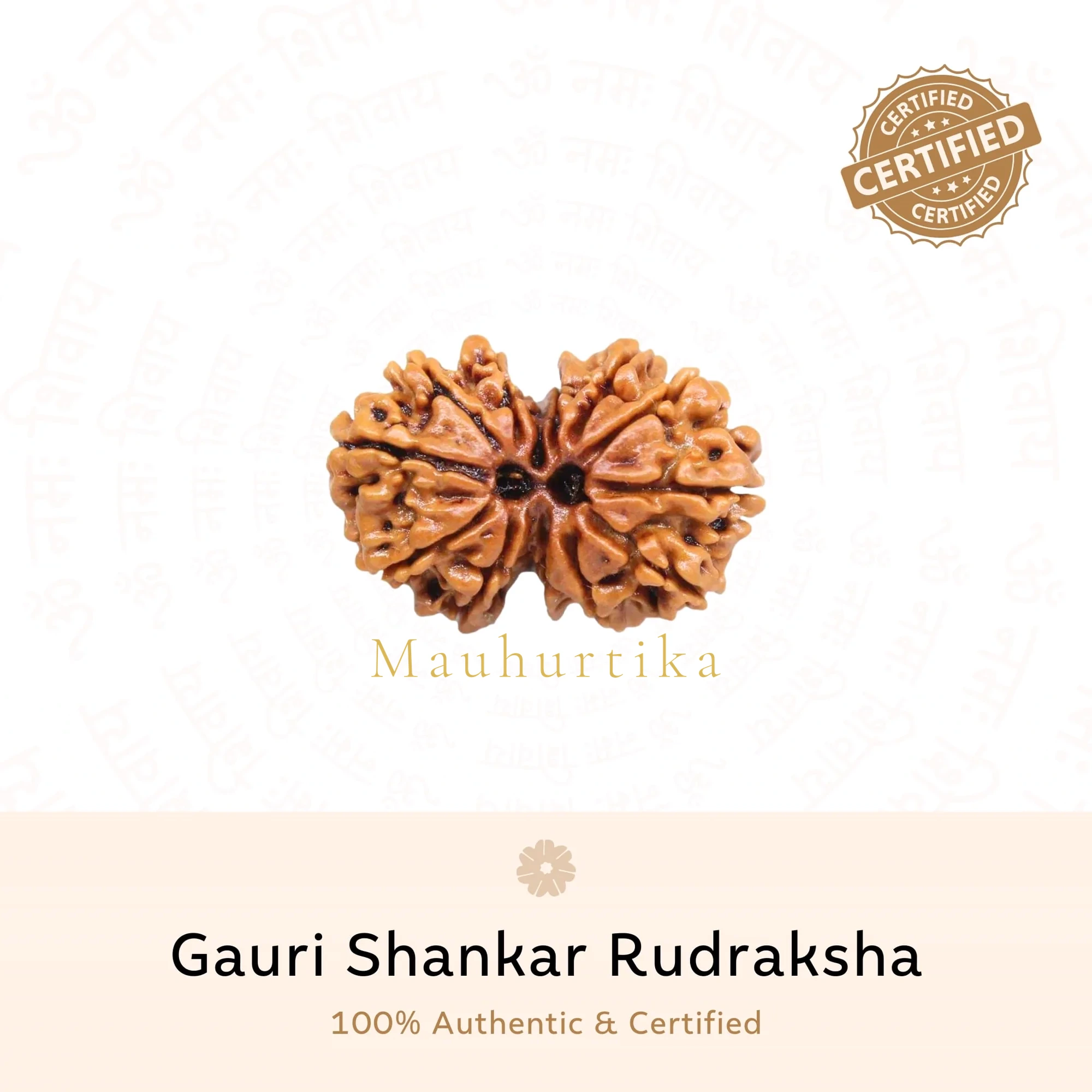
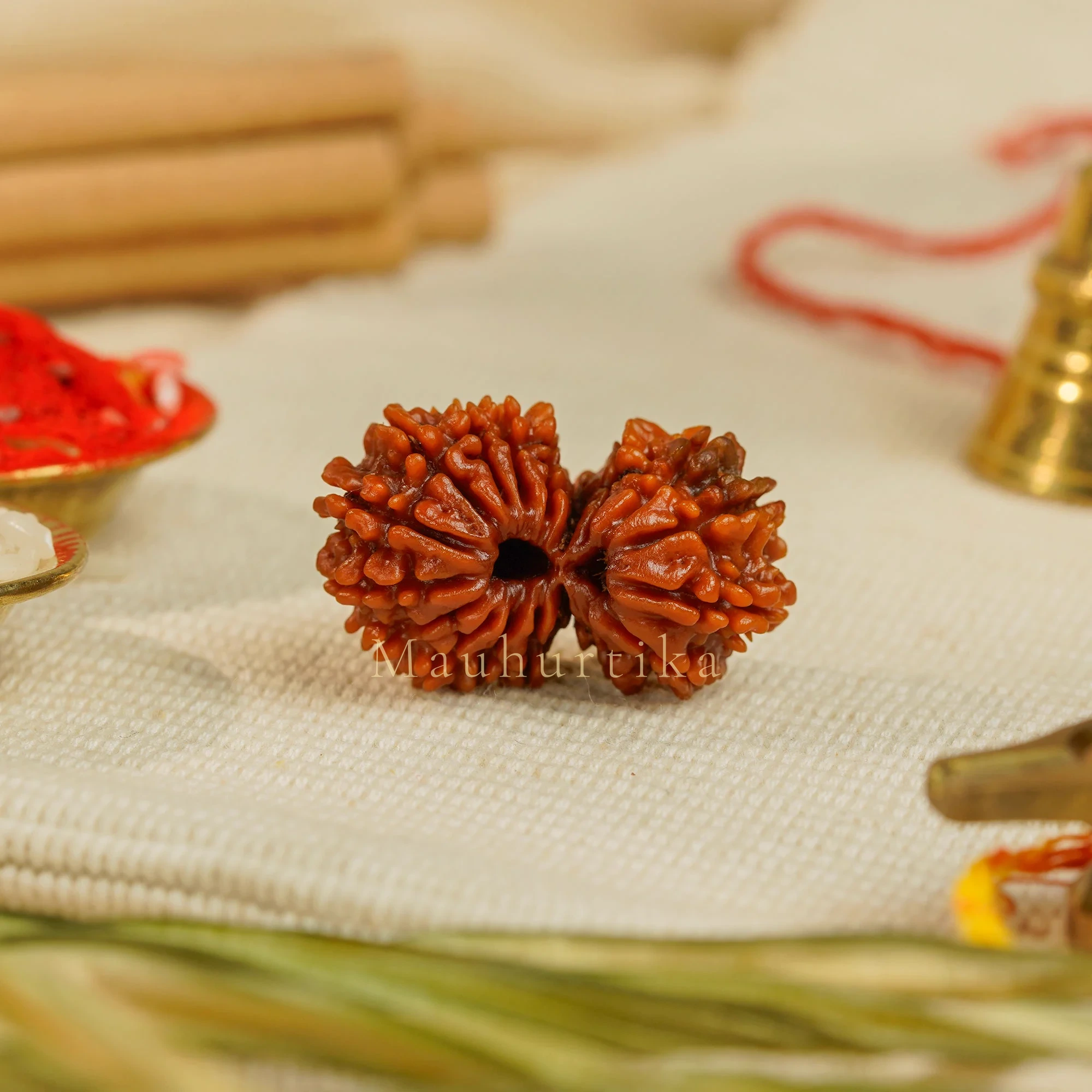
An “18 Mukhi Gauri Shankar” listing needs more detail than its name. Gauri Shankar describes a joined formation, while eighteen can be a seller's count convention. Ask how many divisions are attributed to each half and whether the label refers to their combined total. A joined specimen described as eighteen is not automatically a single 18 Mukhi Rudraksha or two separate eighteen-mukhi beads.
Why collector descriptions need precision
At collector-level prices, a small ambiguity in the wording can create a large misunderstanding. Keep three questions separate: is the joining natural, what is the count on each half, and what evidence supports the seller's description? A photograph, a report and an invoice have different roles; none should be replaced by an impressive product name.
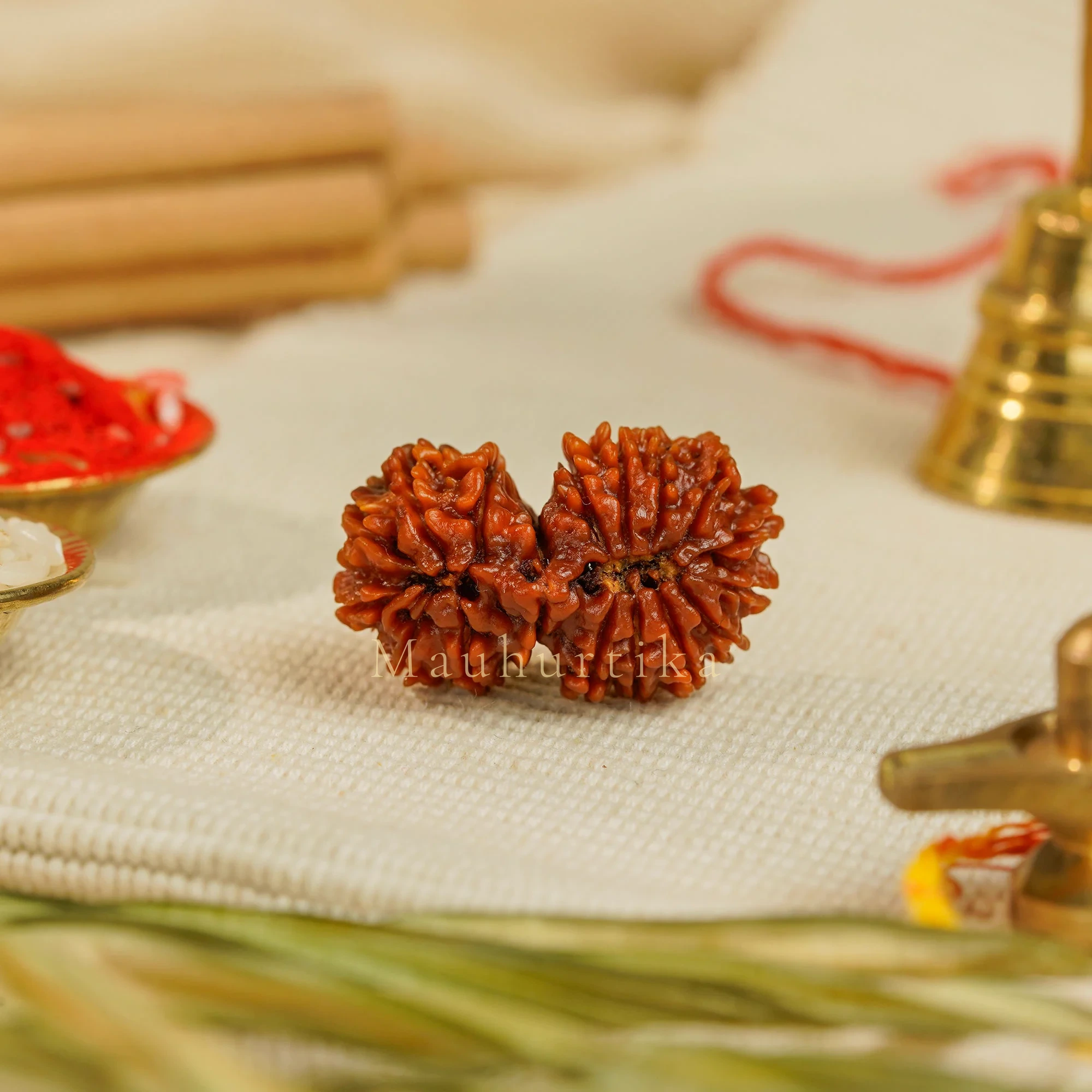
For example, nine plus nine makes eighteen mathematically, but that example does not establish the composition of a bead sold under this label. There may be another stated counting convention. Never present a calculation as the observed anatomy of an unexamined specimen.
Single 18 Mukhi is a different product
A single 18 Mukhi bead has its count described around one bead. Some traditions associate that single-bead type with Bhumi Devi. It would be misleading to automatically assign every single-18 association to a joined bead with a summed count. Ask the practitioner recommending the bead which formation they mean.
This is especially important in a Siddha Mala, where names may describe a range of single Mukhi beads plus additional joined forms. A strand “up to 18 Mukhi” does not itself prove that its Gauri Shankar has an eighteen-count description. Obtain the full bead list instead of drawing conclusions from the collection name.
Gauri Shankar's devotional context
The joined formation is commonly connected with Shiva and Parvati and the coexistence of distinct yet connected qualities. People may include it in worship centred on family harmony, devotion or balance. These meanings are matters of faith, not verified outcomes or a replacement for relationship support.
Avoid buying through fear that a rare specimen is needed to prevent misfortune. A thoughtful enquiry should begin with your practice, budget and the physical description. Higher price and rarity are not scientifically established measures of spiritual effectiveness.
Inspect the junction and the whole bead
Request clear views of the joining area, both lobes and both ends. A metal fitting should not hide the feature being described as naturally joined. Ask whether images show the exact supplied specimen and whether any treatment or repair has been disclosed. Distinct colour on the halves is not alone proof of falsification, just as matching colour is not proof of authenticity.
An independent examination may offer information unavailable in a photograph. If a report is supplied, read its scope: does it discuss the joined structure, the individual counts, dimensions or only material identification? Match its identifying details to the bead. Claims about guaranteed spiritual power are not physical verification.
The current catalogue needs clarification
Mauhurtika has a listing named 18 Mukhi Gauri Shankar Rudraksha Nepal. Its title and generic specification do not, by themselves, establish the individual count of each joined half. For that reason this guide does not present it as a verified exact-match purchase card or claim a 9+9 structure.
If enquiring about that listing, request fresh specimen photographs, the two stated counts and the relevant report before ordering. Also confirm the size, total mounted weight, finish and return terms. The article intentionally leaves those details open rather than inventing them from a reference website.
A specimen-specific enquiry checklist
- State that you are asking about a joined Gauri Shankar, not a single 18 Mukhi bead.
- Ask for the count on each half and the reason for the eighteen label.
- Request evidence for natural joining and disclosure of repairs or treatment.
- Confirm whether the report identifies the actual supplied specimen.
- Ask for the final order description and mounting details in writing.
For a pendant, assess how the irregular outline will sit against clothing and skin. The junction should not bear unnecessary mechanical pressure. Keep the bead dry after suitable cleaning and do not soak, boil, cut or force it apart for a home test.
Related reading
Compare 14 Mukhi Gauri Shankar terminology, the general joined-bead guide and Siddha Mala selection.
Frequently Asked Questions
Q.Does eighteen mean 9+9?
It can be an arithmetic explanation used by a seller, but it must not be assumed. Request the observed count on each half for the supplied specimen.
Q.Is an eighteen-count Gauri Shankar the same as a single 18 Mukhi?
No. Joined and single-bead formations are distinct and should have distinct order descriptions.
Q.Why is the named catalogue item not shown as a verified match?
Its separate-half counts have not been established from the available listing information. The guide asks for clarification instead of inventing a confirmed composition.
Q.Can its rarity guarantee results?
No. Rarity and devotional significance do not establish medical, financial or relationship outcomes.