Rudraksha Names in Tamil, Telugu, Kannada, Bengali and Other Indian Languages
A reference to established Indian-language Rudraksha names, with practical checks for comparing beads, pendants and malas across listings.
You may know the bead as Rudraksha in English, ருத்ராட்சம் in Tamil or రుద్రాక్ష in Telugu. A different script can make a familiar item look unfamiliar on a product label. This guide brings together established Indian-language forms and explains what a name can—and cannot—tell you when comparing a bead, pendant or mala.
The main point is simple: a language label is not a separate grade of Rudraksha. It does not establish where a bead grew, how many mukhis it has or whether a seller's description is accurate. Use the name to communicate; use the item's actual specifications to compare purchases.
Rudraksha names across Indian scripts
These forms are recorded in the linked multilingual dictionary entries. They are useful reference spellings, not a claim that every dialect or speaker uses only one form.
- Hindi: रुद्राक्ष
- Marathi: रुद्राक्ष
- Tamil: ருத்ராட்சம்
- Telugu: రుద్రాక్ష
- Kannada: ರುದ್ರಾಕ್ಷಿ; the form ರುದ್ರಾಕ್ಷ is also recorded.
- Malayalam: രുദ്രാക്ഷം
- Bengali: রুদ্রাক্ষ
- Gujarati: રુદ્રાક્ષ
- Odia: ରୁଦ୍ରାକ୍ଷ
The Tamil WordNet entry hosted by TransLiteral includes corresponding forms across these languages. AmarKosh's multilingual entry provides definitions and examples for several of them. The entries establish language usage; they do not authenticate products.
What the name means in everyday use
Dictionary descriptions connect the term with a tree and the bead used for prayer, worship or wearing. In a shopping conversation, however, the same word may refer to a loose bead, a finished pendant, a strand or the plant itself. Ask which object is actually being offered.
Rudraksha is associated with Shiva in Hindu devotional practice. Stories about its sacred origin belong to religious tradition; they should not be confused with a laboratory description or evidence of a particular bead's origin. A respectful product description can acknowledge devotional meaning without promising health, wealth or protection.
Tamil and Telugu searches: specify the object
If you search using ருத்ராட்சம் or రుద్రాక్ష, results may include individual beads, necklaces, devotional information and different kinds of finished jewellery. Add a photograph or a clear English description when making an enquiry so the seller understands the format you want.
For example, ask for an individual 5 Mukhi bead with its dimensions, or for a Rudraksha mala with its bead count and length. Do not assume that a translation of “mala” specifies a particular counting arrangement. A listing should state whether the count includes a guru bead, spacers or decorative additions.
Kannada, Malayalam and Bengali: spelling is not origin
The Kannada forms ರುದ್ರಾಕ್ಷಿ and ರುದ್ರಾಕ್ಷ illustrate why searching more than one established spelling can be useful. Malayalam രുദ്രാക്ഷം and Bengali রুদ্রাক্ষ likewise identify the familiar devotional object in another script. None of these names means that a bead necessarily grew in Karnataka, Kerala or West Bengal.
A seller may serve a language community while offering beads described as Nepali or Indonesian. Keep language, seller location and claimed growing origin as three separate questions. If origin matters to your purchase, request the basis for that description rather than inferring it from a regional-language heading.
Transliteration and pronunciation
English listings may use Rudraksha, Rudraksh or a more formal form with diacritics. These are writing choices, not quality tiers. Roman spellings also cannot reproduce every language's pronunciation precisely, so this guide does not prescribe a single accent or phonetic formula.
For an accurate local pronunciation, ask a fluent speaker or consult the language entry. When sending a seller a message, copying the script alongside “Rudraksha” and a product photograph is often clearer than relying on an approximate English spelling alone.
A cross-language buying checklist
- Identify the format: loose bead, wearable pendant or mala.
- Ask for the stated mukhi count; the name of the bead is not its face count.
- Confirm dimensions and, for a strand, bead count and overall length.
- Ask whether photographs show the exact item or a representative example.
- Request disclosure of dye, polishing, coating or other treatment.
- Clarify what any offered report covers and how its issuer can be checked.
- Read the actual return terms before paying.
For more detail, use the original and certified Rudraksha buying guide. It separates seller comparison from authentication and explains why a certificate label alone is insufficient. A regional-language title does not replace any of those checks.
Comparing a bead with a mala
A loose bead and a completed mala may share the same language name but have different practical uses. A pendant buyer needs to consider mounting, hole size and comfort. A mala buyer needs to consider counting arrangement, strand construction and fit. Neither choice becomes better merely because a listing uses Sanskrit or a regional script.
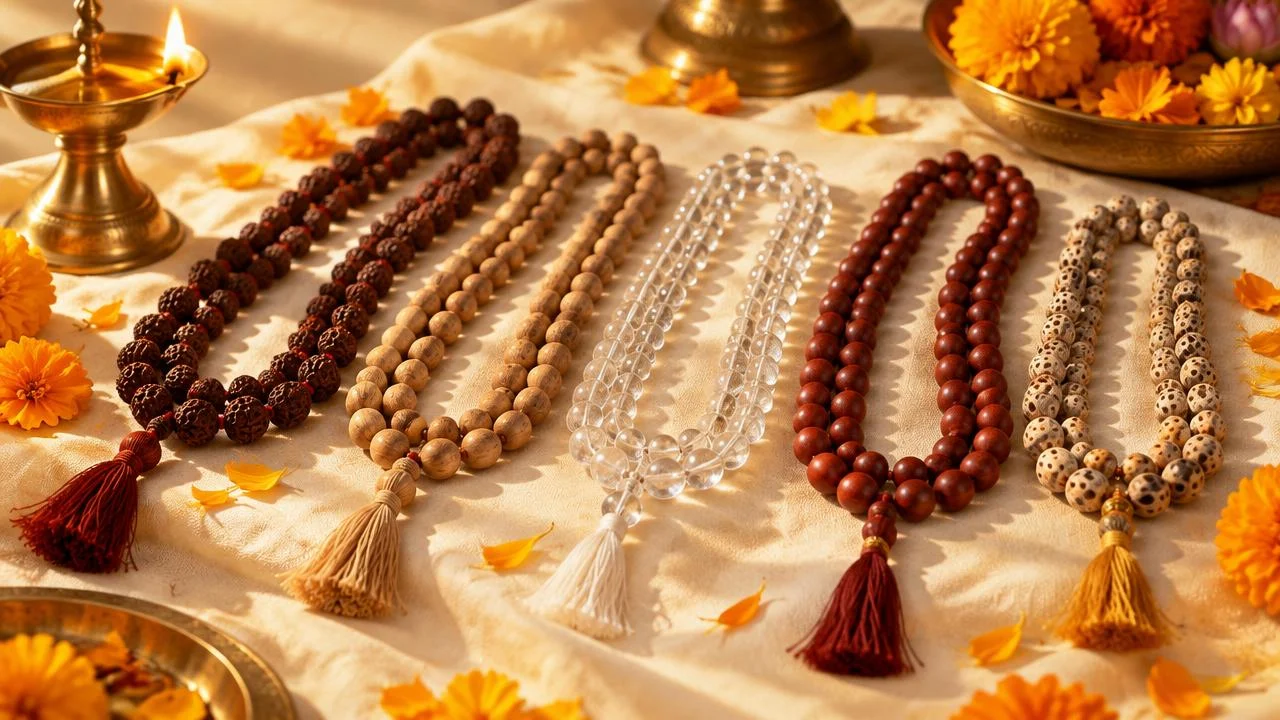
The bead-size guide can help frame a dimensions enquiry. The Rudraksha mala collection and live bead catalogue provide current item details. Prices and availability are deliberately not copied into this language guide.
An enquiry that avoids translation mistakes
Send the name in your preferred script, then specify the object and the facts you need. A useful message is: “I am looking for a Rudraksha bead, not a complete mala. Please share the stated mukhi, origin, dimensions, exact-item photos and treatment information.” For a mala, add the count and preferred length.
You can contact Mauhurtika on WhatsApp. This link starts a product enquiry; it does not promise support in every language. Confirm language assistance directly rather than assuming it from this article.
Frequently Asked Questions
Q.What is Rudraksha called in Tamil?
The Tamil WordNet entry records ருத்ராட்சம். A Tamil name identifies the object, not its origin, mukhi count or quality.
Q.What is Rudraksha called in Telugu?
The recorded Telugu form is రుద్రాక్ష. Specify whether you mean a loose bead, pendant or mala when enquiring.
Q.What is the Kannada name for Rudraksha?
Multilingual dictionary entries record ರುದ್ರಾಕ್ಷಿ and ರುದ್ರಾಕ್ಷ. Spelling variation is not a separate bead grade.
Q.What is the Bengali name for Rudraksha?
The Bengali form is রুদ্রাক্ষ. A Bengali listing does not by itself establish where the bead grew.
Q.Does a regional-language name mean a different kind of Rudraksha?
No. Compare the actual object's mukhi, dimensions, stated origin, construction and disclosed treatments rather than its language label.
Q.Does Mauhurtika offer support in all these languages?
This article is a language reference, not a multilingual-service promise. Ask Mauhurtika directly which language assistance is available for your enquiry.