The Complete Shaligram Guide: Types, Significance and Worship
What a Shaligram Shila is, why it is worshipped as Lord Vishnu, where it comes from, how traditional forms are described, how to perform simple puja and what to ask before you buy one.
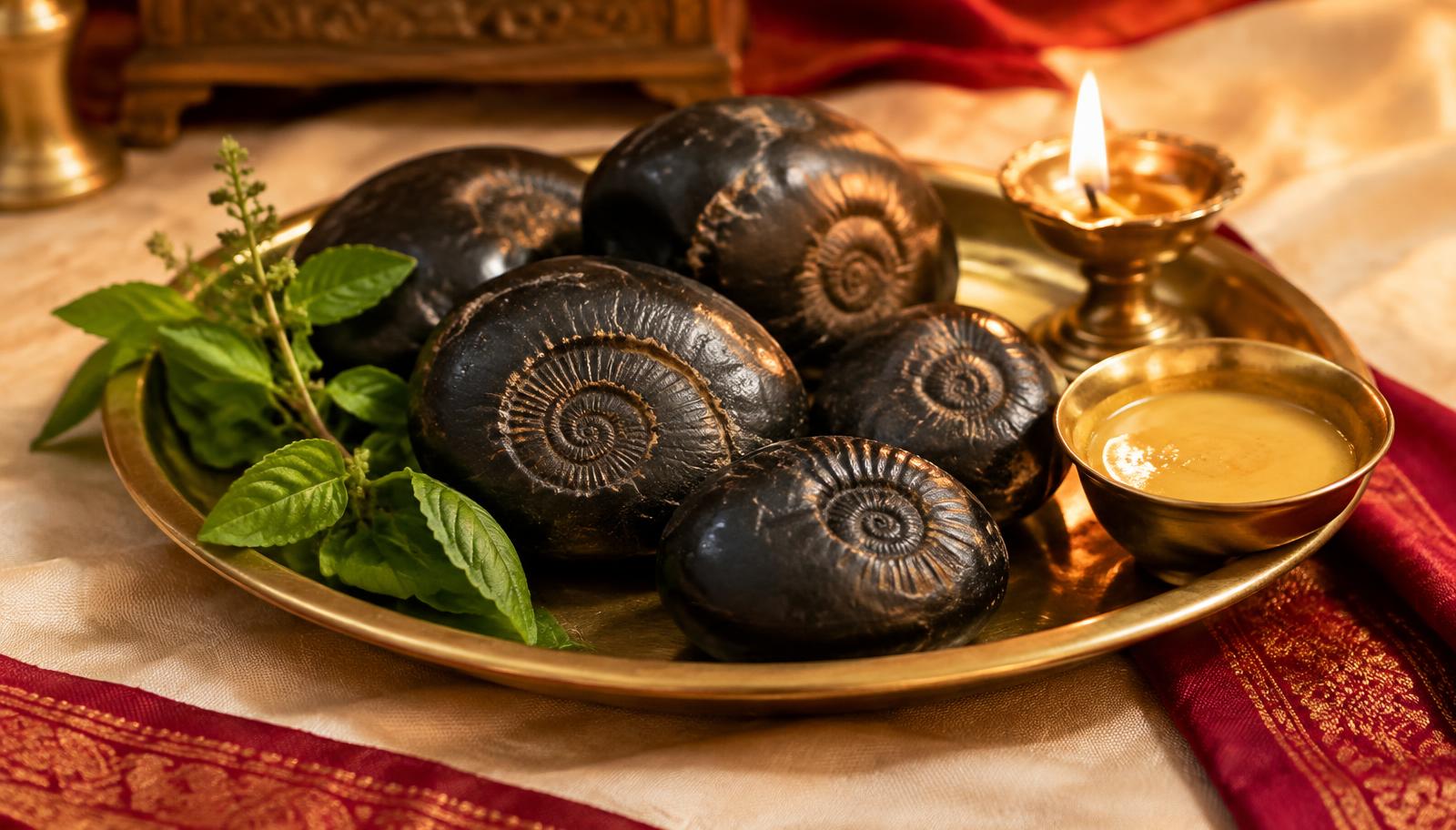
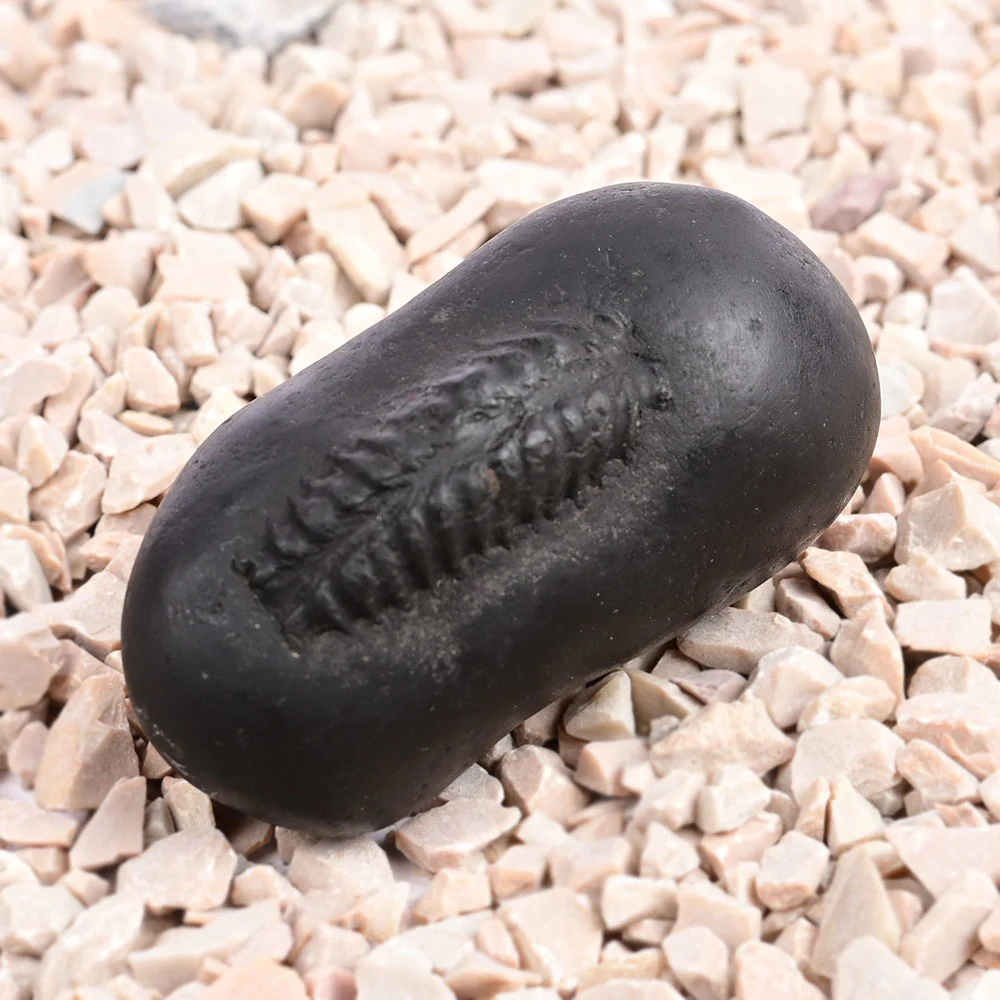
A Shaligram (also spelled Saligram or Salagrama) is a naturally formed black stone, usually containing the fossil imprint of an ancient sea creature called an ammonite. In Vaishnava tradition it is worshipped as a self-manifested (swayambhu) form of Lord Vishnu. Shaligrams are traditionally collected from the Kali Gandaki river in Nepal. Their spiritual meaning is a matter of faith; identification of a specific form depends on interpretation by experienced practitioners.
Few objects in Hindu worship carry as much quiet reverence as the Shaligram. It is not carved, painted or installed with a ceremony to bring a deity into it — devotees regard it as already sacred the moment it is found. Families keep the same Shaligram for generations, temples place them at the heart of daily worship, and many households treat one as the most important member of their home shrine. This guide explains what a Shaligram is, how traditional forms are described, how worship is usually performed, and the practical questions worth asking before you bring one home.
What Is a Shaligram Shila?
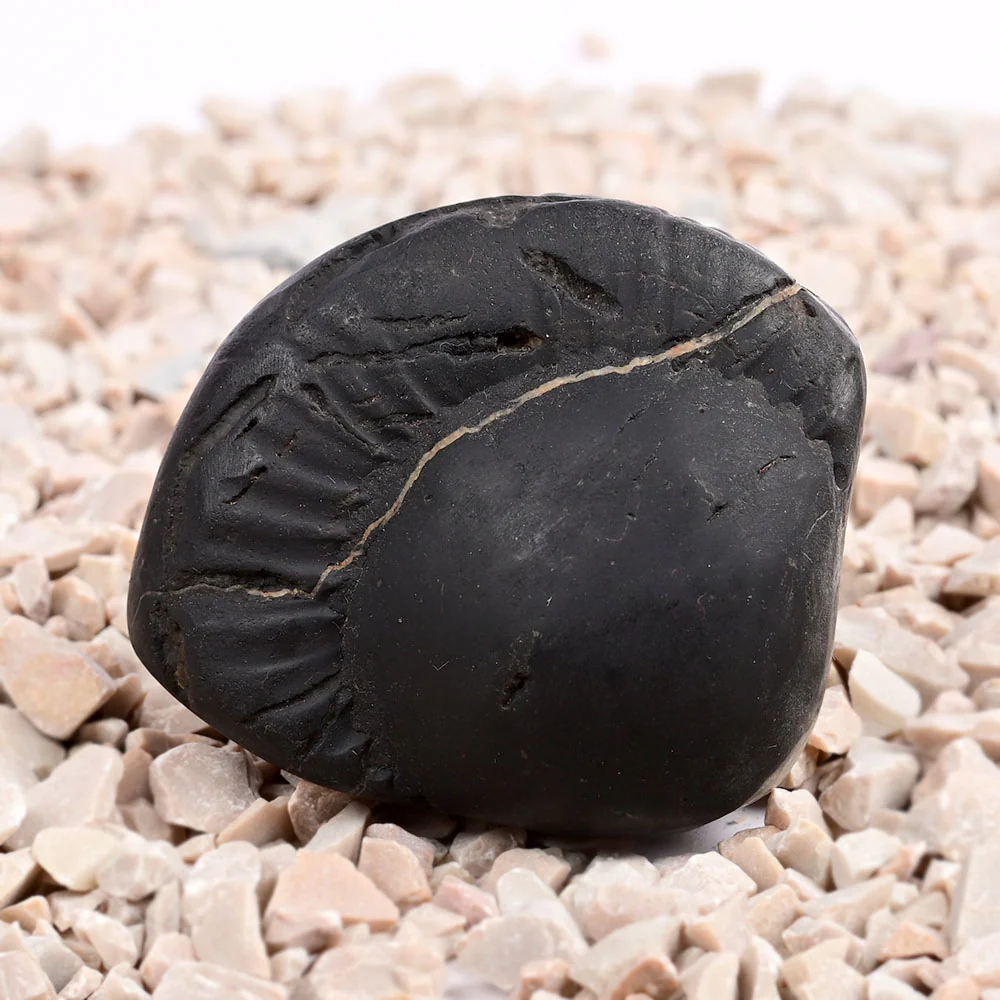
Physically, most Shaligrams are smooth, dark stones — black, deep brown or occasionally with golden or reddish tones — that have been rounded by river water. Many contain the spiral fossil of an ammonite, a shelled marine animal that lived in the ancient Tethys Sea long before the Himalaya rose. As the mountains formed, these marine sediments were lifted high above sea level, and erosion in the upper Kali Gandaki valley now releases them into the river.
Spiritually, the Shaligram is understood as a natural form of Vishnu. The spiral markings are traditionally read as the Sudarshana Chakra, Vishnu's discus, and other features of the stone — openings, lines, dots and textures — are interpreted as signs of particular forms or avatars. Because it is considered self-manifested, a Shaligram does not need the prana pratishtha (life-installation) ritual that a carved murti traditionally requires.
The Traditional Association with Lord Vishnu
Shaligram worship is described in several Puranas and later devotional literature. One widely told story connects the stone with Tulsi (Vrinda), a devoted wife whose chastity protected her husband, and with Vishnu, who is said to have taken the form of the Shaligram as a result of her curse while she became the Tulsi plant. That is why tradition pairs the two so closely: Tulsi leaves are the most important offering to a Shaligram, and the ceremonial marriage of Tulsi with Shaligram (Tulsi Vivah) is still celebrated after Devuthani Ekadashi.
In many Vaishnava homes the Shaligram is treated not as a symbol but as a living presence — woken, bathed, offered food and put to rest each day. Shaiva traditions hold the Narmada Banalinga in similar esteem, and some households keep both side by side as a sign of harmony between Vishnu and Shiva worship.
Origins: Nepal and the Kali Gandaki River
The classical source of Shaligrams is the upper reaches of the Kali Gandaki river in the Mustang region of Nepal, especially around Muktinath, a pilgrimage site sacred to both Hindus and Buddhists. The area is often called Shaligrami or Saligrama-kshetra in older texts. Pilgrims traditionally collect stones from the riverbed during the dry season, when water levels are low.
Collection today is limited by geography, weather and local regulations, and the supply of well-formed stones is not unlimited. This is one reason buyers should be careful about very cheap, uniform-looking stones offered in large numbers — see the authenticity section below.
Commonly Discussed Shaligram Forms
Traditional texts and temple practice describe many forms, each identified by colour, shape, the number and arrangement of chakra marks, the size and shape of the opening (vadana), and other features. Interpretations vary between lineages, and two experienced priests may name the same stone differently. The following are among the forms most often discussed:
Lakshmi Narayan
Usually described as a dark stone with chakra markings visible inside an opening, sometimes with a vanamala-like line. It is associated with Vishnu together with Goddess Lakshmi and is commonly chosen for household worship centred on family harmony and prosperity, as tradition describes it.
Sudarshan
Named after Vishnu's discus, this form is traditionally identified by prominent, well-defined chakra spirals. Devotees associate it with protection in the devotional sense.
Narasimha
Often described as having a wide opening and rough or prominent features suggesting the fierce man-lion avatar. Some traditions advise that Narasimha forms be worshipped with particular care and regularity.
Matsya, Kurma and Varaha
These forms relate to the fish, tortoise and boar avatars. Identification commonly rests on overall shape — elongated for Matsya, a domed back for Kurma, a raised snout-like feature for Varaha — together with chakra markings.
Damodar, Krishna and Radha Krishna
Associated with Krishna in various aspects. Damodar forms are often described as having a line resembling a rope around the waist, recalling the story of child Krishna bound by Yashoda.
Hayagriva
The horse-headed form of Vishnu associated in tradition with learning and knowledge. Students and teachers sometimes favour it.
Other names you will see
Sellers also use names such as Ram, Parshuram, Kalki, Padmanabha, Kuber Lakshmi and Surya. These descriptions draw on traditional systems of identification, but naming practices vary widely. Treat a name as a guide to the stone's appearance and the seller's interpretation, not as a certified classification.
Traditional Identification and Visible Markings
When devotees examine a Shaligram, they typically look at:
- Chakra (spiral) marks: their number, sharpness and position — outside, inside an opening, or both.
- Vadana (opening): a natural cavity through which internal markings may be seen.
- Colour: black is most common; golden, greenish, reddish and multi-coloured stones are described in texts and given specific associations.
- Shape and surface: round, oval, flattened or irregular; smooth or textured; marks resembling a lotus, conch, mace, footprint or garland.
Important caveat: traditional identification is interpretive. There is no laboratory test that can confirm a stone is a particular 'form' of Vishnu, and naming conventions differ between regions and teachers. A geologist can help confirm that a stone is a natural fossil-bearing rock, but the devotional classification remains a matter of tradition.
Some old texts also describe stones considered unsuitable for home worship — for example cracked, broken or very rough stones. Practices differ, so if this matters to you, consult your family priest or guru.
Shaligram Puja: A Simple Daily Practice
Shaligram worship can be elaborate in temples, but at home it is usually simple. A common daily sequence looks like this:
- Cleanliness: bathe and wear clean clothes; clean the shrine area.
- Abhishek (bathing): gently bathe the Shaligram with clean water. On special days devotees use panchamrit — milk, curd, ghee, honey and sugar — followed by clean water.
- Drying and placing: pat dry with a soft cloth and place it on a small cloth, plate or seat, never directly on the floor.
- Chandan: apply a little sandalwood paste.
- Tulsi: offer fresh Tulsi leaves. Tradition considers Tulsi the most essential offering.
- Lamp, incense and flowers: light a ghee lamp and incense, and offer flowers if available.
- Naivedya: offer simple vegetarian food or fruit, then share it as prasad.
- Prayer and aarti: recite a mantra or prayer and perform aarti.
Many families make it a rule never to leave the Shaligram unworshipped for long periods. If you travel, a family member may continue the practice, or you can follow your own tradition's guidance.
Mantras commonly chanted
- Om Namo Narayanaya — the eight-syllable Narayana mantra.
- Om Namo Bhagavate Vasudevaya — the twelve-syllable Vasudeva mantra.
- Vishnu Sahasranama — the thousand names of Vishnu, often recited on Ekadashi or Thursdays.
Pronunciation and the exact procedure vary between lineages. If you want a formal puja vidhi, a knowledgeable priest is the best guide.
Choosing a Shaligram
Most devotees choose a Shaligram through a combination of devotion and practicality:
- Your devotional focus: families devoted to Krishna may prefer a Krishna or Damodar form; those who worship Vishnu with Lakshmi often choose Lakshmi Narayan.
- Size: small stones are easier to bathe and care for daily. Very large stones are more common in temples.
- Condition: many traditions prefer whole stones without cracks or chips.
- Your ability to worship regularly: a simple, well-cared-for Shaligram is better than an impressive one that is rarely attended to.
Our Shaligram collection lists each stone with its weight and description so you can compare forms before enquiring. If you are unsure, our free consultation can help you think through the choice.
Caring for a Shaligram
- Bathe it with clean water; avoid soap, chemical cleaners and abrasive brushes.
- Dry it fully before placing it back in the shrine.
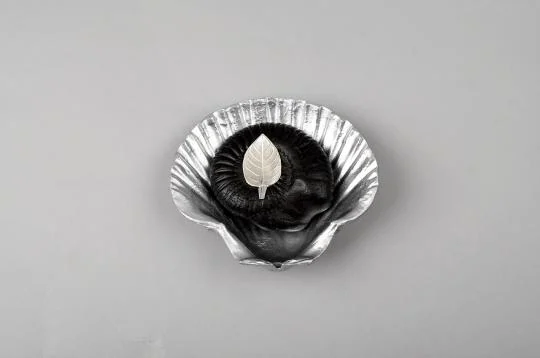
- Keep it in a clean, respectful place — many families use a small silver or brass box, or a cloth-lined seat.
- Handle it with clean hands and avoid dropping it; ammonite fossils can chip.
- If you receive an inherited Shaligram, continue the family's established practice where possible.
Authenticity, Provenance and Questions to Ask
Because Shaligrams are natural objects with deep religious value, imitations and misdescribed stones do exist. Some are ordinary river stones polished and sold with exaggerated names; others are moulded or carved to show convenient markings. You do not need to become an expert, but these questions help:
- Where was it collected, and how is it sourced? A credible seller can describe their supply chain.
- Is the stone natural and unaltered? Ask whether it has been polished, painted, oiled, carved or filled.
- What is its exact weight and size? Real listings give actual measurements for the individual stone, not a generic range.
- Are these photos of the exact stone? For a natural object, you should see the piece you will receive from several angles.
- Who identified the form? Ask on what basis the name was given.
- What is the return policy? A fair seller will explain what happens if the stone does not match its listing.
Explore Shaligram Stones
These are live Shaligram listings from the Mauhurtika catalogue. Prices and availability shown below update automatically from our store.
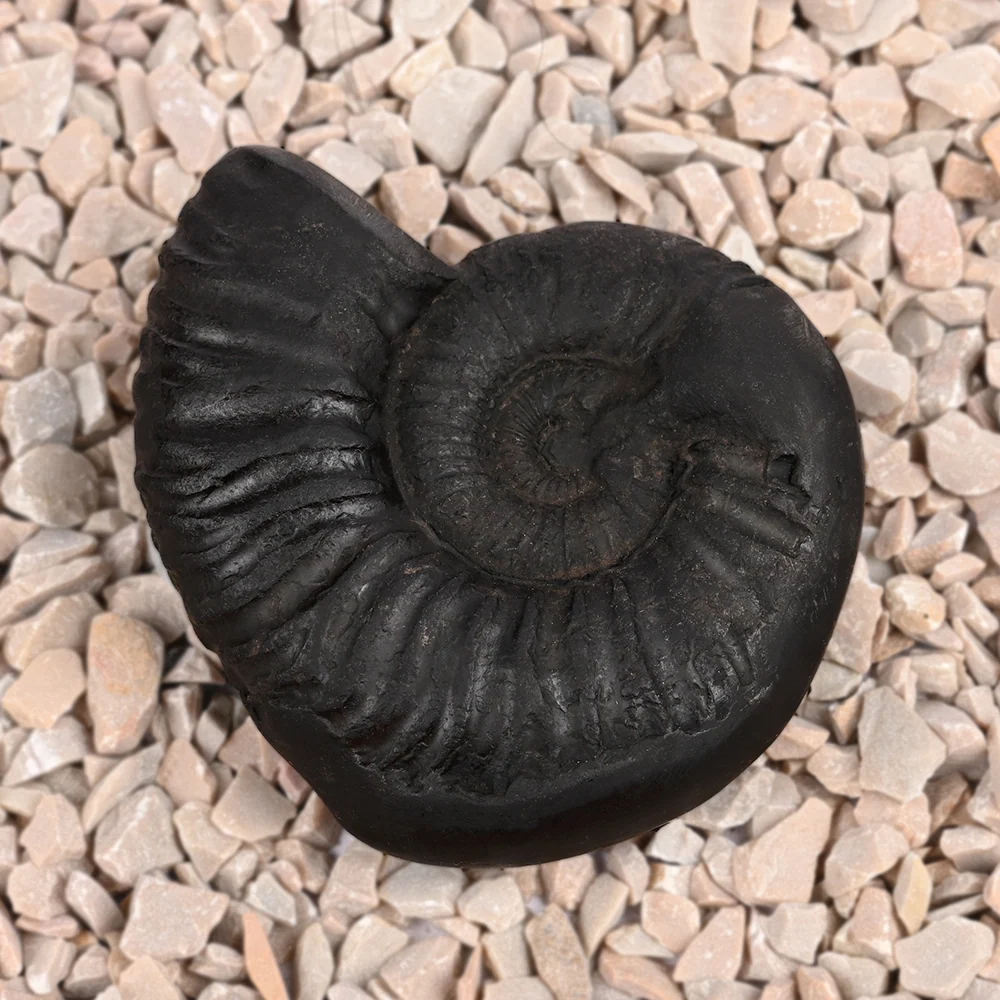
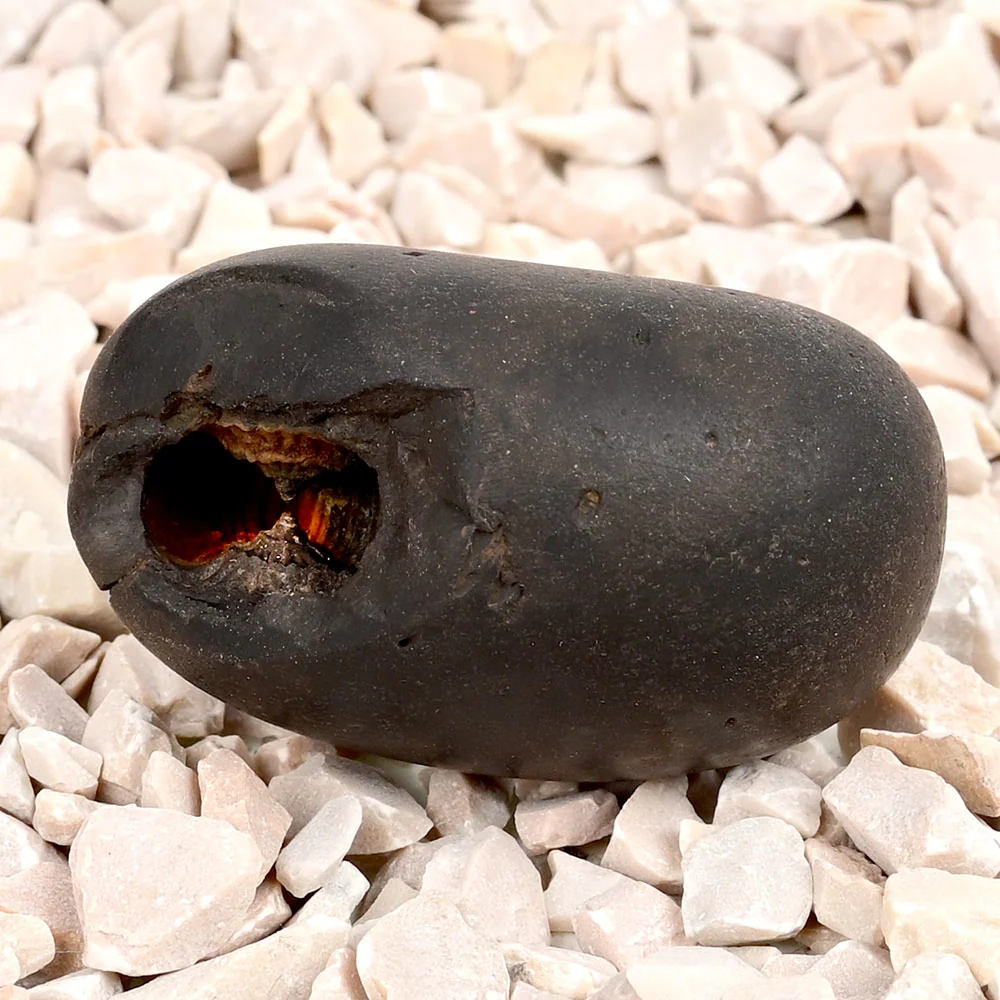
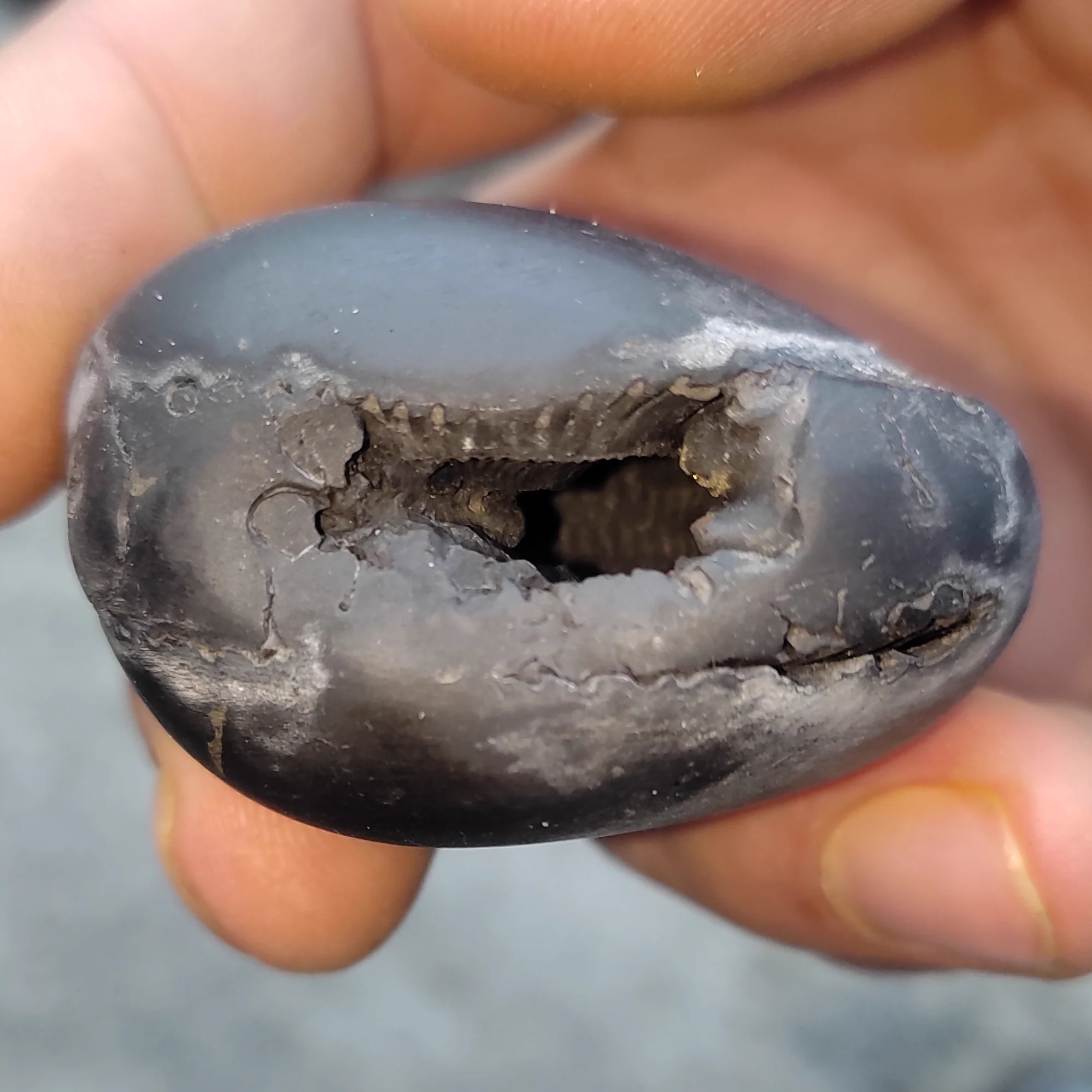
You can view every available stone, Shaligram murti and Shaligram mala on our Shaligram page. For other sacred items, browse the Spiritual Store.
Frequently Asked Questions
Continue Learning
Read our Gauri Shankar Rudraksha guide, the complete Rudraksha guide and 108 names of Lord Hanuman, or explore Rudraksha by purpose.
Frequently Asked Questions
Q.Can a Shaligram be kept at home?
Yes. Shaligrams are widely kept in home shrines. Tradition encourages regular worship — at least a daily offering of water and Tulsi — and keeping the stone in a clean, respectful place.
Q.Does a Shaligram need prana pratishtha?
Traditionally no. A Shaligram is regarded as a self-manifested form of Vishnu, so the installation ritual used for carved murtis is not considered necessary. Some families still perform a simple welcoming puja.
Q.Can women worship a Shaligram?
Practices differ between communities. Many households today have women performing Shaligram puja daily. Follow your family tradition or ask your priest if you are unsure.
Q.What is the most important offering to a Shaligram?
Tulsi leaves. Tradition holds that Tulsi is the offering most dear to Vishnu, and the two are closely linked through the story of Vrinda and the ritual of Tulsi Vivah.
Q.How can I tell if a Shaligram is real?
Look for a natural, unpainted stone, ask for exact weight and photos of the specific piece, and ask how it was sourced. Identification of a particular form is traditional and interpretive; no lab test can certify a devotional form.
Q.Can I keep more than one Shaligram?
Many families keep several. Some traditions recommend an odd number or specific combinations; customs vary, so follow your own lineage's guidance.